


Effect of 4 Weeks of Cervical Deep Muscle Flexion Exercise on Headache and Sleep Disorder in Patients with Tension Headache and Forward Head Posture
- PMID: 33806089
- PMCID: PMC8037445
- DOI: 10.3390/ijerph18073410
Effect of 4 Weeks of Cervical Deep Muscle Flexion Exercise on Headache and Sleep Disorder in Patients with Tension Headache and Forward Head Posture
Abstract
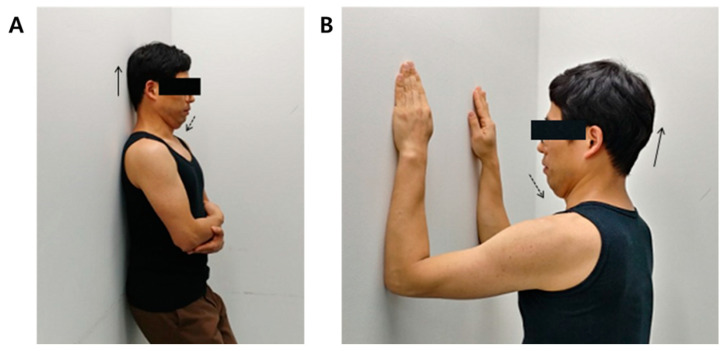
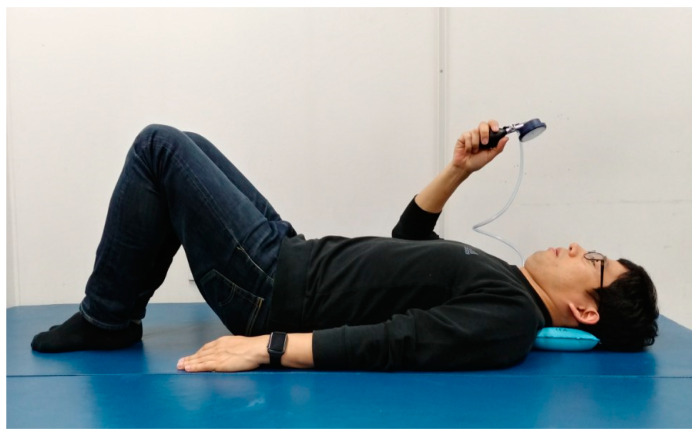
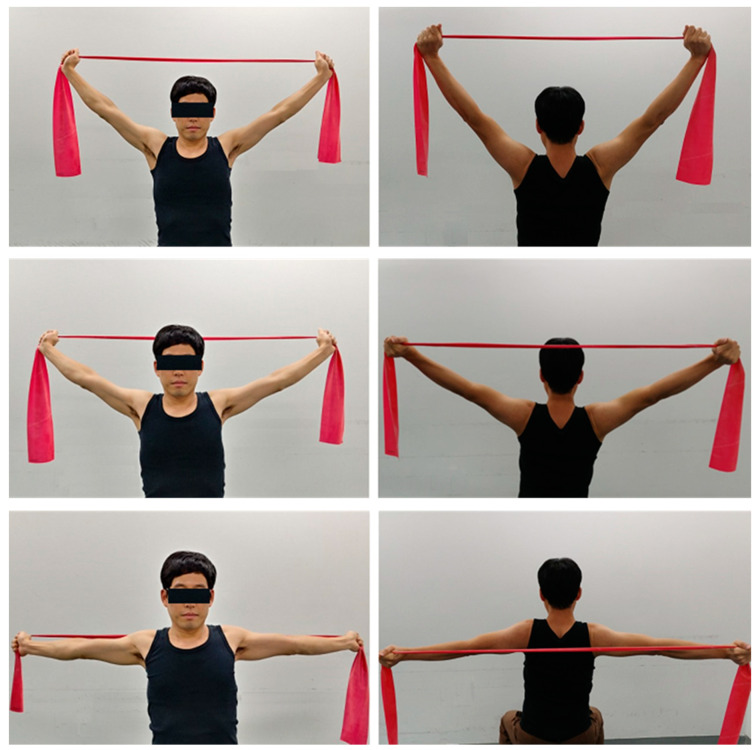
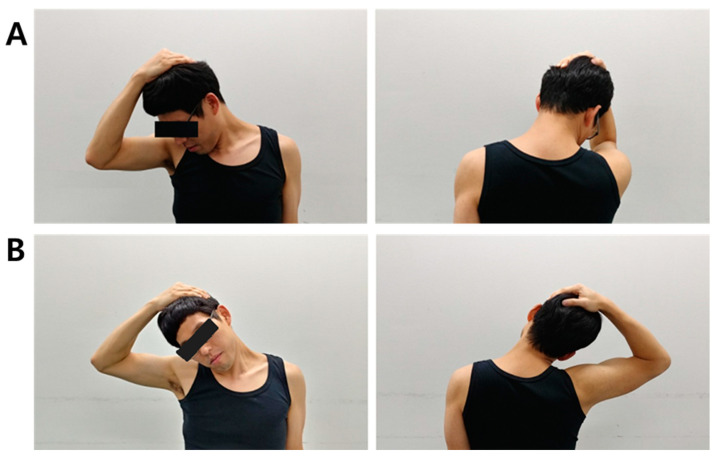
The purpose of this study was to investigate the effect of flexion exercise of the deep cervical muscles on headache and sleep disorders in patients with tension headaches and forward head posture. A total of 32 patients with tension headaches and forward head posture were randomly assigned to two groups: an experimental group (n = 16) and a control group (n = 16). The experimental group performed cervical deep muscle flexion exercises for 4 weeks, whereas the control group performed stretching exercises for the same period. The Henry Ford Hospital Headache Disability Inventory (HDI) was used for headache assessment, and the Korean version of the Pittsburgh Sleep Quality Index (PSQI-K) was used for sleep disorder assessment. The experimental group showed a significant reduction in both HDI and PSQI-K score after 4 weeks of intervention (p < 0.001), while no significant difference was found in the control group (p > 0.05). On comparing the experimental and control groups, we found a significant difference in changes in the HDI and PSQI-K between the groups (p < 0.05). The results indicate that flexion exercise of the deep cervical muscles in patients with tension headache and forward head posture will improve the quality of life and activities of daily life by mitigating headaches and sleep disorders.
Keywords: deep muscle flexion exercise; headache disorder; sleep disorder; stretching exercise; tension headache.
Conflict of interest statement
The authors declare no conflict of interest.
Figures
References
-
- Tepper M., Vollenbroek-Hutten M.M.R., Hermens H.J., Baten C. The effect of an ergonomic computer device on muscle activity of the upper trapezius muscle during typing. Appl. Ergon. 2003;34:125–130. - PubMed
-
- Mekhora K., Liston C., Nanthavanij S., Cole J. The effect of ergonomic intervention on discomfort in computer users with tension neck syndrome. Int. J. Ind. Ergon. 2000;26:367–379. doi: 10.1016/S0169-8141(00)00012-3. - DOI
-
- Petrofsky J.S., Laymon M., Alshammari F., Khowailed I.A., Lee H. Use of low level of continuous heat and Ibuprofen as an adjunct to physical therapy improves pain relief, range of motion and the compliance for home exercise in patients with nonspecific neck pain: A randomized controlled trial. J. Back Musculoskelet. Rehabil. 2017;30:889–896. doi: 10.3233/BMR-160577. - DOI - PubMed
Publication types
MeSH terms
LinkOut - more resources
Full Text Sources
Other Literature Sources
Medical
