


Marine-Derived Macrolides 1990-2020: An Overview of Chemical and Biological Diversity
- PMID: 33806230
- PMCID: PMC8066444
- DOI: 10.3390/md19040180
Marine-Derived Macrolides 1990-2020: An Overview of Chemical and Biological Diversity
Abstract
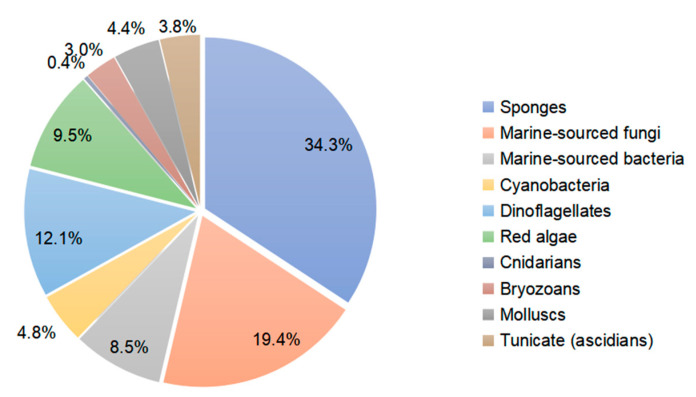
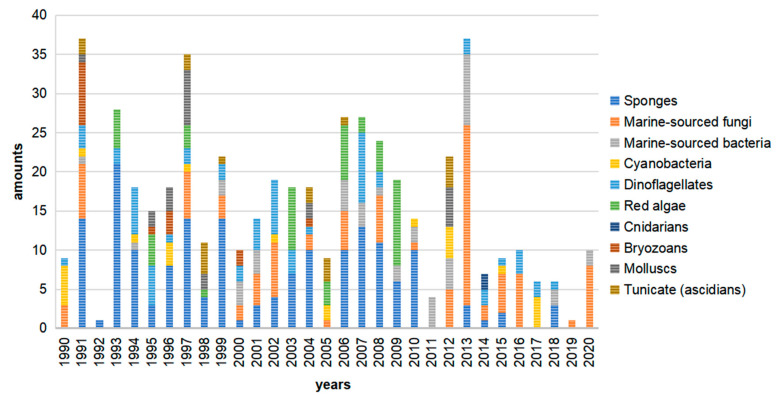
Macrolides are a significant family of natural products with diverse structures and bioactivities. Considerable effort has been made in recent decades to isolate additional macrolides and characterize their chemical and bioactive properties. The majority of macrolides are obtained from marine organisms, including sponges, marine microorganisms and zooplankton, cnidarians, mollusks, red algae, bryozoans, and tunicates. Sponges, fungi and dinoflagellates are the main producers of macrolides. Marine macrolides possess a wide range of bioactive properties including cytotoxic, antibacterial, antifungal, antimitotic, antiviral, and other activities. Cytotoxicity is their most significant property, highlighting that marine macrolides still encompass many potential antitumor drug leads. This extensive review details the chemical and biological diversity of 505 macrolides derived from marine organisms which have been reported from 1990 to 2020.
Keywords: biological diversity; chemical diversity; cytotoxicity; macrolides; marine organisms.
Conflict of interest statement
The authors declare no conflict of interest.
Figures
References
-
- Woodward R.B. Struktur und biogenese der makrolide. Angew. Chem. 1957;69:50–58. doi: 10.1002/ange.19570690109. - DOI
Publication types
MeSH terms
Substances
Grants and funding
LinkOut - more resources
Full Text Sources
Other Literature Sources
