


SiO2-Ag Composite as a Highly Virucidal Material: A Roadmap that Rapidly Eliminates SARS-CoV-2
- PMID: 33806671
- PMCID: PMC8001031
- DOI: 10.3390/nano11030638
SiO2-Ag Composite as a Highly Virucidal Material: A Roadmap that Rapidly Eliminates SARS-CoV-2
Abstract
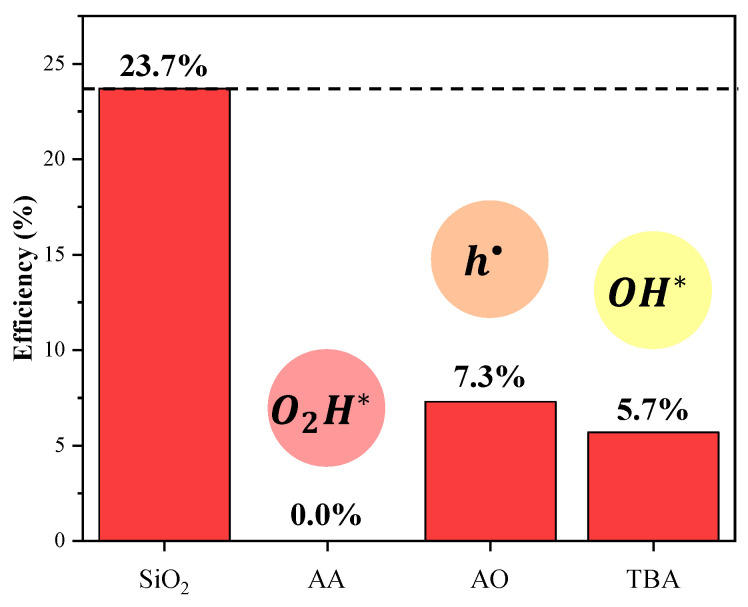
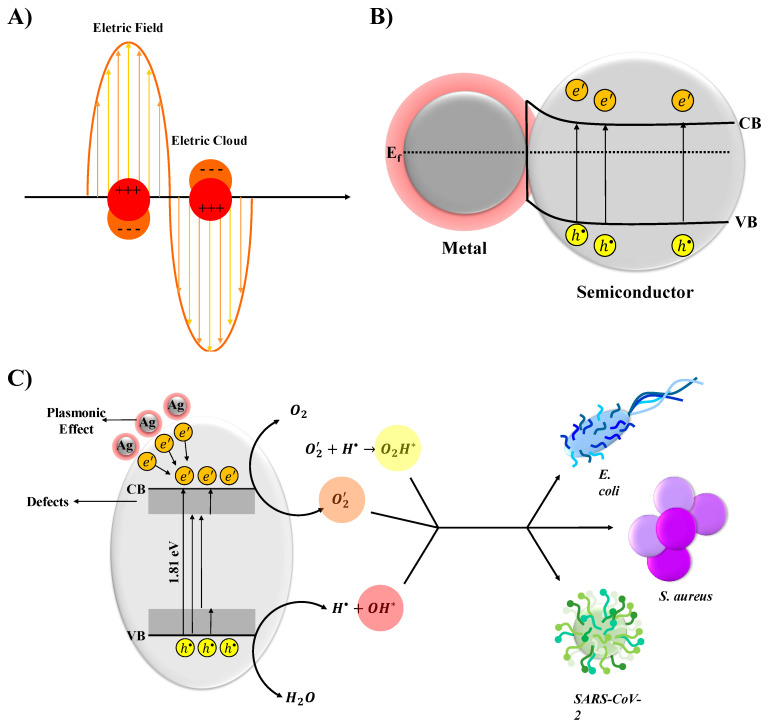
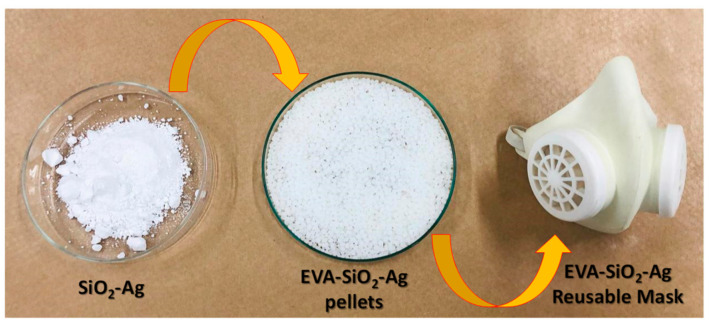
COVID-19, as the cause of a global pandemic, has resulted in lockdowns all over the world since early 2020. Both theoretical and experimental efforts are being made to find an effective treatment to suppress the virus, constituting the forefront of current global safety concerns and a significant burden on global economies. The development of innovative materials able to prevent the transmission, spread, and entry of COVID-19 pathogens into the human body is currently in the spotlight. The synthesis of these materials is, therefore, gaining momentum, as methods providing nontoxic and environmentally friendly procedures are in high demand. Here, a highly virucidal material constructed from SiO2-Ag composite immobilized in a polymeric matrix (ethyl vinyl acetate) is presented. The experimental results indicated that the as-fabricated samples exhibited high antibacterial activity towards Escherichia coli (E. coli) and Staphylococcus aureus (S. aureus) as well as towards SARS-CoV-2. Based on the present results and radical scavenger experiments, we propose a possible mechanism to explain the enhancement of the biocidal activity. In the presence of O2 and H2O, the plasmon-assisted surface mechanism is the major reaction channel generating reactive oxygen species (ROS). We believe that the present strategy based on the plasmonic effect would be a significant contribution to the design and preparation of efficient biocidal materials. This fundamental research is a precedent for the design and application of adequate technology to the next-generation of antiviral surfaces to combat SARS-CoV-2.
Keywords: COVID-19; SiO2-Ag composite; antiviral surfaces; ethyl vinyl acetate; surface plasmon resonance effect; virus elimination.
Conflict of interest statement
The authors declare no conflict of interest.
Figures
References
-
- World Health Organization . Infection Prevention and Control during Health Care when Novel Coronavirus (nCoV) Infection is Suspected—Interim Guidance. WHO; Geneva, Switzerland: 2020.
Grants and funding
- FAPESP CEPID-finance code 2013/07296-2, FAPESP/SHELL- finance code 2017/11986-5 487 and PIPE-finance codes 15/50113-3 and 11/51084-4/Fundação de Amparo à Pesquisa do Estado de São Paulo
- finance code 03/2013 Ref. 0555/13/Financiadora de Estudos e Projetos
- finance code 166281/2017-4/Conselho Nacional de Desenvolvimento Cientifico e Tecnológico
- finance code 001/Coordenação de Aperfeiçoamento de Pessoal de Nível Superior
- project UJI-B2019-30/Universitat Jaume I
LinkOut - more resources
Full Text Sources
Other Literature Sources
Miscellaneous
