


Antibiotic Resistant Bloodstream Infections in Pediatric Patients Receiving Chemotherapy or Hematopoietic Stem Cell Transplant: Factors Associated with Development of Resistance, Intensive Care Admission and Mortality
- PMID: 33807654
- PMCID: PMC8000765
- DOI: 10.3390/antibiotics10030266
Antibiotic Resistant Bloodstream Infections in Pediatric Patients Receiving Chemotherapy or Hematopoietic Stem Cell Transplant: Factors Associated with Development of Resistance, Intensive Care Admission and Mortality
Abstract
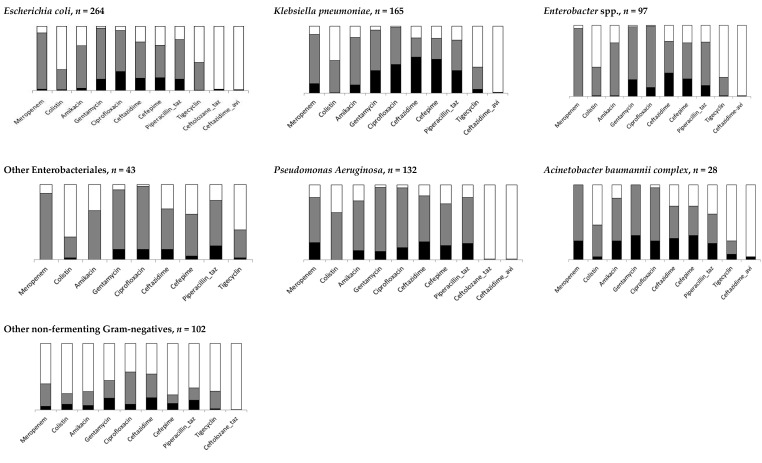
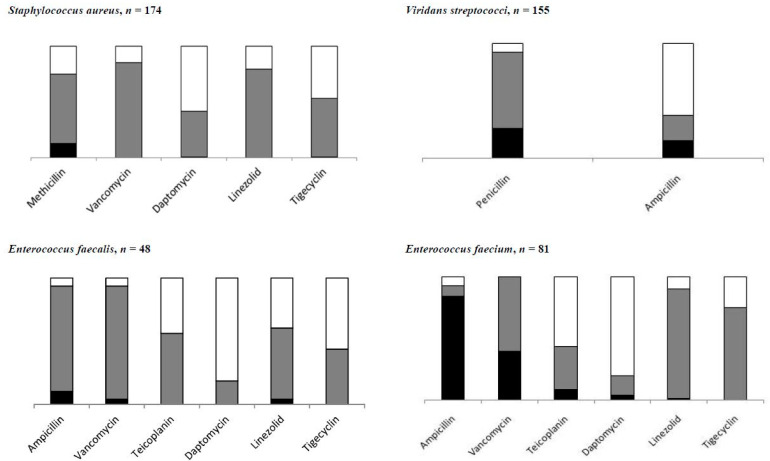
Bloodstream infections (BSI) are a severe complication of antineoplastic chemotherapy or hematopoietic stem cell transplantation (HSCT), especially in the presence of antibiotic resistance (AR). A multinational, multicenter retrospective study in patients aged ≤ 18 years, treated with chemotherapy or HSCT from 2015 to 2017 was implemented to analyze AR among non-common skin commensals BSI. Risk factors associated with AR, intensive care unit (ICU) admission and mortality were analyzed by multilevel mixed effects or standard logistic regressions. A total of 1291 BSIs with 1379 strains were reported in 1031 patients. Among Gram-negatives more than 20% were resistant to ceftazidime, cefepime, piperacillin-tazobactam and ciprofloxacin while 9% was resistant to meropenem. Methicillin-resistance was observed in 17% of S. aureus and vancomycin resistance in 40% of E. faecium. Previous exposure to antibiotics, especially to carbapenems, was significantly associated with resistant Gram-negative BSI while previous colonization with methicillin-resistant S. aureus was associated with BSI due to this pathogen. Hematological malignancies, neutropenia and Gram-negatives resistant to >3 antibiotics were significantly associated with higher risk of ICU admission. Underlying disease in relapse/progression, previous exposure to antibiotics, and need of ICU admission were significantly associated with mortality. Center-level variation showed a greater impact on AR, while patient-level variation had more effect on ICU admission and mortality. Previous exposure to antibiotics or colonization by resistant pathogens can be the cause of AR BSI. Resistant Gram-negatives are significantly associated with ICU admission and mortality, with a significant role for the treating center too. The significant evidence of center-level variations on AR, ICU admission and mortality, stress the need for careful local antibiotic stewardship and infection control programs.
Keywords: allogeneic stem cell transplant; antibiotic resistance; bloodstream infections; chemotherapy; intensive care admission and mortality; pediatric patients.
Conflict of interest statement
Authors have no conflict of interest to declare for the present study.
Figures
References
-
- Robinson P.D., Lehrnbecher T., Phillips R., Dupuis L.L., Sung L. Strategies for Empiric Management of Pediatric Fever and Neutropenia in Patients with Cancer and Hematopoietic Stem-Cell Transplantation Recipients: A Systematic Review of Randomized Trials. J. Clin. Oncol. 2016;34:2054–2060. doi: 10.1200/JCO.2015.65.8591. - DOI - PubMed
-
- Lehrnbecher T., Robinson P., Fisher B., Alexander S., Ammann R.A., Beauchemin M., Carlesse F., Groll A.H., Haeusler G.M., Santolaya M., et al. Guideline for the Management of Fever and Neutropenia in Children with Cancer and Hematopoietic Stem-Cell Transplantation Recipients: 2017 Update. J. Clin. Oncol. 2017;35:2082–2094. doi: 10.1200/JCO.2016.71.7017. - DOI - PubMed
-
- Castagnola E., Caviglia I., Pescetto L., Bagnasco F., Haupt R., Bandettini R. Antibiotic susceptibility of Gram-negatives isolated from bacteremia in children with cancer. Implications for empirical therapy of febrile neutropenia. Futur. Microbiol. 2015;10:357–365. doi: 10.2217/fmb.14.144. - DOI - PubMed
LinkOut - more resources
Full Text Sources
Other Literature Sources
Research Materials
