


Recent Updates of Diagnosis, Pathophysiology, and Treatment on Osteoarthritis of the Knee
- PMID: 33807695
- PMCID: PMC7961389
- DOI: 10.3390/ijms22052619
Recent Updates of Diagnosis, Pathophysiology, and Treatment on Osteoarthritis of the Knee
Abstract
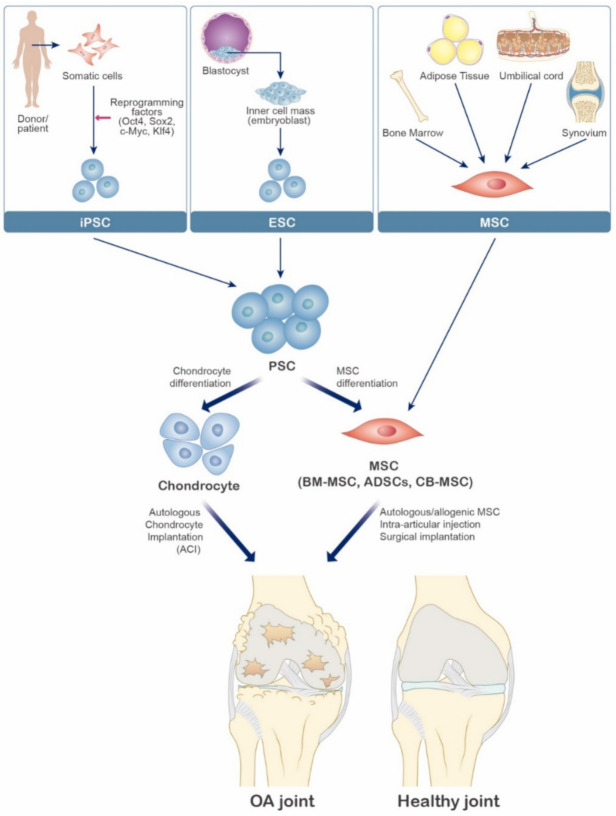
Osteoarthritis (OA) is a degenerative and chronic joint disease characterized by clinical symptoms and distortion of joint tissues. It primarily damages joint cartilage, causing pain, swelling, and stiffness around the joint. It is the major cause of disability and pain. The prevalence of OA is expected to increase gradually with the aging population and increasing prevalence of obesity. Many potential therapeutic advances have been made in recent years due to the improved understanding of the underlying mechanisms, diagnosis, and management of OA. Embryonic stem cells and induced pluripotent stem cells differentiate into chondrocytes or mesenchymal stem cells (MSCs) and can be used as a source of injectable treatments in the OA joint cavity. MSCs are known to be the most studied cell therapy products in cell-based OA therapy owing to their ability to differentiate into chondrocytes and their immunomodulatory properties. They have the potential to improve cartilage recovery and ultimately restore healthy joints. However, despite currently available therapies and advances in research, unfulfilled medical needs persist for OA treatment. In this review, we focused on the contents of non-cellular and cellular therapies for OA, and briefly summarized the results of clinical trials for cell-based OA therapy to lay a solid application basis for clinical research.
Keywords: cell therapy; diagnosis; embryonic stem cells; induced pluripotent stem cells; management; mesenchymal stem cells; osteoarthritis; surgery.
Conflict of interest statement
The authors declare no conflict of interest.
Figures
References
-
- Kellgren J.H., Jeffrey M.R., Ball J. The Epidemiology of Chronic Rheumatism: A Symposium. Blackwell Scientific Publications; Oxford, UK: 1963.
-
- Hannan M.T., Felson D.T., Pincus T. Analysis of the discordance between radiographic changes and knee pain in osteoarthritis of the knee. J. Rheumatol. 2000;27:1513–1517. - PubMed
-
- Rubin B.R. Management of osteoarthritic knee pain. J. Am. Osteopath. Assoc. 2005;105:S23–S28. - PubMed
Publication types
MeSH terms
Grants and funding
LinkOut - more resources
Full Text Sources
Other Literature Sources
Medical
