Review
. 2021 Mar 5;14(5):1240.
doi: 10.3390/ma14051240.

A Review on Multiscale Bone Damage: From the Clinical to the Research Perspective

Affiliations
Review

A Review on Multiscale Bone Damage: From the Clinical to the Research Perspective

Federica Buccino et al. Materials (Basel). .

Abstract

The investigation of bone damage processes is a crucial point to understand the mechanisms of age-related bone fractures. In order to reduce their impact, early diagnosis is key. The intricate architecture of bone and the complexity of multiscale damage processes make fracture prediction an ambitious goal. This review, supported by a detailed analysis of bone damage physical principles, aims at presenting a critical overview of how multiscale imaging techniques could be used to implement reliable and validated numerical tools for the study and prediction of bone fractures. While macro- and meso-scale imaging find applications in clinical practice, micro- and nano-scale imaging are commonly used only for research purposes, with the objective to extract fragility indexes. Those images are used as a source for multiscale computational damage models. As an example, micro-computed tomography (micro-CT) images in combination with micro-finite element models could shed some light on the comprehension of the interaction between micro-cracks and micro-scale bone features. As future insights, the actual state of technology suggests that these models could be a potential substitute for invasive clinical practice for the prediction of age-related bone fractures. However, the translation to clinical practice requires experimental validation, which is still in progress.

Keywords: age-related bone fractures; bone damage; computational models; experimental validation; multiscale imaging.


Conflict of interest statement

The authors declare no conflict of interest.

Figures
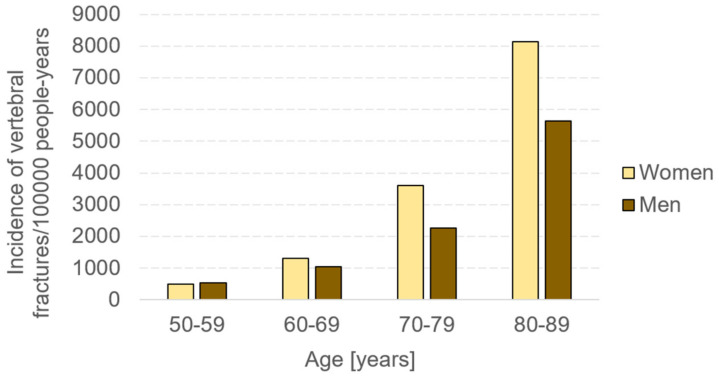
Figure 1
Figure 1
Incidence of vertebral fractures in Minnesota in years 2009–2010. The trend shows higher values for women >60 years old [5].
Figure 2
Figure 2
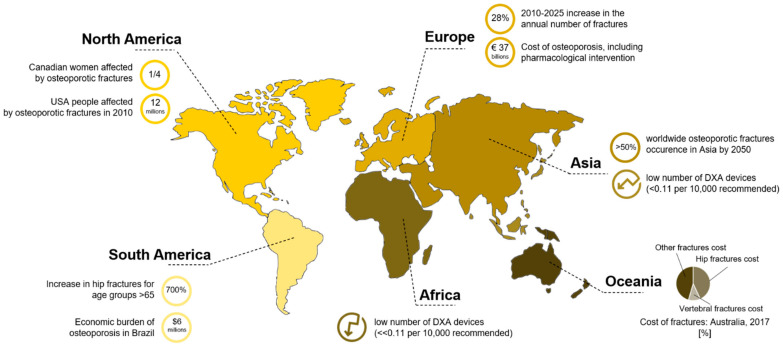
Infographic of the impact of osteoporotic fractures in the world. Australia: [9]. Rest of the world: [10]. DXA: dual X-ray absorptiometry.
Figure 3
Figure 3
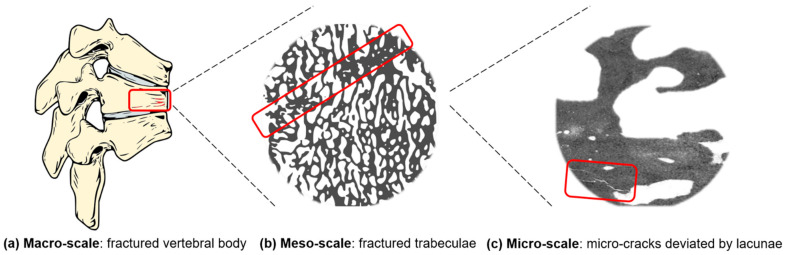
Schematic representation of the multiscale fracture mechanism (rectangular boxes). The macro-scale (a) is represented by a fractured vertebral body due to bone loss that amplifies the spine curvature. At the meso-scale (b), the fractured trabeculae are visible. At the micro-scale (c), the micro-crack starts from porosities and is deviated by the presence of the lacunae.
Figure 4
Figure 4
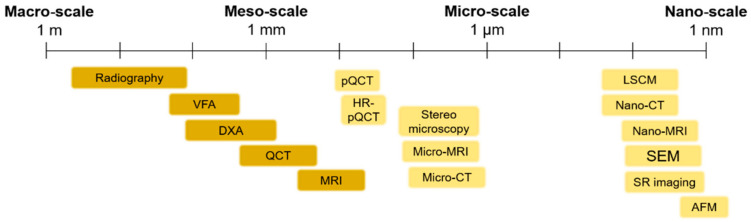
An overview of the main imaging techniques to assess bone damage at different scales. Macro- and meso-scale techniques are depicted in a darker color, while micro- and nano-scale imaging techniques are represented in a brighter color. VFA: Vertebral Fracture Assessment; QCT: Quantitative Computed Tomography; MRI: Magnetic Resonance Imaging; pQCT: peripheral Quantitative Computed Tomography; Micro-CT: Micro Computed Tomography; LSCM: Laser Scanning Confocal Microscopy; SEM: Scanning Electron Microscopy; SR imaging: Synchrotron Radiation imaging; AFM: Atomic Force Microscopy.
Figure 5
Figure 5
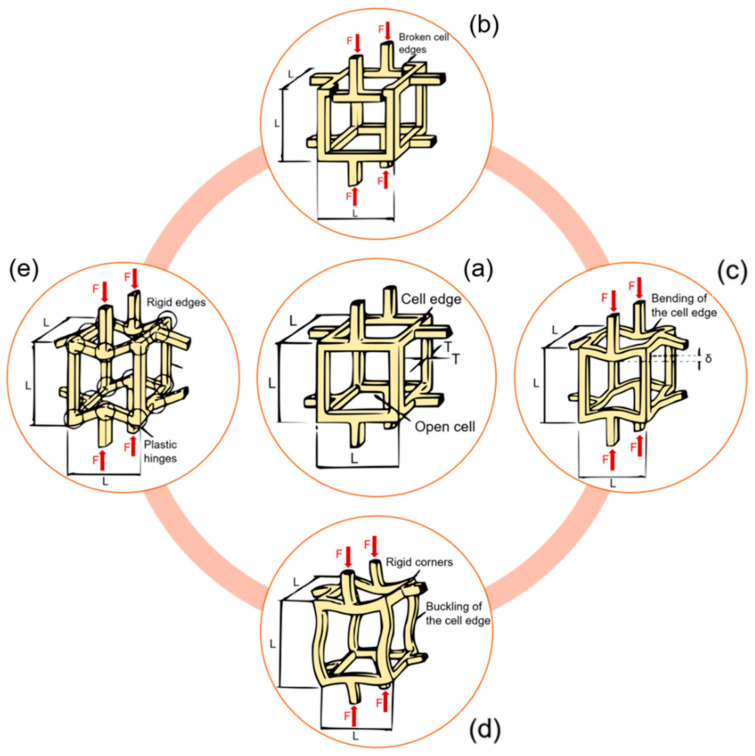
Different meso-scale failure modes of a trabecular network. (a) An unloaded trabecular cell. (b) Brittle crushing. (c) Bending of horizontal rods, compression of vertical rods. (d) Buckling of vertical rods, bending of horizontal rods. (e) Plastic yielding. Readapted from [68].
Figure 6
Figure 6
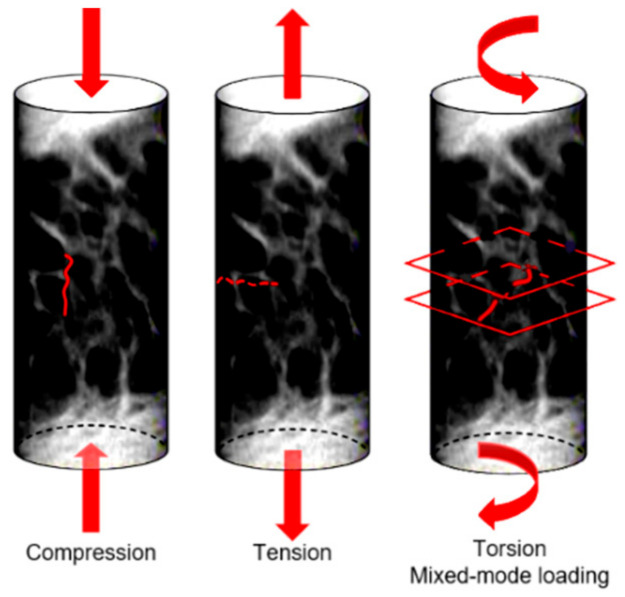
Orientation of micro-cracks in a bone sample subjected to different loading conditions.
Figure 7
Figure 7
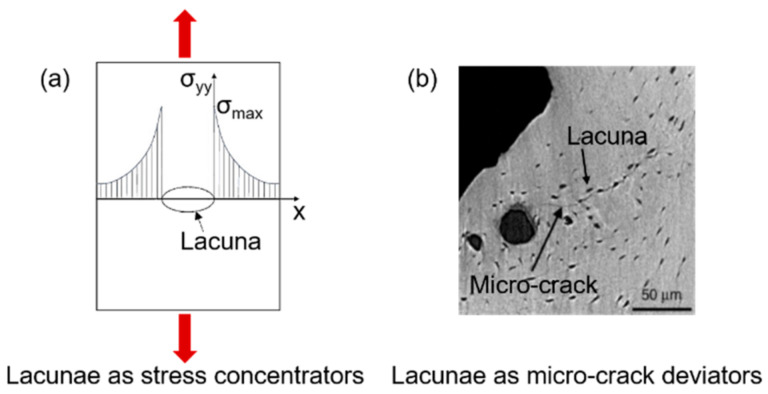
The dual effect of the lacunar system on microdamage: lacunae as sites for crack initiation (a) and lacunae as micro-crack deviators (b); (b) is adapted from [72].
Figure 8
Figure 8
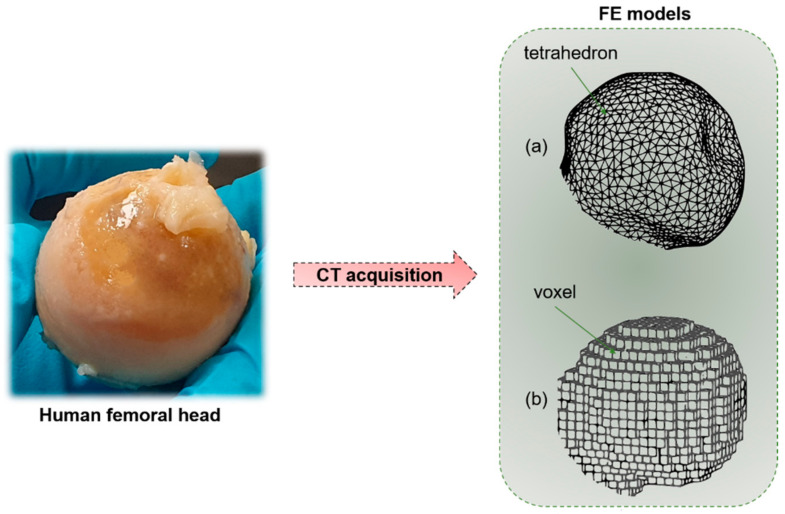
Starting from a human bone (e.g., femoral head), by means of CT acquisition, it is possible to obtain a macro-scale finite element (FE) model of the sample. (a) Geometry-based FE models with tetrahedral elements. (b) Voxel-based FE model with hexahedral elements.
Figure 9
Figure 9
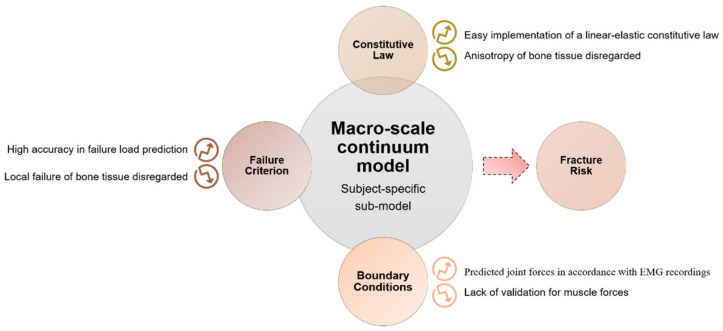
Scheme for the implementation of a whole-bone model. Results, potentialities and limitations are highlighted for each step. EMG: Electromyography.
Figure 10
Figure 10
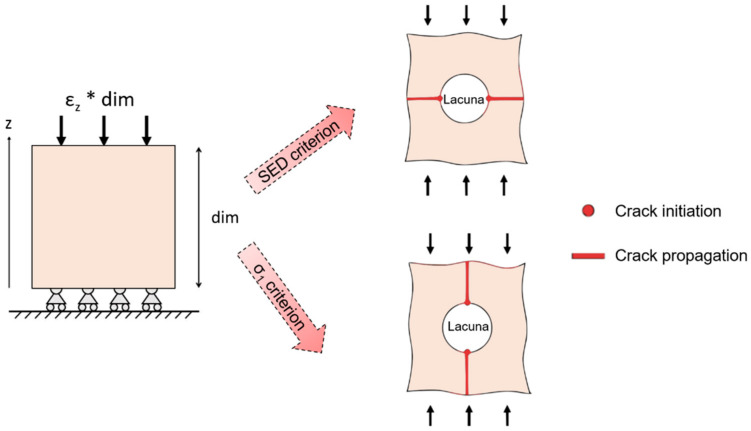
Schematic output of models of a bone sample with a lacuna subjected to compression. Crack initiation (dots) and crack propagation (lines) are highlighted, according to strain energy density (SED) damage criterion and to σ1 criterion.
Figure 11
Figure 11
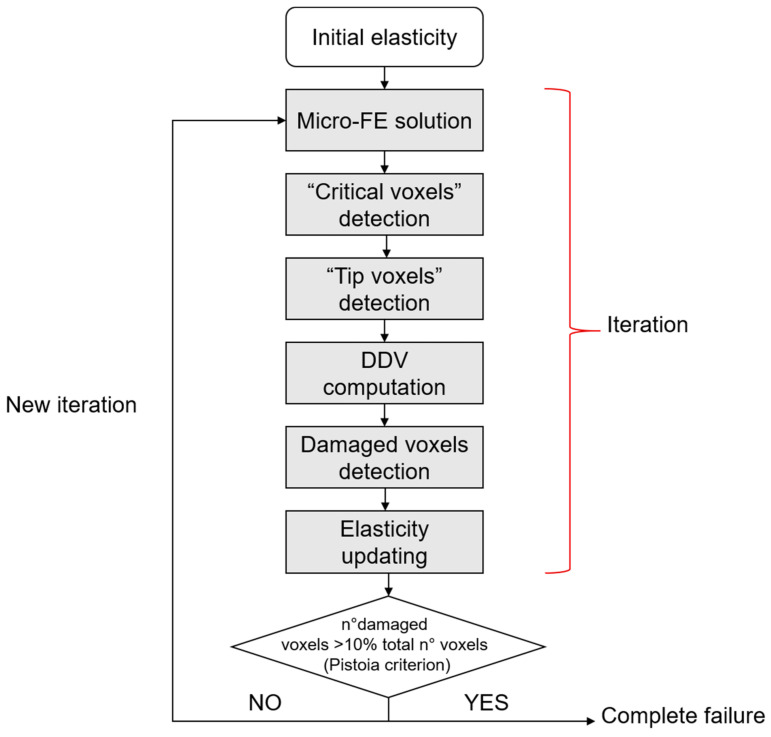
Stress gradient algorithm. “Critical voxels” are the voxels that exceed a defined stress threshold. “Tip voxels” are the center of the spherical sensation region of the osteocytes and are eligible sites for damage propagation. In the stress gradient algorithm, a key role is played by the deletion direction vector (DDV), that indicates a direction for crack propagation. The iteration stops when the total failure of the sample is reached, according to the Pistoia criterion [109].
Figure 12
Figure 12
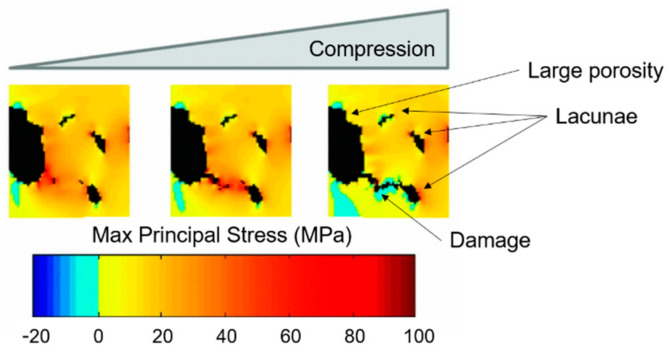
Stress gradient algorithm (on SR CT data from a cortical bone sample) results: damage starts from big porosities and its propagation follows the stress gradient. Micro-damage is deviated by the presence of lacunae. Readapted from [111].

References

    1. Burge R., Dawson-Hughes B., Solomon D.H., Wong J.B., King A., Tosteson A. Incidence and Economic Burden of Osteoporosis-Related Fractures in the United States, 2005–2025. J. Bone Miner. Res. 2007;22:465–475. doi: 10.1359/jbmr.061113. - DOI - PubMed
    1. Zioupos P., Kirchner H.O.K., Peterlik H. Ageing bone fractures: The case of a ductile to brittle transition that shifts with age. Bone. 2020;131 doi: 10.1016/j.bone.2019.115176. - DOI - PubMed
    1. Wani I.M., Arora S. Computer-aided diagnosis systems for osteoporosis detection: A comprehensive survey. Med. Biol. Eng. Comput. 2020;58:1873–1917. doi: 10.1007/s11517-020-02171-3. - DOI - PubMed
    1. Harvey N., Dennison E., Cooper C. Osteoporosis: Impact on health and economics. Nat. Rev. Rheumatol. 2010;6:99–105. doi: 10.1038/nrrheum.2009.260. - DOI - PubMed
    1. Amin S., Achenbach S.J., Atkinson E.J., Khosla S., Melton L.J. Trends in Fracture Incidence: A Population-Based Study over 20 Years. J. Bone Miner. Res. 2014;29:581–589. doi: 10.1002/jbmr.2072. - DOI - PMC - PubMed

LinkOut - more resources