


Human Skin Microbiome: Impact of Intrinsic and Extrinsic Factors on Skin Microbiota
- PMID: 33808031
- PMCID: PMC7998121
- DOI: 10.3390/microorganisms9030543
Human Skin Microbiome: Impact of Intrinsic and Extrinsic Factors on Skin Microbiota
Abstract
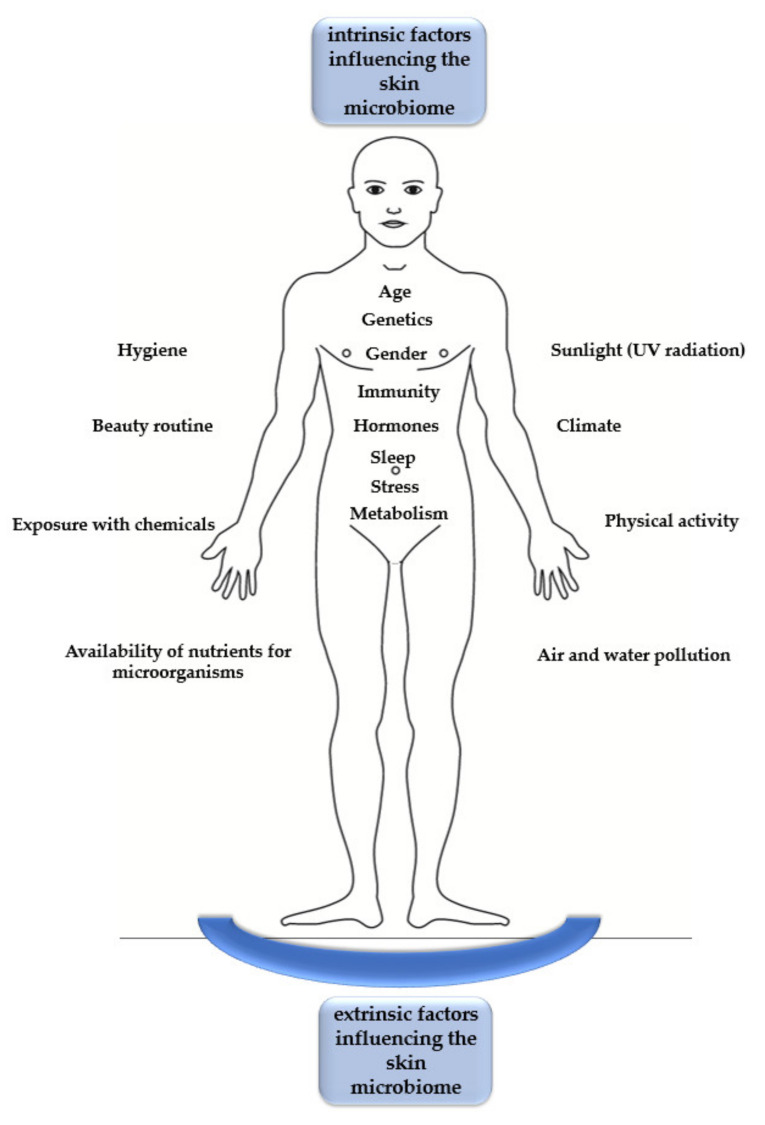
The skin is the largest organ of the human body and it protects the body from the external environment. It has become the topic of interest of researchers from various scientific fields. Microorganisms ensure the proper functioning of the skin. Of great importance, are the mutual relations between such microorganisms and their responses to environmental impacts, as dysbiosis may contribute to serious skin diseases. Molecular methods, used for microorganism identification, allow us to gain a better understanding of the skin microbiome. The presented article contains the latest reports on the skin microbiota in health and disease. The review discusses the relationship between a properly functioning microbiome and the body's immune system, as well as the impact of internal and external factors on the human skin microbiome.
Keywords: disinfection; external factors; internal factors; microbiome; skin.
Conflict of interest statement
The authors declare no conflict of interest.
Figures
References
-
- Malinowska M., Tokarz-Deptuła B., Deptuła W. Mikrobiom człowieka. Post. Mikrobiol. 2017;56:33–42.
Publication types
LinkOut - more resources
Full Text Sources
Other Literature Sources
