


Recent Advances in Nanotechnology with Nano-Phytochemicals: Molecular Mechanisms and Clinical Implications in Cancer Progression
- PMID: 33808235
- PMCID: PMC8036762
- DOI: 10.3390/ijms22073571
Recent Advances in Nanotechnology with Nano-Phytochemicals: Molecular Mechanisms and Clinical Implications in Cancer Progression
Abstract
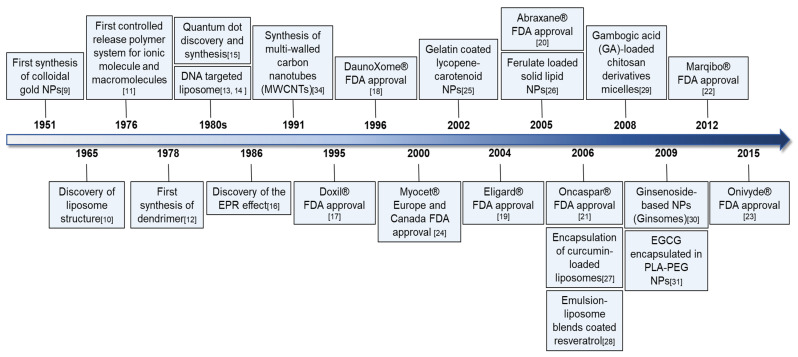
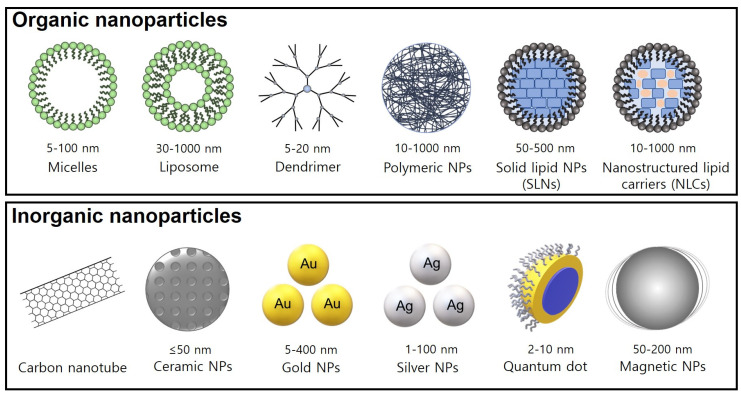
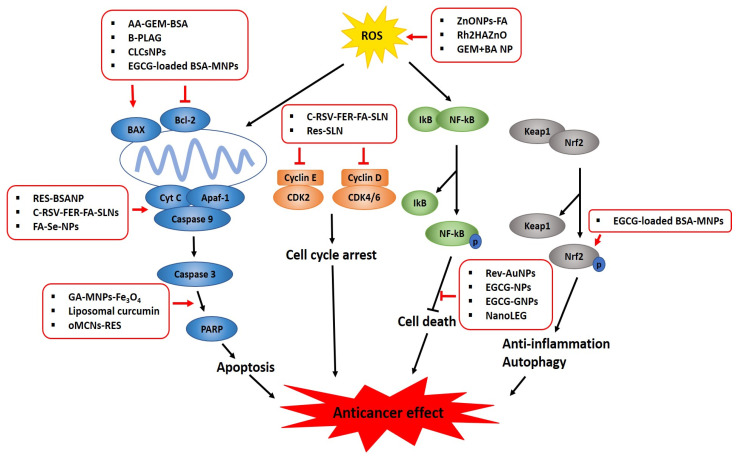
Biocompatible nanoparticles (NPs) containing polymers, lipids (liposomes and micelles), dendrimers, ferritin, carbon nanotubes, quantum dots, ceramic, magnetic materials, and gold/silver have contributed to imaging diagnosis and targeted cancer therapy. However, only some NP drugs, including Doxil® (liposome-encapsulated doxorubicin), Abraxane® (albumin-bound paclitaxel), and Oncaspar® (PEG-Asparaginase), have emerged on the pharmaceutical market to date. By contrast, several phytochemicals that were found to be effective in cultured cancer cells and animal studies have not shown significant efficacy in humans due to poor bioavailability and absorption, rapid clearance, resistance, and toxicity. Research to overcome these drawbacks by using phytochemical NPs remains in the early stages of clinical translation. Thus, in the current review, we discuss the progress in nanotechnology, research milestones, the molecular mechanisms of phytochemicals encapsulated in NPs, and clinical implications. Several challenges that must be overcome and future research perspectives are also described.
Keywords: cancer progression; clinical implications; nano-phytochemicals; nanoparticles; research milestones.
Conflict of interest statement
The authors declare that they have no competing interests.
Figures
References
-
- Kalyane D., Raval N., Maheshwari R., Tambe V., Kalia K., Tekade R.K. Employment of enhanced permeability and retention effect (EPR): Nanoparticle-based precision tools for targeting of therapeutic and diagnostic agent in cancer. Mater. Sci. Eng. C Mater. Biol. Appl. 2019;98:1252–1276. doi: 10.1016/j.msec.2019.01.066. - DOI - PubMed
Publication types
MeSH terms
Substances
Grants and funding
LinkOut - more resources
Full Text Sources
Other Literature Sources
Medical
Miscellaneous
