


Frailty Status and Polypharmacy Predict All-Cause Mortality in Community Dwelling Older Adults in Europe
- PMID: 33808273
- PMCID: PMC8036295
- DOI: 10.3390/ijerph18073580
Frailty Status and Polypharmacy Predict All-Cause Mortality in Community Dwelling Older Adults in Europe
Abstract
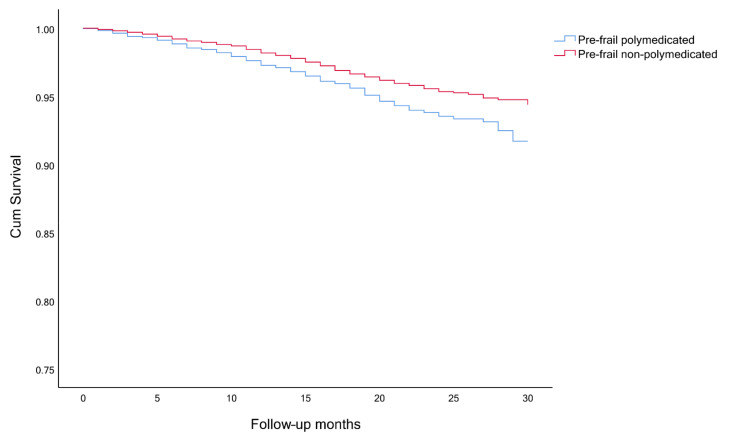
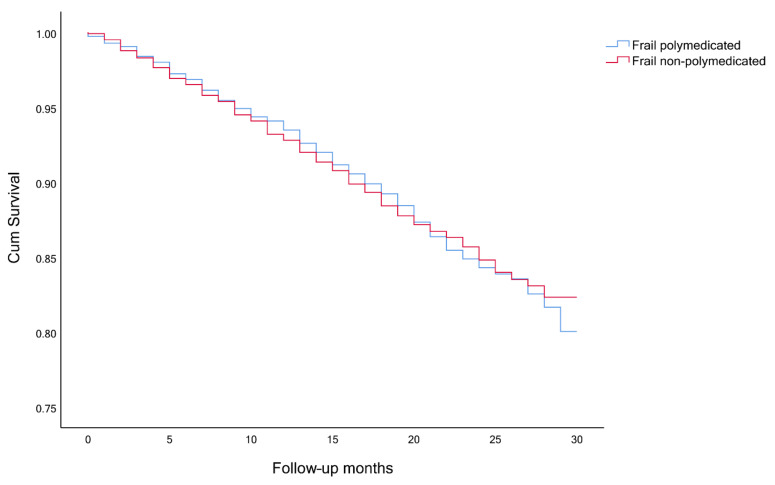
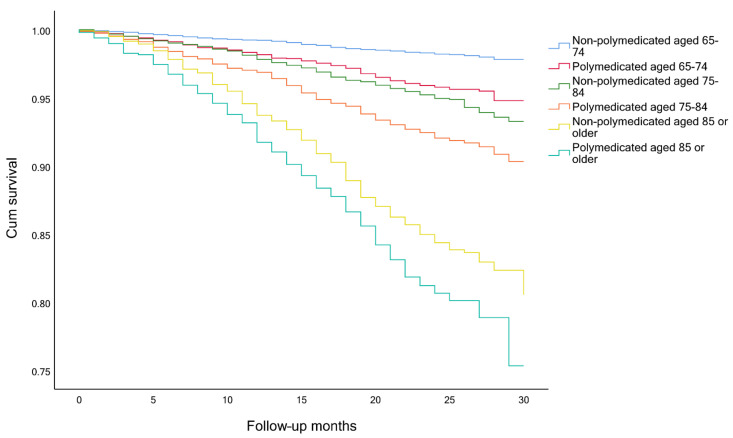
European population ageing is associated with frailty, a complex geriatric syndrome, and polypharmacy, both resulting in adverse health outcomes. In this study we aimed to evaluate the impact of frailty and polypharmacy, on mortality rates, within 30 months, using a cohort of SHARE participants aged 65 years old or more. Frailty was assessed using a version of Fried's phenotype criteria operationalized to SHARE while polypharmacy was defined as taking five or more drugs per day. We found a prevalence of 40.4% non-frail, 47.3% pre-frail and 12.3% frail participants. Moreover, a prevalence of polypharmacy of 31.3% was observed, being 3 three times more prevalent in frail individuals and two times in pre-frail individuals, when compared with non-frail. Individuals with both conditions had shown higher mortality rates. Comparing with non-polymedicated non-frail individuals all the other conditions are more prone to die within 30 months. Polymedicated older and male participants exhibited also higher mortality rates. This work shows polypharmacy and frailty to be associated with a higher risk of all-cause of mortality and highlights the need to decrease 'unnecessary' polypharmacy to reduce drug-related issues and also the need to assess frailty early to prevent avoidable adverse outcomes.
Keywords: 30 months follow-up; all-cause mortality; follow-up; frailty; polypharmacy.
Conflict of interest statement
The authors declare no conflict of interest.
Figures


References
-
- Eurostat . Ageing Europe—Looking at the Lives of Older People in EU. European Commision; Luxembourg: 2019.
Publication types
MeSH terms
LinkOut - more resources
Full Text Sources
Other Literature Sources
