


The Influence of Parental Dietary Behaviors and Practices on Children's Eating Habits
- PMID: 33808337
- PMCID: PMC8067332
- DOI: 10.3390/nu13041138
The Influence of Parental Dietary Behaviors and Practices on Children's Eating Habits
Abstract
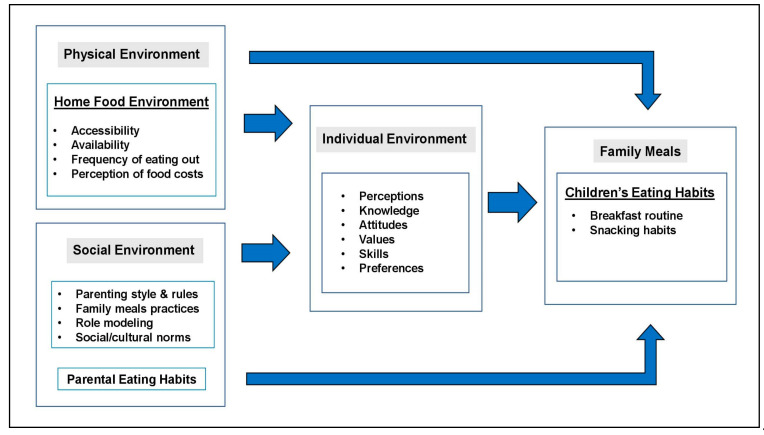
Poor dietary habits established during childhood might persist into adulthood, increasing the risk of developing obesity and obesity-related complications such as Type 2 Diabetes Mellitus. It has been found that early modifications in eating habits, especially during childhood, might promote health and decrease the risk of developing diseases during later life. Various studies found a great influence of parental dietary habits on dietary behaviors of their children regardless of demographic characteristics such as gender, age, socioeconomic status and country; however, the exact mechanism is still not clear. Therefore, in this review, we aimed to investigate both parents' and children's dietary behaviors, and to provide evidence for the potential influence of parents' dietary behaviors and practices on certain children's eating habits. Family meals were found to contribute the most in modeling children's dietary habits as they represent an important moment of control and interaction between parents and their children. The parental practices that influenced their children most were role modeling and moderate restriction, suggesting that the increase of parental encouragement and decrease of excessive pressure could have a positive impact in their children's dietary behaviors. This narrative review highlights that parental child-feeding behaviors should receive more attention in research studies as modifiable risk factors, which could help to design future dietary interventions and policies to prevent dietary-related diseases.
Keywords: breakfast; children; dietary intake; family meals; feeding practices; parents; snacking habits.
Conflict of interest statement
The authors declare no conflict of interest.
Figures
References
-
- ESPGHAN Committee on Nutrition. Agostoni C., Braegger C., Decsi T., Kolacek S., Koletzko B., Michaelsen K.F., Mihatsch W., Moreno L.A., Puntis J., et al. Breast-feeding: A commentary by the ESPGHAN Committee on Nutrition. J. Pediatr. Gastroenterol. Nutr. 2009;49:112–125. doi: 10.1097/MPG.0b013e31819f1e05. - DOI - PubMed
Publication types
MeSH terms
LinkOut - more resources
Full Text Sources
Other Literature Sources
Medical
