


Feasibility of Implementing a Tai Chi Program in an Assisted Living Facility: Reducing Fall Risks and Improving Quality of Life
- PMID: 33808636
- PMCID: PMC8003394
- DOI: 10.3390/jcm10061277
Feasibility of Implementing a Tai Chi Program in an Assisted Living Facility: Reducing Fall Risks and Improving Quality of Life
Abstract
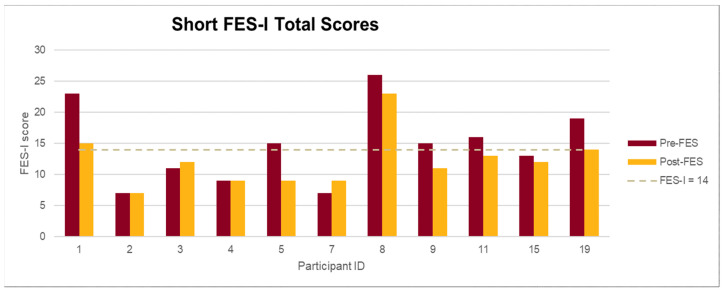
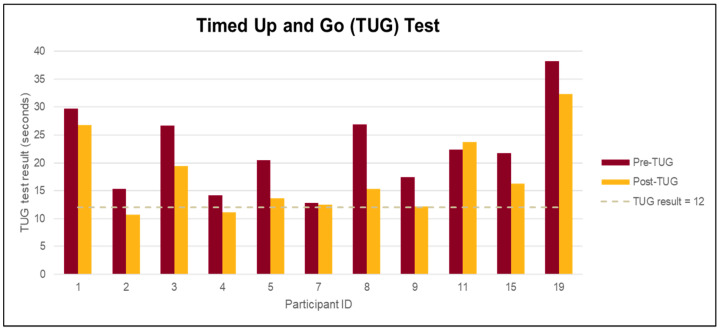
One in four American older adults fall every year, resulting in injuries, death, and significant financial burden. Although fall etiology is multifactorial, the medical problems and aging factors that lead to unsteady gait and imbalance represent one of the major fall risks among older adults. A growing number of research studies support the health benefits of regular Tai Chi (TC) practice including improved physical, cognitive, and psychological function. The purpose of this quality improvement project was to assess the feasibility of establishing a 12-week (45 min per session) Tai Chi (TC) program (Sun Style Tai Chi) in a 75 bed assisted living facility as well as to evaluate the potential of the TC program to improve the fear of falling and functional mobility (as proxy for fall risk) and quality of life (QoL). A nurse who was a certified TC instructor taught the program. Twenty-three participants, 96% female and 96% white, mean (SD) age 83 (±7) years, attended one or more TC classes. Class attendance, self-reported questionnaires (e.g., fear of falling, QoL), and objective measure Timed Up and Go (TUG) were used to collect data. Nine participants (39%) completed 9 out of 12 sessions. Eleven participants (48%) completed both pre- and post-intervention measurements and twelve (52%) provided feedback on a post-intervention satisfaction survey. Participants showed 20% improvement in fear of falling (mean relative change) and 21% decrease (mean relative change) in TUG test (p = 0.001) with no clinically important changes in QoL. This quality improvement project suggested that TC is a feasible exercise that might have the potential to reduce risk of falls in older adults, and the program was well accepted with no serious or other adverse events reported. Further research studies are needed to examine the potential effects of TC programs with an appropriately powered RCT and longer intervention period.
Keywords: Tai Chi Chuan; Tai-ji; aged; falls; functional status; movement; older adults; postural balance.
Conflict of interest statement
The authors declare that they have no competing interests.
Figures
References
-
- Centers for Disease Control and Prevention [(accessed on 22 December 2020)];Important Facts about Falls. 2017 Available online: https://www.cdc.gov/homeandrecreationalsafety/falls/adultfalls.html.
-
- Kendrick D., Kumar A., Carpenter H., Zijlstra G.A.R., Skelton D.A., Cook J.R., Stevens Z., Belcher C.M., Haworth D., Gawler S.J., et al. Exercise for reducing fear of falling in older people living in the community (review) Cochrane Database Syst. Rev. 2014;2014:CD009848. doi: 10.1002/14651858.CD009848.pub2. - DOI - PMC - PubMed
LinkOut - more resources
Full Text Sources
Other Literature Sources
