. 2021 Mar 19;22(6):3142.
doi: 10.3390/ijms22063142.

Stem Cell Therapy for Neonatal Hypoxic-Ischemic Encephalopathy: A Systematic Review of Preclinical Studies

Affiliations

Stem Cell Therapy for Neonatal Hypoxic-Ischemic Encephalopathy: A Systematic Review of Preclinical Studies

Inês Serrenho et al. Int J Mol Sci. .

Abstract

Neonatal hypoxic-ischemic encephalopathy (HIE) is an important cause of mortality and morbidity in the perinatal period. This condition results from a period of ischemia and hypoxia to the brain of neonates, leading to several disorders that profoundly affect the daily life of patients and their families. Currently, therapeutic hypothermia (TH) is the standard of care in developing countries; however, TH is not always effective, especially in severe cases of HIE. Addressing this concern, several preclinical studies assessed the potential of stem cell therapy (SCT) for HIE. With this systematic review, we gathered information included in 58 preclinical studies from the last decade, focusing on the ones using stem cells isolated from the umbilical cord blood, umbilical cord tissue, placenta, and bone marrow. Outstandingly, about 80% of these studies reported a significant improvement of cognitive and/or sensorimotor function, as well as decreased brain damage. These results show the potential of SCT for HIE and the possibility of this therapy, in combination with TH, becoming the next therapeutic approach for HIE. Nonetheless, few preclinical studies assessed the combination of TH and SCT for HIE, and the existent studies show some contradictory results, revealing the need to further explore this line of research.

Keywords: hypoxic-ischemic encephalopathy; mesenchymal stem/stromal cells; stem cell therapy; therapeutic hypothermia; umbilical cord blood cells; umbilical cord tissue.


Conflict of interest statement

The authors declare no conflict of interest.

Figures
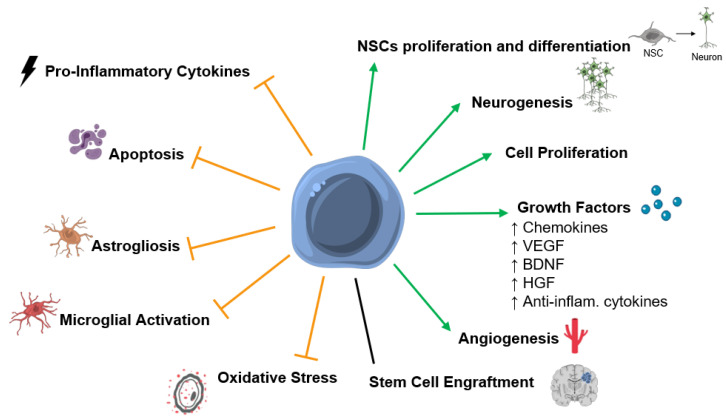
Figure 1
Figure 1
Mechanisms of action of stem cells identified by the preclinical studies included in this systematic review. Several mechanisms of action that might be mediating the positive functional outcomes observed after SCT in preclinical models of neonatal hypoxic-ischemic encephalopathy (HIE). Stem cell therapy (SCT) was associated with the promotion or upregulation (green arrows) of neuronal stem cells (NSCs) proliferation and differentiation, neurogenesis, cell proliferation, growth factors levels/secretion, angiogenesis, and inhibition or downregulation (orange truncated arrows) of pro-inflammatory cytokines, apoptosis, astrogliosis, microglial activation, and oxidative stress. Also, some studies report stem cell engrafment after SCT, while other report low or no engrafment. Abbreviations: Anti-inflam—anti-inflammatory; BDNF—brain-derived neurotrophic factor; HGF—hepatocyte growth factor; VEGF—vascular endothelial growth factor.
Figure 2
Figure 2
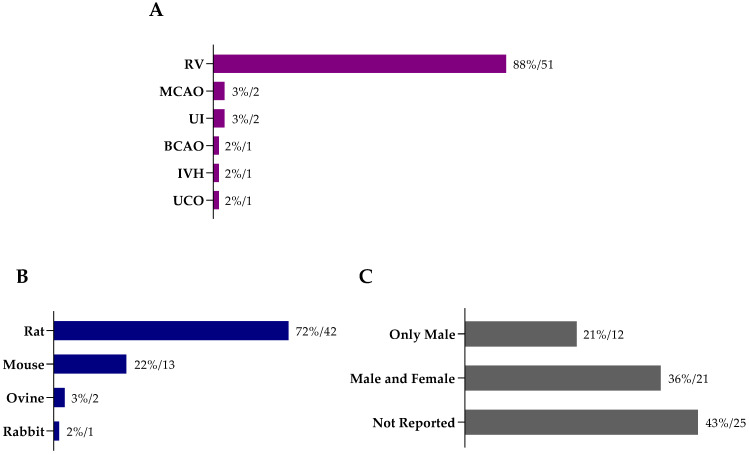
(A) Animal models used to induce hypoxic-ischemic encephalopathy in the studies included in this systematic review, as well as the employed (B) species and (C) animals’ sex across the different studies (percentage/number of reports). Abbreviations: BCAO—bilateral carotid artery occlusion; IVH—intraventricular hemorrhage; RV—Rice–Vannucci animal model (or adaptation); MCAO—middle cerebral artery occlusion; UCO—umbilical cord occlusion; UI—uterine ischemia.
Figure 3
Figure 3
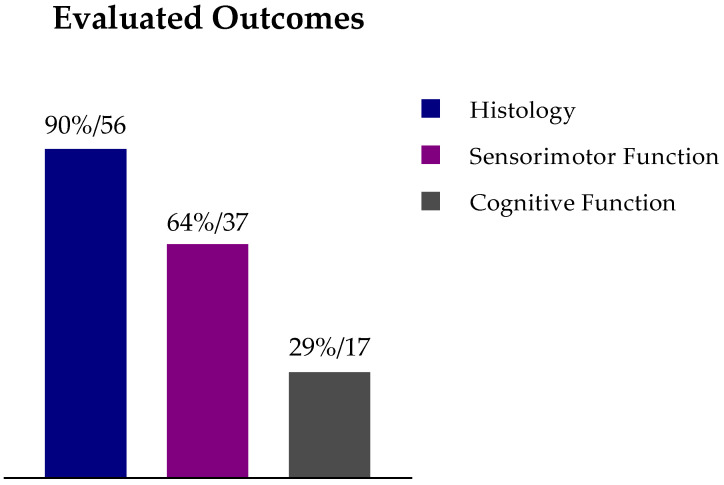
Studies that included histological, cognitive function, and/or sensorimotor function evaluation after stem cell therapy in animal models for hypoxic-ischemic encephalopathy (percentage/number of reports).
Figure 4
Figure 4
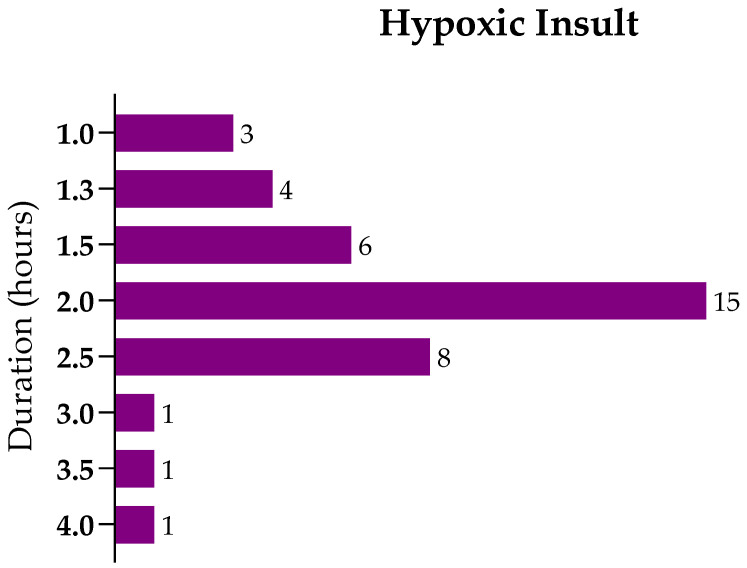
Distribution of the studies using the Rice–Vannucci protocol to induce hypoxic-ischemic brain lesion in neonatal rats regarding the hypoxic insult’s duration in hours.
Figure 5
Figure 5
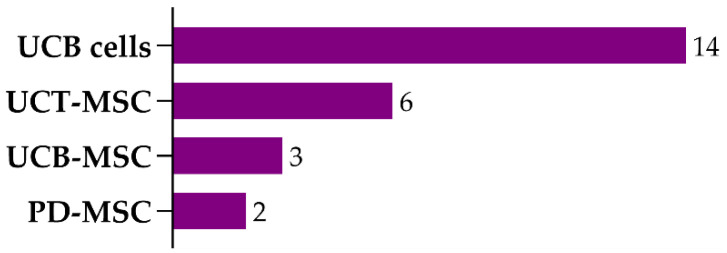
Number of protocols using different cell types isolated from neonatal tissues used in postnatal day-7 rats subjected to unilateral carotid artery occlusion, followed by 1.5–2.5 h of hypoxia. Abbreviations: UCB cells—umbilical cord blood cells; UCT-MSCs—umbilical cord tissue mesenchymal stem/stromal cells; UCB-MSCs—umbilical cord blood mesenchymal stem/stromal cells; PD-MSCs—placenta-derived mesenchymal stem/stromal cells.
Figure 6
Figure 6
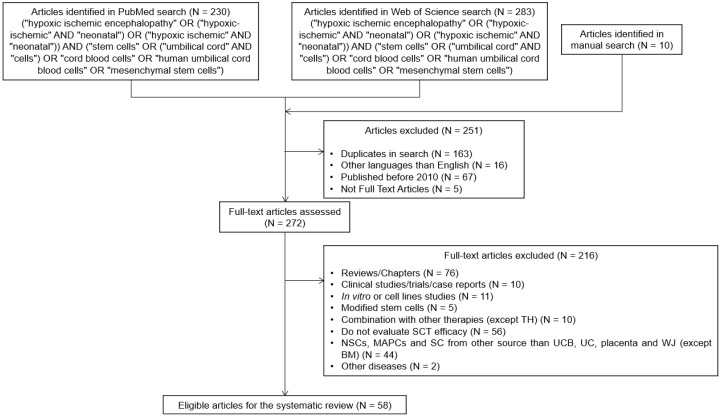
Flow diagram representing the literature search and screening processes applied to select the preclinical studies included in this systematic review. Abbreviations: BM—bone-marrow; MAPCs—multipotent adult progenitor cells; NSCs—neuronal stem cells; SC—stem cells; UC—umbilical cord; UCB—umbilical cord blood; WJ—wharton’s jelly.

References

    1. Millar L.J., Shi L., Hoerder-Suabedissen A., Molnar Z. Neonatal Hypoxia Ischaemia: Mechanisms, Models, and Therapeutic Challenges. Front. Cell Neurosci. 2017;11:78. doi: 10.3389/fncel.2017.00078. - DOI - PMC - PubMed
    1. Zhang S., Li B., Zhang X., Zhu C., Wang X. Birth Asphyxia Is Associated With Increased Risk of Cerebral Palsy: A Meta-Analysis. Front. Neurol. 2020;11:704. doi: 10.3389/fneur.2020.00704. - DOI - PMC - PubMed
    1. Honeycutt A.A., Grosse S.D., Dunlap L.J., Schendel D.E., Chen H., Brann E., Homsi G.a. Using Survey Data to Study Disability: Results from the National Health Survey on Disability (USA) Emerald Group Publishing Limited; Bingley, UK: 2003. Economic Costs of Mental Retardation, Cerebral Palsy, Hearing Loss, and Vision Impairment; pp. 207–228.
    1. Lawn J.E., Cousens S., Zupan J., Lancet Neonatal Survival Steering Team 4 million neonatal deaths: When? Where? Why? Lancet. 2005;365:891–900. doi: 10.1016/S0140-6736(05)71048-5. - DOI - PubMed
    1. Kurinczuk J.J., White-Koning M., Badawi N. Epidemiology of neonatal encephalopathy and hypoxic-ischaemic encephalopathy. Early Hum. Dev. 2010;86:329–338. doi: 10.1016/j.earlhumdev.2010.05.010. - DOI - PubMed

Publication types

MeSH terms

LinkOut - more resources