


Why Concurrent CDDP and Radiotherapy Has Synergistic Antitumor Effects: A Review of In Vitro Experimental and Clinical-Based Studies
- PMID: 33808722
- PMCID: PMC8003508
- DOI: 10.3390/ijms22063140
Why Concurrent CDDP and Radiotherapy Has Synergistic Antitumor Effects: A Review of In Vitro Experimental and Clinical-Based Studies
Abstract
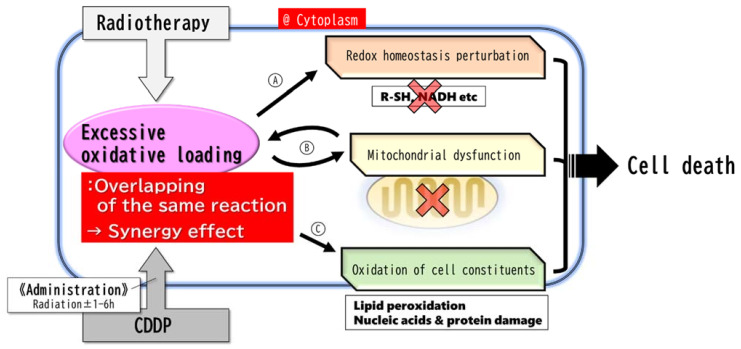
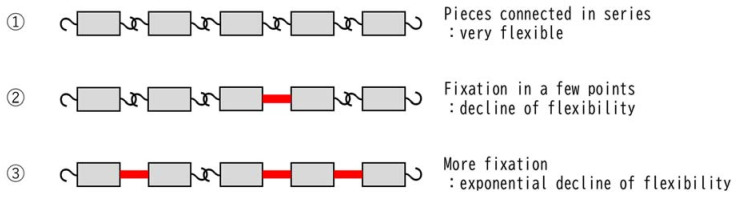
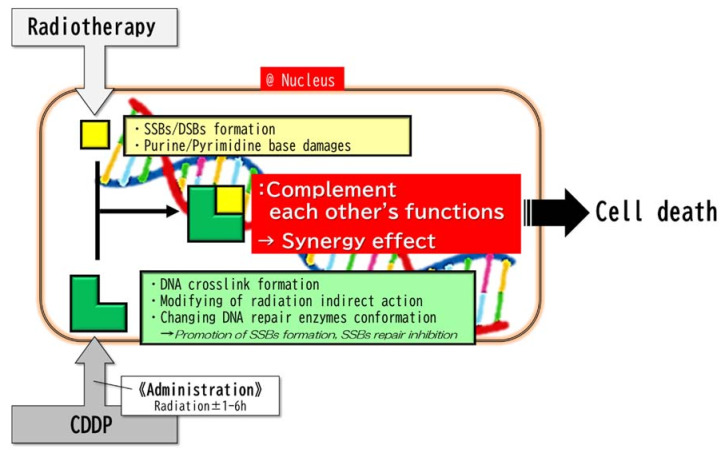
Chemo-radiotherapy, which combines chemotherapy with radiotherapy, has been clinically practiced since the 1970s, and various anticancer drugs have been shown to have a synergistic effect when used in combination with radiotherapy. In particular, cisplatin (CDDP), which is often the cornerstone of multi-drug combination cancer therapies, is highly versatile and frequently used in combination with radiotherapy for the treatment of many cancers. Therefore, the mechanisms underlying the synergistic effect of CDDP and radiotherapy have been widely investigated, although no definitive conclusions have been reached. We present a review of the combined use of CDDP and radiotherapy, including the latest findings, and propose a mechanism that could explain their synergistic effects. Our hypothesis involves the concepts of overlap and complementation. "Overlap" refers to the overlapping reactions of CDDP and radiation-induced excessive oxidative loading, which lead to accumulating damage to cell components, mostly within the cytoplasm. "Complementation" refers to the complementary functions of CDDP and radiation that lead to DNA damage, primarily in the nucleus. In fact, the two concepts are inseparable, but conceptualizing them separately will help us understand the mechanism underlying the synergism between radiation therapy and other anticancer drugs, and help us to design future radiosensitizers.
Keywords: chemo-radiotherapy (CRT); cis-diamminedichloroplatinum (cisplatin: CDDP); concurrent; radio-sensitizing; radiotherapy (RT); synergistic effect.
Conflict of interest statement
The authors declare no conflict of interest.
Figures
References
-
- Zák M., Drobník J. Effect of cis-dichlorodiamine platinum (II) on the post-irradiation lethality in mice after irradiation with X-rays. Strahlentherapie. 1971;142:112–115. - PubMed
-
- Browman G.P., Hodson D.I., MacKenzie R.J., Bestic N., Zuraw L. Cancer Care Ontario Practice Guideline Initiative Head and Neck Cancer Disease Site Group Choosing a concomitant chemotherapy and radiotherapy regimen for squamous cell head and neck cancer: A systematic review of the published literature with subgroup analysis. Head Neck. 2001;23:579–589. doi: 10.1002/hed.1081. - DOI - PubMed
-
- Al-Sarraf M., Leblanc M., Giri P.G., Fu K.K., Cooper J., Vuong T., Forastiere A.A., Adams G., Sakr W.A., Schuller D.E., et al. Chemoradiotherapy versus radiotherapy in patients with advanced nasopharyngeal cancer: Phase III randomized Intergroup study 0099. J. Clin. Oncol. 1998;16:1310–1317. doi: 10.1200/JCO.1998.16.4.1310. - DOI - PubMed
-
- Calais G., Alfonsi M., Bardet E., Sire C., Germain T., Bergerot P., Rhein B., Tortochaux J., Oudinot P., Bertrand P. Randomized Trial of Radiation Therapy Versus Concomitant Chemotherapy and Radiation Therapy for Advanced-Stage Oropharynx Carcinoma. J. Natl. Cancer Inst. 1999;91:2081–2086. doi: 10.1093/jnci/91.24.2081. - DOI - PubMed
-
- Wendt T.G., Grabenbauer G.G., Rödel C.M., Thiel H.J., Aydin H., Rohloff R., Wustrow T.P., Iro H., Popella C., Schalhorn A. Simultaneous radiochemotherapy versus radiotherapy alone in advanced head and neck cancer: A randomized multicenter study. J. Clin. Oncol. 1998;16:1318–1324. doi: 10.1200/JCO.1998.16.4.1318. - DOI - PubMed
Publication types
MeSH terms
Substances
Grants and funding
LinkOut - more resources
Full Text Sources
Other Literature Sources
Medical
Research Materials
