


Acinetobacter baumannii Antibiotic Resistance Mechanisms
- PMID: 33808905
- PMCID: PMC8003822
- DOI: 10.3390/pathogens10030373
Acinetobacter baumannii Antibiotic Resistance Mechanisms
Abstract
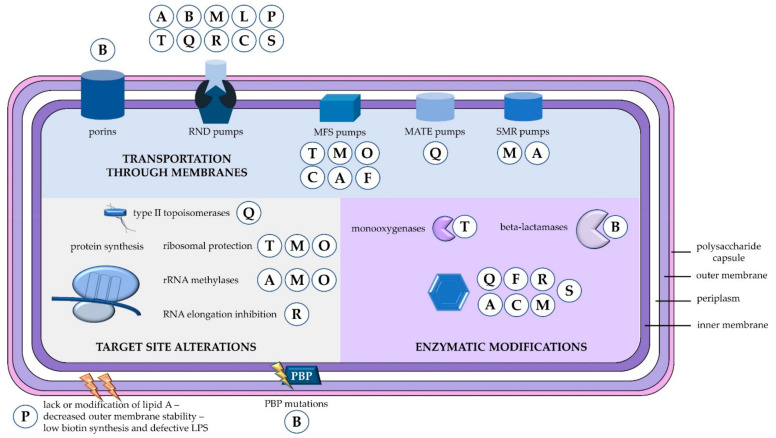
Acinetobacter baumannii is a Gram-negative ESKAPE microorganism that poses a threat to public health by causing severe and invasive (mostly nosocomial) infections linked with high mortality rates. During the last years, this pathogen displayed multidrug resistance (MDR), mainly due to extensive antibiotic abuse and poor stewardship. MDR isolates are associated with medical history of long hospitalization stays, presence of catheters, and mechanical ventilation, while immunocompromised and severely ill hosts predispose to invasive infections. Next-generation sequencing techniques have revolutionized diagnosis of severe A. baumannii infections, contributing to timely diagnosis and personalized therapeutic regimens according to the identification of the respective resistance genes. The aim of this review is to describe in detail all current knowledge on the genetic background of A. baumannii resistance mechanisms in humans as regards beta-lactams (penicillins, cephalosporins, carbapenems, monobactams, and beta-lactamase inhibitors), aminoglycosides, tetracyclines, fluoroquinolones, macrolides, lincosamides, streptogramin antibiotics, polymyxins, and others (amphenicols, oxazolidinones, rifamycins, fosfomycin, diaminopyrimidines, sulfonamides, glycopeptide, and lipopeptide antibiotics). Mechanisms of antimicrobial resistance refer mainly to regulation of antibiotic transportation through bacterial membranes, alteration of the antibiotic target site, and enzymatic modifications resulting in antibiotic neutralization. Virulence factors that may affect antibiotic susceptibility profiles and confer drug resistance are also being discussed. Reports from cases of A. baumannii coinfection with SARS-CoV-2 during the COVID-19 pandemic in terms of resistance profiles and MDR genes have been investigated.
Keywords: Acinetobacter baumannii; CRAB; antibiotic; antimicrobial; extensive drug resistant; multidrug resistant; next-generation sequencing; pandrug resistant; resistance.
Conflict of interest statement
The authors declare no conflict of interest.
Figures
References
-
- Levy-Blitchtein S., Roca I., Plasencia-Rebata S., Vicente-Taboada W., Velásquez-Pomar J., Muñoz L., Moreno-Morales J., Pons M.J., Del Valle-Mendoza J., Vila J. Emergence and spread of carbapenem-resistant Acinetobacter baumannii international clones II and III in Lima, Peru article. Emerg. Microbes Infect. 2018;7:119. doi: 10.1038/s41426-018-0127-9. - DOI - PMC - PubMed
Publication types
LinkOut - more resources
Full Text Sources
Other Literature Sources
Miscellaneous
