


Is High-Intensity Interval Training Suitable to Promote Neuroplasticity and Cognitive Functions after Stroke?
- PMID: 33809413
- PMCID: PMC7998434
- DOI: 10.3390/ijms22063003
Is High-Intensity Interval Training Suitable to Promote Neuroplasticity and Cognitive Functions after Stroke?
Abstract
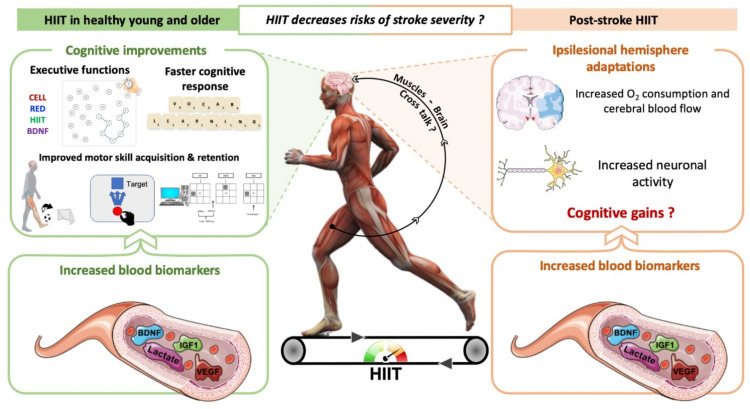
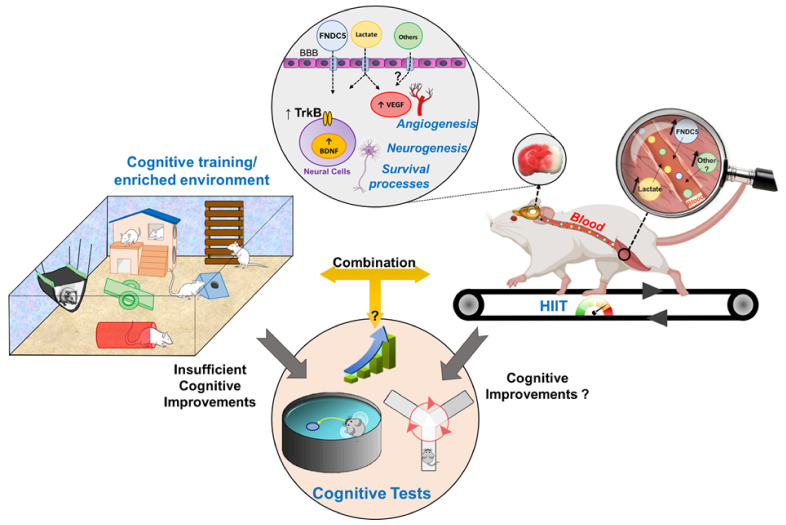
Stroke-induced cognitive impairments affect the long-term quality of life. High-intensity interval training (HIIT) is now considered a promising strategy to enhance cognitive functions. This review is designed to examine the role of HIIT in promoting neuroplasticity processes and/or cognitive functions after stroke. The various methodological limitations related to the clinical relevance of studies on the exercise recommendations in individuals with stroke are first discussed. Then, the relevance of HIIT in improving neurotrophic factors expression, neurogenesis and synaptic plasticity is debated in both stroke and healthy individuals (humans and rodents). Moreover, HIIT may have a preventive role on stroke severity, as found in rodents. The potential role of HIIT in stroke rehabilitation is reinforced by findings showing its powerful neurogenic effect that might potentiate cognitive benefits induced by cognitive tasks. In addition, the clinical role of neuroplasticity observed in each hemisphere needs to be clarified by coupling more frequently to cellular/molecular measurements and behavioral testing.
Keywords: angiogenesis; cerebral ischemia; cognition; endurance exercise; neurogenesis; neurotrophic factors; rat and human model; stroke rehabilitation.
Conflict of interest statement
The authors declare no conflict of interest.
Figures
References
-
- Kyu H.H., Abate D., Abate K.H., Abay S.M., Abbafati C., Abbasi N., Abbastabar H., Abd-Allah F., Abdela J., Abdelalim A., et al. Global, Regional, and National Disability-Adjusted Life-Years (DALYs) for 359 Diseases and Injuries and Healthy Life Expectancy (HALE) for 195 Countries and Territories, 1990–2017: A Systematic Analysis for the Global Burden of Disease Study 2017. Lancet. 2018;392:1859–1922. doi: 10.1016/S0140-6736(18)32335-3. - DOI - PMC - PubMed
-
- Mokashi S.P., Vivekanand S. Relationship between cognitive deficits and the ability to perform the activities of daily living in stroke patients. Indian J. Occup. Ther. 2005;37:3–9.
Publication types
MeSH terms
LinkOut - more resources
Full Text Sources
Other Literature Sources
Medical
