


Time-to-Treatment in Oral Cancer: Causes and Implications for Survival
- PMID: 33809427
- PMCID: PMC8000007
- DOI: 10.3390/cancers13061321
Time-to-Treatment in Oral Cancer: Causes and Implications for Survival
Abstract
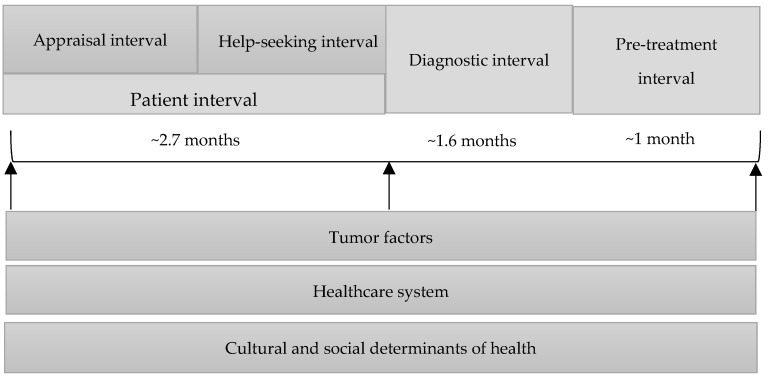
The purpose of this review was to identify and describe the causes that influence the time-intervals in the pathway of diagnosis and treatment of oral cancer and to assess its impact on prognosis and survival. The review was structured according to the recommendations of the Aarhus statement, considering original data from individual studies and systematic reviews that reported outcomes related to the patient, diagnostic and pre-treatment intervals. The patient interval is the major contributor to the total time-interval. Unawareness of signs and/or symptoms, denial and lack of knowledge about oral cancer are the major contributors to the process of seeking medical attention. The diagnostic interval is influenced by tumor factors, delays in referral due to higher number of consultations and previous treatment with different medicines or dental procedures and by professional factors such as experience and lack of knowledge related to the disease and diagnostic procedures. Patients with advanced stage disease, primary treatment with radiotherapy, treatment at an academic facility and transitions in care are associated with prolonged pre-treatment intervals. An emerging body of evidence supports the impact of prolonged pre-treatment and treatment intervals with poorer survival from oral cancer.
Keywords: early diagnosis; head and neck cancer; oral cancer; survival rate; time-to-treatment; treatment delays.
Conflict of interest statement
The authors declare no conflict of interest.
Figures
References
-
- Jitender S., Sarika G., Varada H., Omprakash Y., Mohsin K. Screening for oral cancer. J. Exp. Ther. Oncol. 2016;11:303–307. - PubMed
-
- SEER Cancer Stat Facts: Oral Cavity and Pharynx Cancer. [(accessed on 6 March 2021)]; Available online: https://seer.cancer.gov/statfacts/html/oralcav.html.
-
- Ogden G.R. Factors affecting survival for oral cancer. In: Warnakulasuriya S., Greenspan J.S., editors. Textbook of Oral Cancer: Prevention, Diagnosis and Management. Springer International Publishing; Cham, Switzerland: 2020. pp. 327–342.
Publication types
LinkOut - more resources
Full Text Sources
Other Literature Sources
