Review
. 2021 Mar 16;11(3):835.
doi: 10.3390/ani11030835.

Key Genes Regulating Skeletal Muscle Development and Growth in Farm Animals

Affiliations
Review

Key Genes Regulating Skeletal Muscle Development and Growth in Farm Animals

Mohammadreza Mohammadabadi et al. Animals (Basel). .

Abstract

Farm-animal species play crucial roles in satisfying demands for meat on a global scale, and they are genetically being developed to enhance the efficiency of meat production. In particular, one of the important breeders' aims is to increase skeletal muscle growth in farm animals. The enhancement of muscle development and growth is crucial to meet consumers' demands regarding meat quality. Fetal skeletal muscle development involves myogenesis (with myoblast proliferation, differentiation, and fusion), fibrogenesis, and adipogenesis. Typically, myogenesis is regulated by a convoluted network of intrinsic and extrinsic factors monitored by myogenic regulatory factor genes in two or three phases, as well as genes that code for kinases. Marker-assisted selection relies on candidate genes related positively or negatively to muscle development and can be a strong supplement to classical selection strategies in farm animals. This comprehensive review covers important (candidate) genes that regulate muscle development and growth in farm animals (cattle, sheep, chicken, and pig). The identification of these genes is an important step toward the goal of increasing meat yields and improves meat quality.

Keywords: adipogenesis; candidate gene; meat yield; muscle development; myogenesis.


Conflict of interest statement

The authors declare that they have no competing interests.

Figures
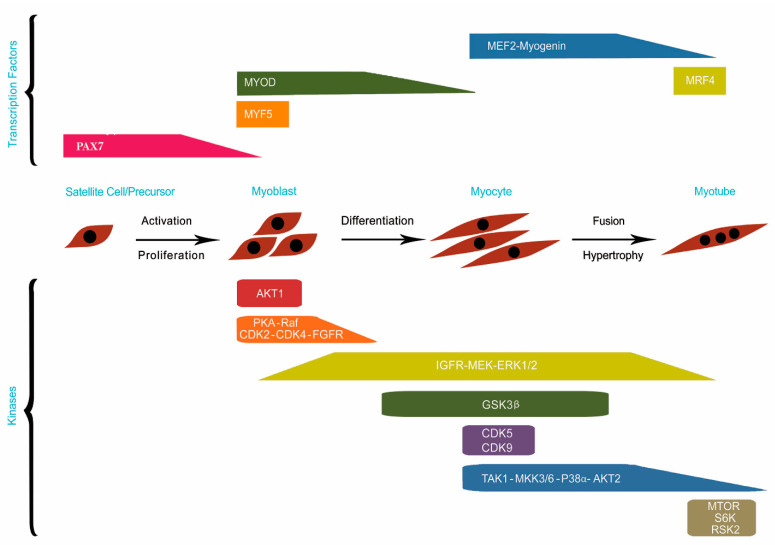
Figure 1
Figure 1
The involvement of myogenic transcription factors and protein kinases in the regulation of different stages of myogenesis. Embryonic precursors or quiescent satellite cells proliferate and construct myoblasts. Myoblasts then undergo differentiation to form myocytes. Finally, multinucleated myotubes are formed as a result of fusion of myocytes. The upper and lower sections of the figure illustrate transcription factors and protein kinases required for myogenesis, respectively (modified from [13]).
Figure 2
Figure 2
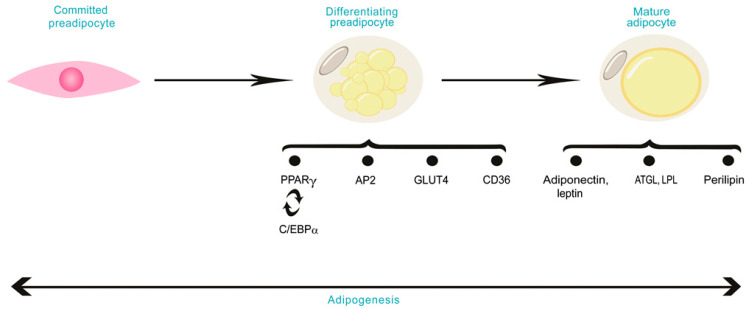
Overview of key factors involved in adipogenesis. Committed preadipocyte encounters growth arrest which leads to the formation of differentiating preadipocyte. Subsequently, differentiation occurs, and a mature adipocyte is formed.
Figure 3
Figure 3
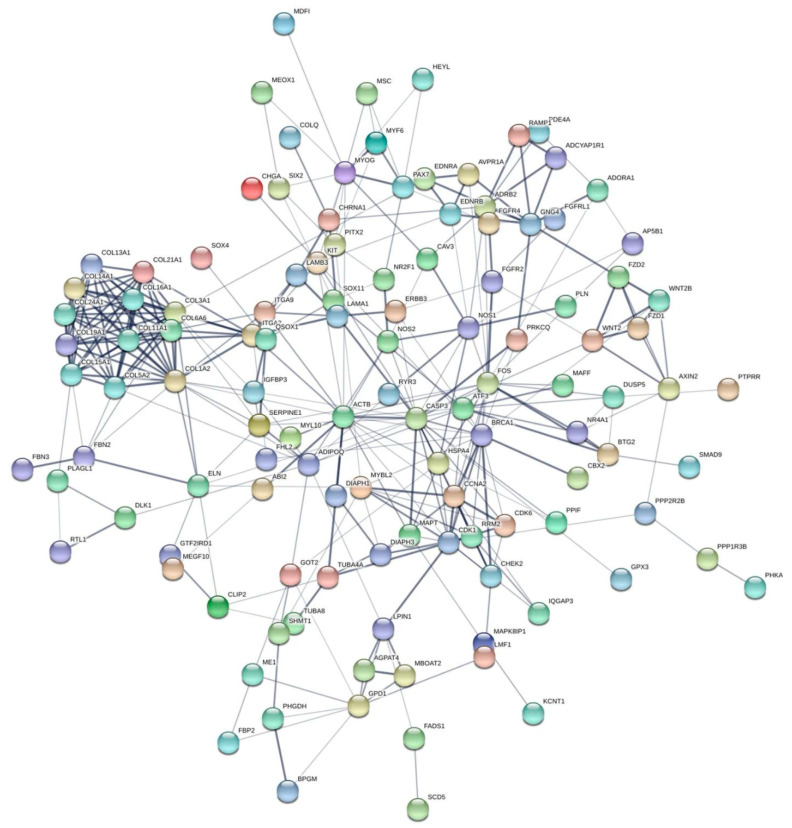
The network of differentially methylated genes associated with muscle development in sheep. Darker lines indicate higher confidence levels [131].
Figure 4
Figure 4
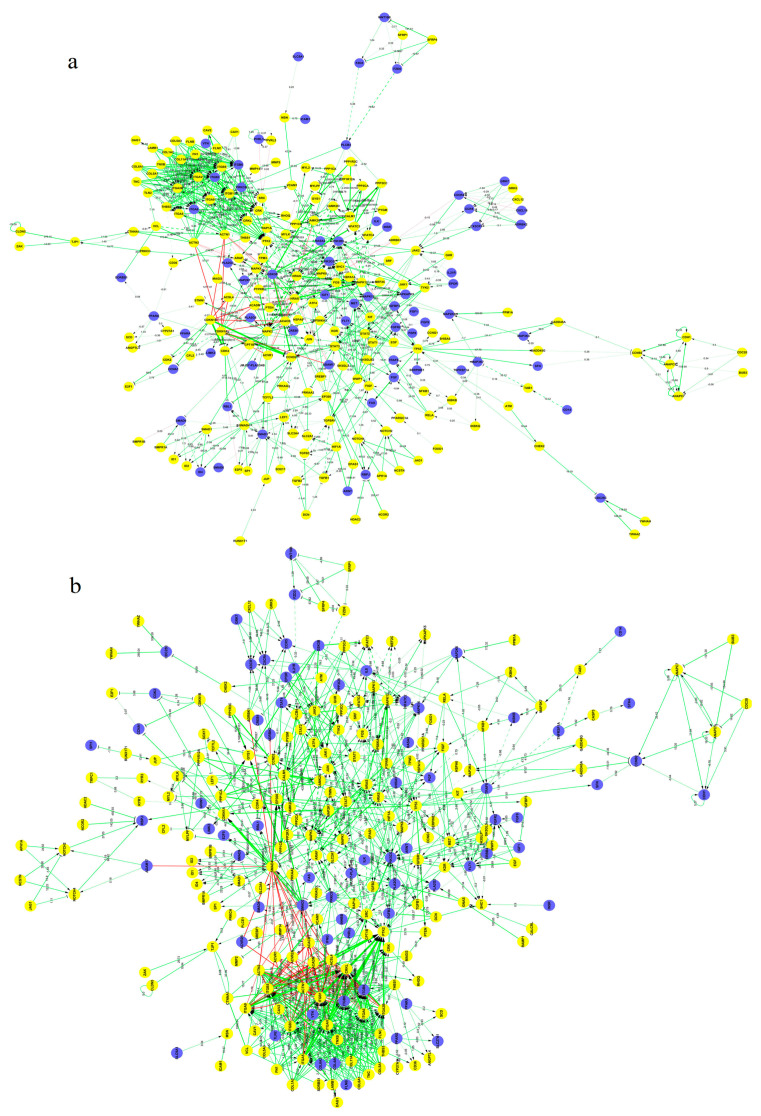
The interaction network of differentially expressed genes (DEGs) regulating myogenesis in Landrace (LR) (a) and Lantang (LT) (b) pig breeds. Yellow and blue dots represent DE and non-DE genes, respectively. Straight lines represent interaction association between genes. Solid and dashed lines represent direct and indirect interaction, respectively. Value and diameter of lines represent the interaction size [138].
Figure 5
Figure 5
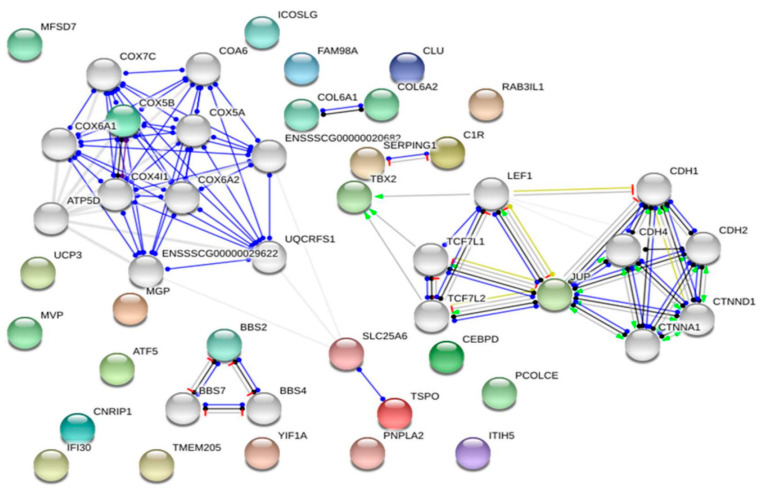
Upregulation of differentially expressed genes in the muscle of pigs with greater-than-normal muscle mass. Identified genes were colored and marked in grey; line shape represents anticipated mode of action. Lines colored represent anticipated mode of action (red shows interactions that were experimentally identified; blue shows interactions from selected databases; black shows coexpression; green shows text-mining relations and interactions contingent on appropriate researches stating a transfer from different organisms; and yellow shows transcriptional adjustment [164].

References

    1. Bentzinger C.F., Wang Y.X., Rudnicki M.A. Building Muscle: Molecular Regulation of myogenesis. Cold Spring Harb. Perspect. Biol. 2012;4:a008342. doi: 10.1101/cshperspect.a008342. - DOI - PMC - PubMed
    1. Mifflin M.D., St Jeor S.T., Hill L.A., Scott B.J., Daugherty S.A., Koh Y.O. A new predictive equation for resting energy expenditure in healthy individuals. Am. J. Clin. Nutr. 1990;51:241–247. doi: 10.1093/ajcn/51.2.241. - DOI - PubMed
    1. Nelson K.M., Weinsier R.L., Long C.L., Schutz Y. Prediction of resting energy expenditure from fat-free mass and fat mass. Am. J. Clin. Nutr. 1992;56:848–856. doi: 10.1093/ajcn/56.5.848. - DOI - PubMed
    1. Taguchi M., Ishikawa-Takata K., Tatsuta W., Katsuragi C., Usui C., Sakamoto S., Higuchi M. Resting energy expenditure can be assessed by fat-free mass in female athletes regardless of body size. J. Nutr. Sci. Vitaminol. 2011;57:22–29. doi: 10.3177/jnsv.57.22. - DOI - PubMed
    1. Wolfe R.R. The underappreciated role of muscle in health and disease. Am. J. Clin. Nutr. 2006;84:475–482. doi: 10.1093/ajcn/84.3.475. - DOI - PubMed

LinkOut - more resources