. 2021 Mar 16;14(3):267.
doi: 10.3390/ph14030267.

Doxepin Exacerbates Renal Damage, Glucose Intolerance, Nonalcoholic Fatty Liver Disease, and Urinary Chromium Loss in Obese Mice

Affiliations

Doxepin Exacerbates Renal Damage, Glucose Intolerance, Nonalcoholic Fatty Liver Disease, and Urinary Chromium Loss in Obese Mice

Geng-Ruei Chang et al. Pharmaceuticals (Basel). .

Abstract

Doxepin is commonly prescribed for depression and anxiety treatment. Doxepin-related disruptions to metabolism and renal/hepatic adverse effects remain unclear; thus, the underlying mechanism of action warrants further research. Here, we investigated how doxepin affects lipid change, glucose homeostasis, chromium (Cr) distribution, renal impairment, liver damage, and fatty liver scores in C57BL6/J mice subjected to a high-fat diet and 5 mg/kg/day doxepin treatment for eight weeks. We noted that the treated mice had higher body, kidney, liver, retroperitoneal, and epididymal white adipose tissue weights; serum and liver triglyceride, alanine aminotransferase, aspartate aminotransferase, blood urea nitrogen, and creatinine levels; daily food efficiency; and liver lipid regulation marker expression. They also demonstrated exacerbated insulin resistance and glucose intolerance with lower Akt phosphorylation, GLUT4 expression, and renal damage as well as higher reactive oxygen species and interleukin 1 and lower catalase, superoxide dismutase, and glutathione peroxidase levels. The treated mice had a net-negative Cr balance due to increased urinary excretion, leading to Cr mobilization, delaying hyperglycemia recovery. Furthermore, they had considerably increased fatty liver scores, paralleling increases in adiponectin, FASN, PNPLA3, FABP4 mRNA, and SREBP1 mRNA levels. In conclusion, doxepin administration potentially worsens renal injury, nonalcoholic fatty liver disease, and diabetes.

Keywords: chromium; doxepin; fatty liver disease; glucose intolerance; obesity; renal impairment.


Conflict of interest statement

The authors declare no conflict of interest.

Figures
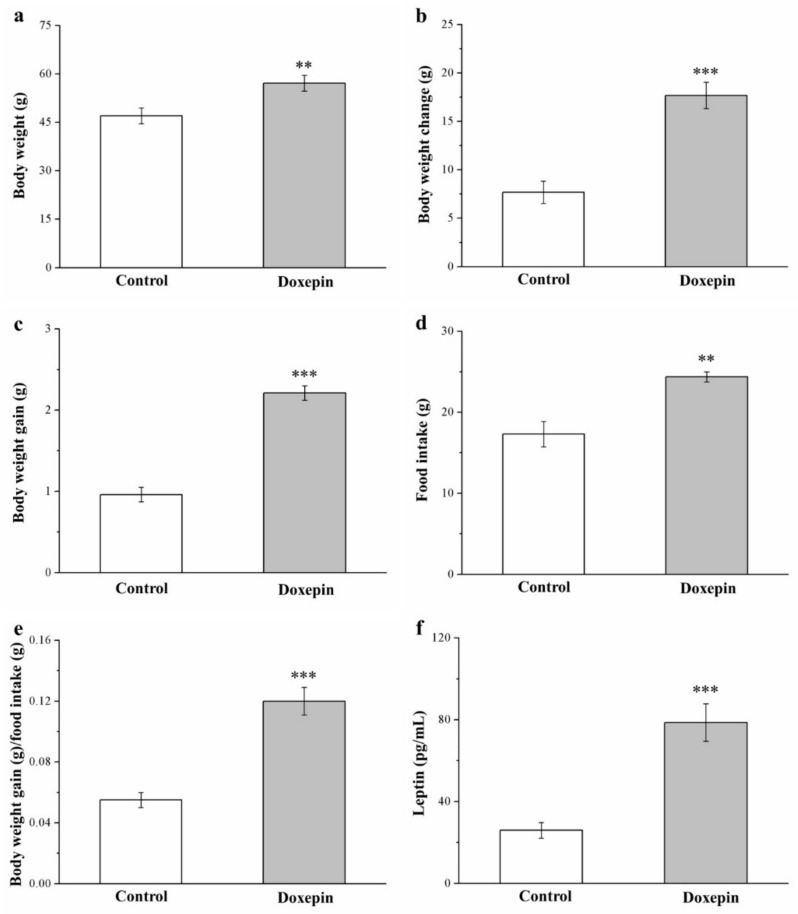
Figure 1
Figure 1
(a) Body weight, (b) body weight change, (c) body weight gain, (d) weekly food intake, (e) daily food efficiency, and (f) serum leptin levels in control and doxepin-treated obese mice over 56 days of treatment. All values represent means ± standard deviations (n = 10 for all groups). ** p < 0.01 and *** p < 0.001 indicate high and very high statistical significance, respectively.
Figure 2
Figure 2
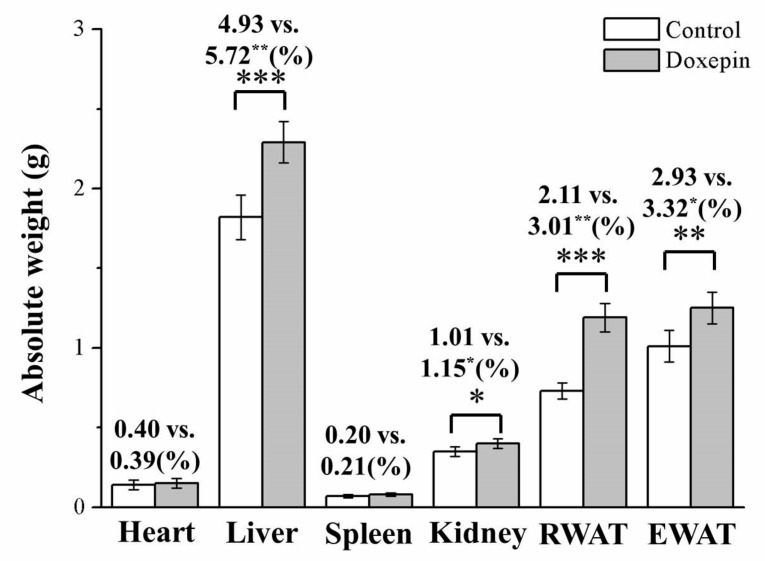
Absolute weights (i.e., percentages of the TBW) of the heart, spleen, liver, kidney, EWAT, and RWAT in control and doxepin-treated obese mice over 56 treatment days. All values represent means ± standard deviations (n = 10 for all groups). * p < 0.05, ** p < 0.01, and *** p < 0.001 indicate statistical significance, high statistical significance, and very high statistical significance, respectively.
Figure 3
Figure 3
(a) H&E staining of livers, RWAT, and EWAT (magnification, 200×) and changes in (b) fatty liver score and the sizes of (c) RWAT and (d) EWAT adipocytes in control and doxepin-treated obese mice over 56 treatment days. All values denote the mean ± standard deviation (n = 10 for all groups). *** p < 0.001 indicate very high statistical significance.
Figure 4
Figure 4
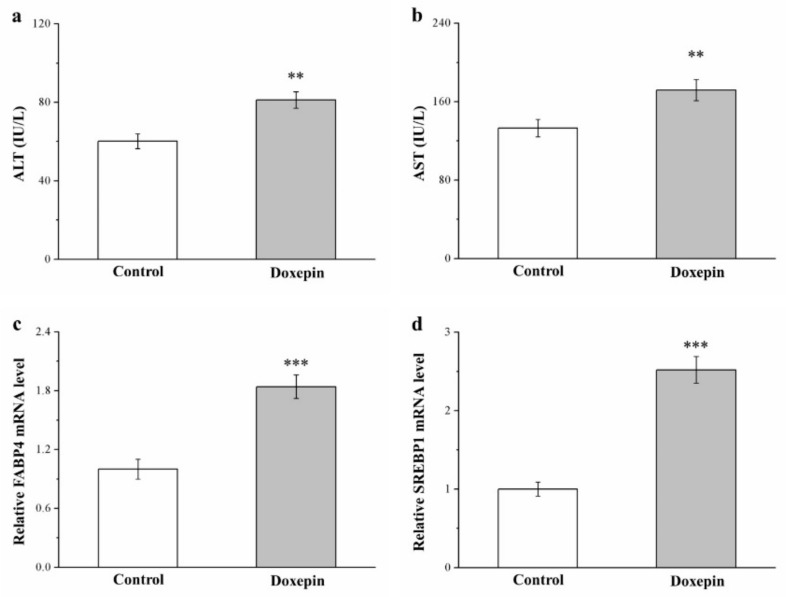
Serum (a) ALT and (b) AST levels as well as liver (c) FABP4 and (d) SREBP1 mRNA levels in the control and doxepin treatment groups over 56 treatment days. All values represent means ± standard deviations (n = 10 for all groups). ** p < 0.01 and *** p < 0.001 indicate high and very high statistical significance, respectively.
Figure 5
Figure 5
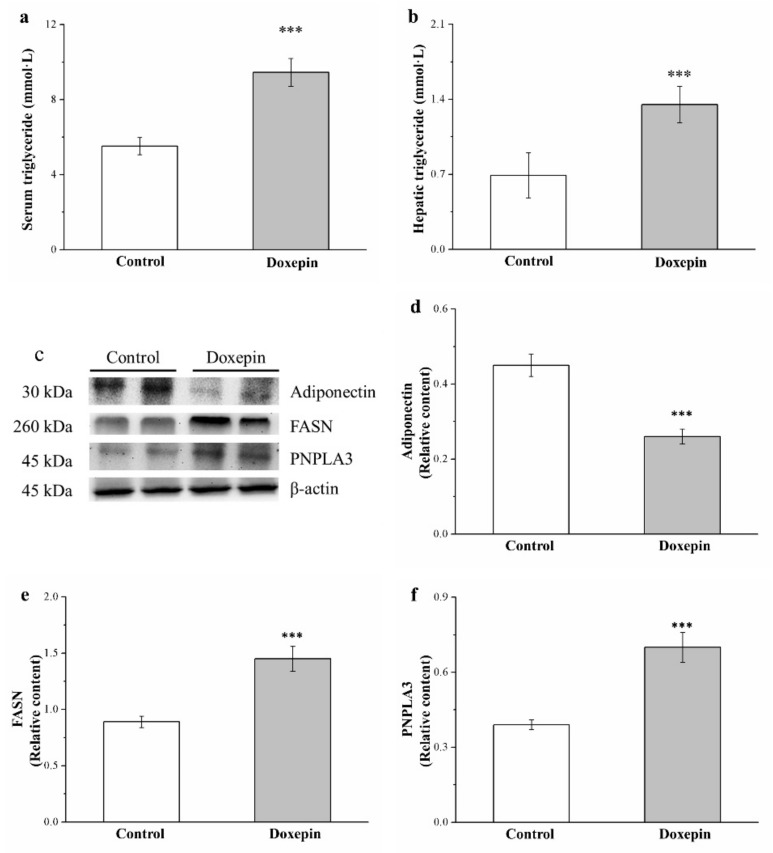
(a) Serum and (b) liver triglyceride levels, (c) representative Western blot of liver extracts, and (d) adiponectin, (e) FASN, and (f) PNPLA3 expression levels in the controls and doxepin-treated obese mice over 56 treatment days. All values represent the mean ± standard deviation (n = 10 for all groups). *** p < 0.001 indicates very high statistical significance.
Figure 6
Figure 6
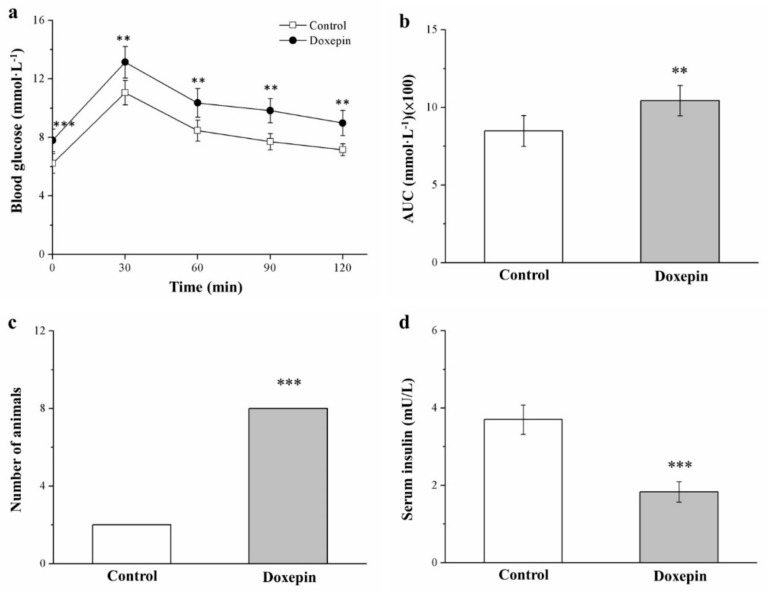
(a) IPGTT curve. (b) AUC during the 120 min following glucose injection, (c) glucose intolerance criterion (Fisher’s exact test), and (d) serum insulin levels in the controls and doxepin-treated mice over 56 treatment days. All values represent means ± standard deviations (n = 10 for all groups). ** p < 0.01 and *** p < 0.001 indicate high and very high statistical significance, respectively.
Figure 7
Figure 7
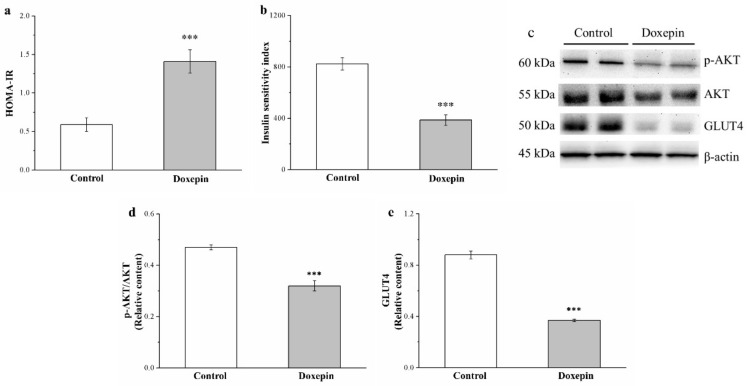
(a) HOMA-IR and (b) IS indexes, (c) representative Western blot of gastrocnemius muscle extracts, (d) phospho-Akt, and (e) GLUT4 expression levels of the control and doxepin-treated obese mice over 56 treatment days. All values represent the mean ± standard deviation (n = 10 for all groups). *** p < 0.001 indicates very high statistical significance.
Figure 8
Figure 8
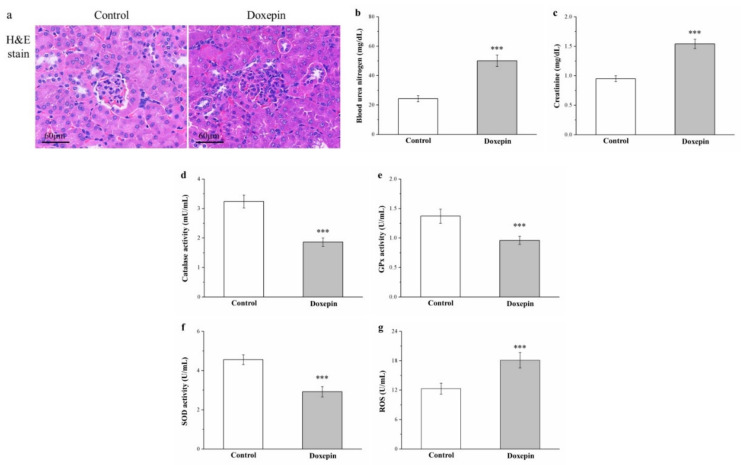
(a) Renal morphology (H&E staining; magnification, 200×), (b) serum BUN and (c) serum creatinine levels, (d) renal catalase (e) renal GPx, and (f) renal SOD activity, and (g) renal ROS levels in the control and doxepin-treated obese mice over 56 days of treatment. All values represent means ± standard deviations (n = 10 for all groups). *** p < 0.001 indicates very high statistical significance.

References

    1. Cortese S., Brown T.E., Corkum P., Gruber R., O’Brien L.M., Stein M., Weiss M., Owens J. Assessment and Management of Sleep Problems in Youths With Attention-Deficit/Hyperactivity Disorder. J. Am. Acad. Child Adolesc. Psychiatry. 2013;52:784–796. doi: 10.1016/j.jaac.2013.06.001. - DOI - PubMed
    1. Benasi G., Guidi J., Offidani E., Balon R., Rickels K., Fava G.A. Benzodiazepines as a Monotherapy in Depressive Disorders: A Systematic Review. Psychother. Psychosom. 2018;87:65–74. doi: 10.1159/000486696. - DOI - PubMed
    1. Kim Y.R., Park B.K., Kim Y.H., Shim I., Kang I.C., Lee M.Y. Antidepressant Effect of Fraxinus rhynchophylla Hance Extract in a Mouse Model of Chronic Stress-Induced Depression. Biomed. Res. Int. 2018;2018:8249563. doi: 10.1155/2018/8249563. - DOI - PMC - PubMed
    1. Azadeh M., Meshkati A., Hajhashemi V. A synbiotic mixture augmented the efficacy of doxepin, venlafaxine, and fluvoxamine in a mouse model of depression. Turk. J. Pharm. Sci. 2020;17:293–298. - PMC - PubMed
    1. Gahr M., Zeiss R., Lang D., Connemann B.J., Hiemke C., Muche R., Freudenmann R.W., Schönfeldt-Lecuona C. Associ-ation between haemorrhages and treatment with selective and non-selective serotonergic antidepressants: Possible implications of quantitative signal detection. Psychiatry Res. 2015;229:257–263. doi: 10.1016/j.psychres.2015.07.024. - DOI - PubMed

LinkOut - more resources