. 2021 Mar 22;11(3):227.
doi: 10.3390/jpm11030227.

Predictive Biomarkers of COVID-19 Severity in SARS-CoV-2 Infected Patients with Obesity and Metabolic Syndrome

Affiliations

Predictive Biomarkers of COVID-19 Severity in SARS-CoV-2 Infected Patients with Obesity and Metabolic Syndrome

Carles Perpiñan et al. J Pers Med. .

Abstract

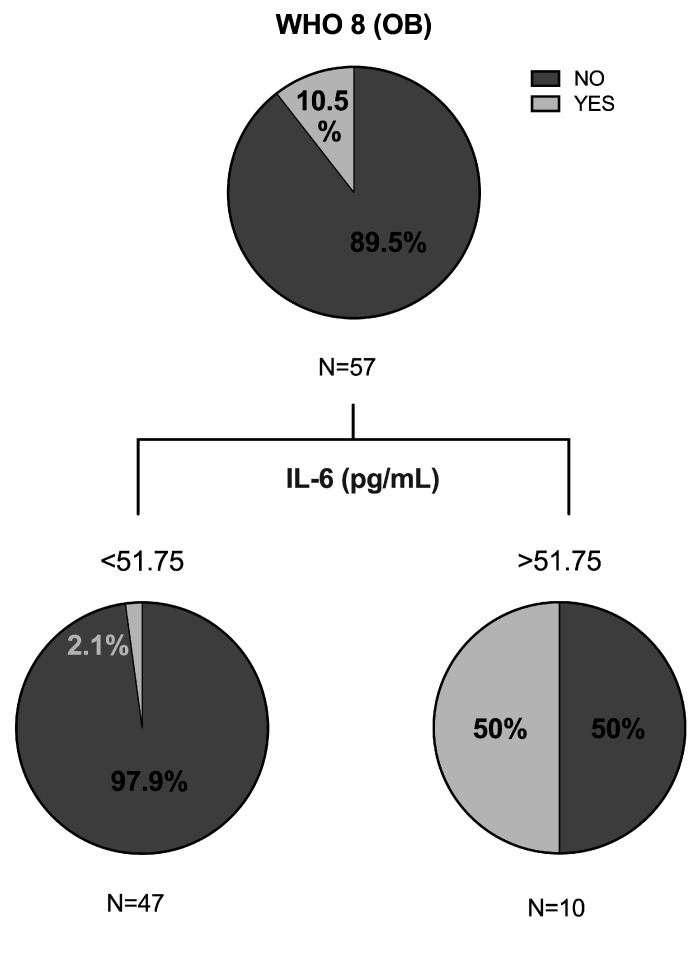
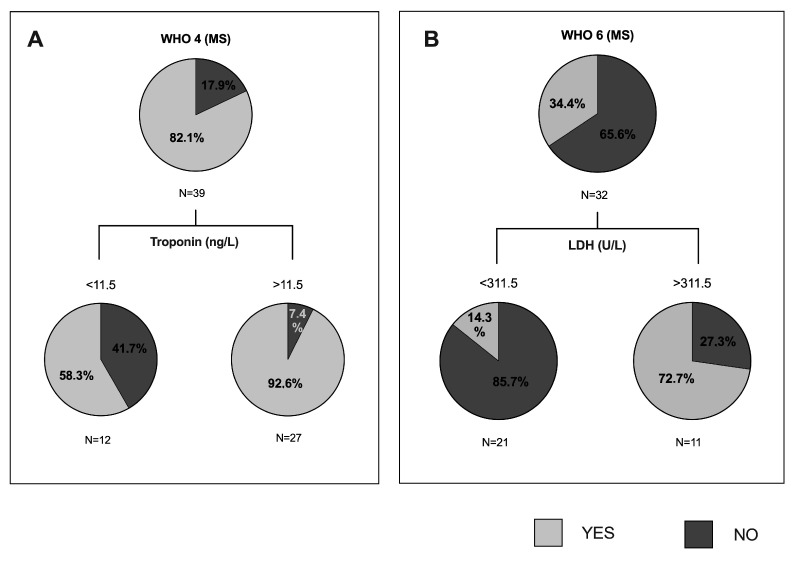
In SARS-CoV-2-infected patients, obesity, hypertension, and diabetes are dangerous factors that may result in death. Priority in detection and specific therapies for these patients are necessary. We wanted to investigate the impact of obesity and metabolic syndrome (MS) on the clinical course of COVID-19 and whether prognostic biomarkers described are useful to predict the evolution of COVID-19 in patients with obesity or MS. This prospective cohort study included 303 patients hospitalized for COVID-19. Participants were first classified according to the presence of obesity; then, they were classified according to the presence of MS. Clinical, radiologic, and analytical parameters were collected. We reported that patients with obesity presented moderate COVID-19 symptoms and pneumonia, bilateral pulmonary infiltrates, and needed tocilizumab more frequently. Meanwhile, patients with MS presented severe pneumonia and respiratory failure more frequently, they have a higher mortality rate, and they also showed higher creatinine and troponin levels. The main findings of this study are that IL-6 is a potential predictor of COVID-19 severity in patients with obesity, while troponin and LDH can be used as predictive biomarkers of COVID-19 severity in MS patients. Therefore, treatment for COVID-19 in patients with obesity or MS should probably be intensified and personalized.

Keywords: COVID-19; SARS-CoV-2; metabolic syndrome; obesity; personalized therapy; pneumonia; prediction.


Conflict of interest statement

The authors declare no conflict of interest.

Figures
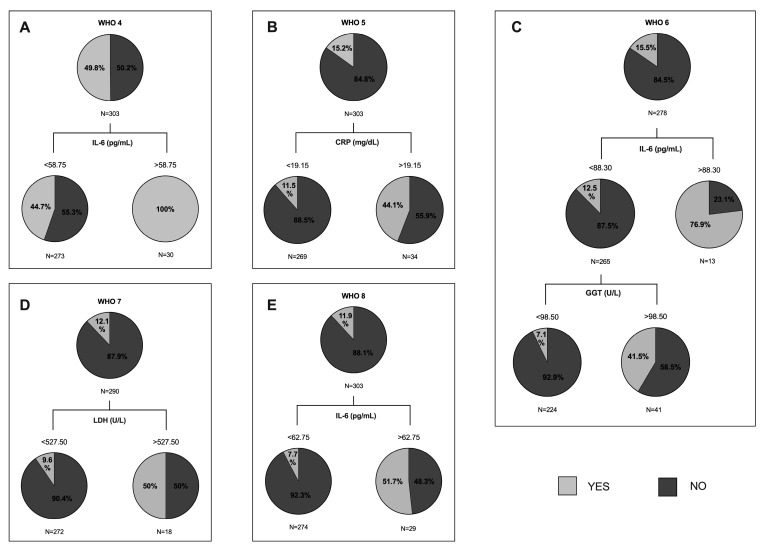
Figure 1
Figure 1
Classification and regression trees of the whole cohort of study were elaborated through CRT method for World Health Organization (WHO) eight-point classification of severe pneumonia by COVID-19 (namely: (0) no clinical or virological evidence of covid-19 infection; (1) infected without limitations; (2) limitation of activity; (3) hospitalized without oxygen therapy; (4) oxygen by mask or nasal; (5) non-invasive ventilation (NIV) (continuous positive airway pressure (CPAP) or positive bipressure in the airways (BiPAP)) or high-flow oxygen (HFO); (6) intubation with mechanical ventilation (MV) or mask with reservoir; (7) MV or extracorporeal membrane oxygenation (ECMO), support with vasopressors, dialysis/renal replacement therapy; and (8) death. (A) Pie charts represent the proportion of patients who met the WHO 4 (light grey) or not (dark grey) at each node of the tree. IL-6: interleukin 6. (B) Pie charts represent the proportion of patients who met the WHO 5. CRP: c-reactive protein. (C) Pie charts represent the proportion of patients who met the WHO 6. IL-6: interleukin 6; GGT: gamma-glutamyl transferase. (D) Pie charts represent the proportion of patients who met the WHO 7. LDH: lactate dehydrogenase. (E) Pie charts represent the proportion of patients who met the WHO 8. IL-6: interleukin 6.
Figure 2
Figure 2
Classification and regression tree of the cohort with obesity were elaborated through CRT method for variable WHO 8 of severe pneumonia by COVID-19, namely: death. OB: obesity; IL-6: interleukin 6.
Figure 3
Figure 3
Classification and regression trees of the cohort with metabolic syndrome were elaborated through CRT method for WHO 4 and WHO 6 variables of severe pneumonia by COVID-19, namely: (4) oxygen by mask or nasal; (6) intubation with mechanical ventilation (MV), mask with reservoir. (A) Pie charts represent the proportion of patients with MS who met the WHO 4 (light grey) or not (dark grey) at each node of the tree. MS: metabolic syndrome. (B) Pie charts represent the proportion of patients who met the WHO 6. MS: metabolic syndrome; LDH: lactate dehydrogenase.

References

    1. Deng S.-Q., Peng H.-J. Characteristics of and Public Health Responses to the Coronavirus Disease 2019 Outbreak in China. J. Clin. Med. 2020;9:575. doi: 10.3390/jcm9020575. - DOI - PMC - PubMed
    1. Gupta R., Ghosh A., Singh A.K., Misra A. Clinical Considerations for Patients with Diabetes in Times of COVID-19 Epidemic. Diabetes Metab. Syndr. Clin. Res. Rev. 2020;14:211–212. doi: 10.1016/j.dsx.2020.03.002. - DOI - PMC - PubMed
    1. Ryan D.H., Ravussin E., Heymsfield S. COVID 19 and the Patient with Obesity—The Editors Speak Out. Obesity. 2020;28:847. doi: 10.1002/oby.22808. - DOI - PMC - PubMed
    1. del Rio C., Malani P.N. COVID-19—New Insights on a Rapidly Changing Epidemic. JAMA J. Am. Med Assoc. 2020;323:1092–1093. doi: 10.1001/jama.2020.3072. - DOI - PubMed
    1. Simonnet A., Chetboun M., Poissy J., Raverdy V., Noulette J., Duhamel A., Labreuche J., Mathieu D., Pattou F., Jourdain M., et al. High Prevalence of Obesity in Severe Acute Respiratory Syndrome Coronavirus-2 (SARS-CoV-2) Requiring Invasive Mechanical Ventilation. Obesity. 2020;28:1195–1199. doi: 10.1002/oby.22831. - DOI - PMC - PubMed

LinkOut - more resources