


12-Week Inspiratory Muscle Training Improves Respiratory Muscle Strength in Adult Patients with Stable Asthma: A Randomized Controlled Trial
- PMID: 33809922
- PMCID: PMC8004228
- DOI: 10.3390/ijerph18063267
12-Week Inspiratory Muscle Training Improves Respiratory Muscle Strength in Adult Patients with Stable Asthma: A Randomized Controlled Trial
Abstract
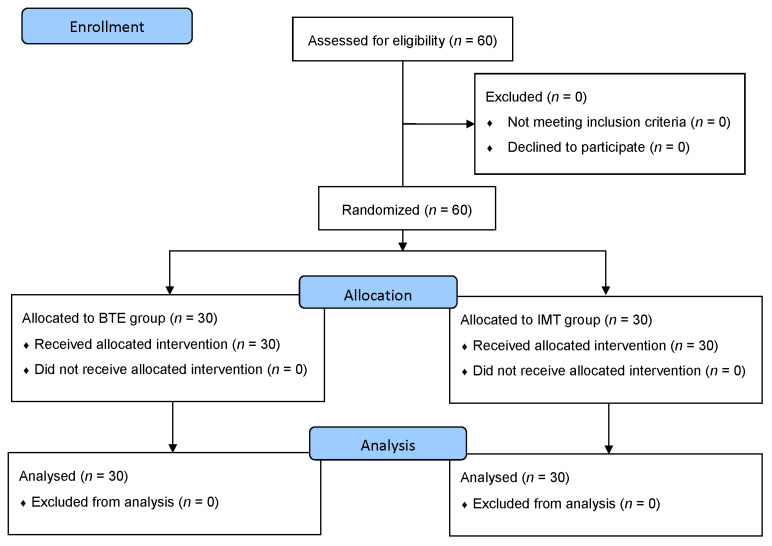
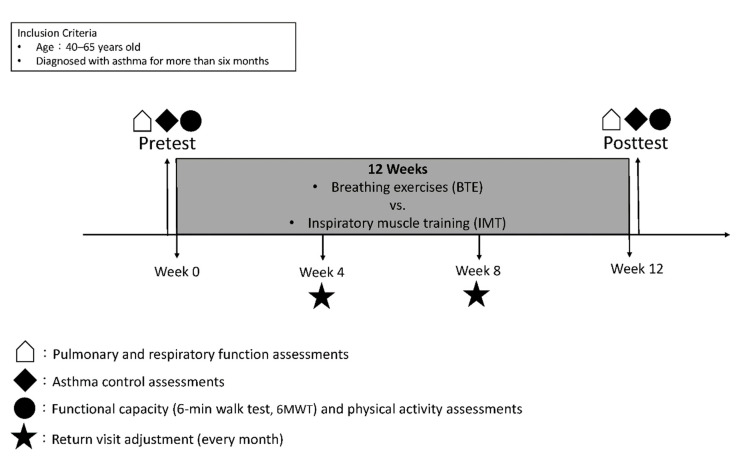
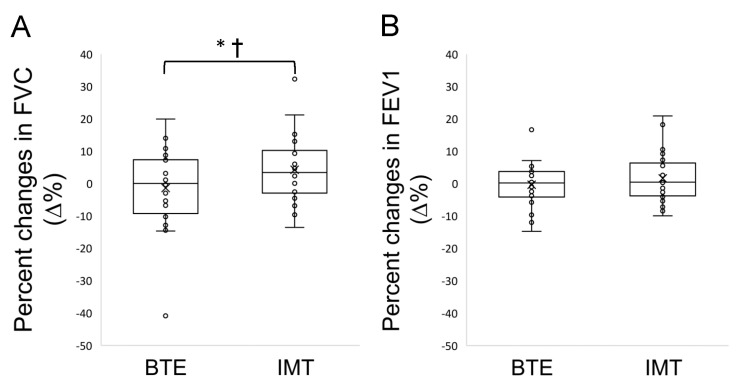
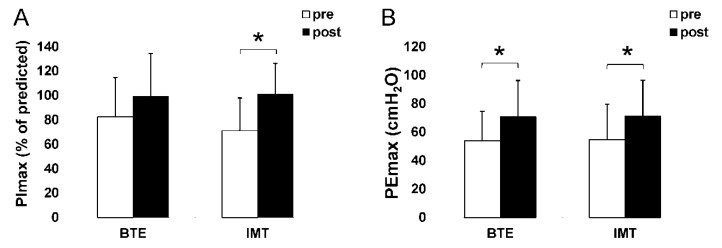
This study aims to investigate and compare the effects of conventional breathing exercises and an inspiratory muscle training intervention on clinical symptoms in asthma patients. Sixty asthma patients (40-65 years old) were randomly assigned to either the conventional breathing exercises (BTE) or inspiratory muscle training (IMT) group for a 12-week intervention period. Outcome measurements were performed before and after the intervention, including the spirometry data, maximal inspiratory and expiratory pressures (PImax and PEmax), asthma control test, asthma control questionnaire, six-minute walk test, and three-day physical activity log, were recorded. PImax expressed as % of predicted value controlled for age and gender in healthy subjects (% predicted) increased by 16.92% (82.45% to 99.38%, p < 0.05) in the BTE group and by 29.84% (71.19% to 101.03%, p < 0.05) in the IMT group. Except for forced vital capacity, which was reduced in the BTE group, all other measured variables improved in both groups, and no statistically significant between-group differences were found. IMT appears to be more effective than breathing exercise intervention in promoting improvements in respiratory muscle strength. IMT may act as an alternative to conventional breathing exercises for middle-aged and elderly asthma patients.
Keywords: asthma; breathing exercise; forced vital capacity (FVC); inspiratory muscle training; maximal inspiratory pressure (PImax).
Conflict of interest statement
The authors declare no conflict of interest.
Figures
References
-
- GBD 2015 Chronic Respiratory Disease Collaborators Global, regional, and national deaths, prevalence, disability-adjusted life years, and years lived with disability for chronic obstructive pulmonary disease and asthma, 1990–2015: A systematic analysis for the Global Burden of Disease Study 2015. Lancet Respir. Med. 2017;5:691–706. doi: 10.1016/S2213-2600(17)30293-X. - DOI - PMC - PubMed
-
- Ying Y., Weng Y., Chang K. The prevalence and patient’s quality of life for asthma in Taiwan. Int. J. Pul. Res. Sci. 2017;1:1–5. doi: 10.19080/IJOPRS.2017.01.555560. - DOI
-
- Castilho T., Itaborahy B.D.H., Hoepers A., Brito J.N.d., Almeida A.C.d.S., Schivinski C.I.S. Effects of inspiratory muscle training and breathing exercises in children with asthma: A systematic review. J. Hum. Growth Dev. 2020;30:291–300. doi: 10.7322/jhgd.v30.10381. - DOI
Publication types
MeSH terms
LinkOut - more resources
Full Text Sources
Other Literature Sources
Medical
