


CTLA-4 in Regulatory T Cells for Cancer Immunotherapy
- PMID: 33809974
- PMCID: PMC8005092
- DOI: 10.3390/cancers13061440
CTLA-4 in Regulatory T Cells for Cancer Immunotherapy
Abstract
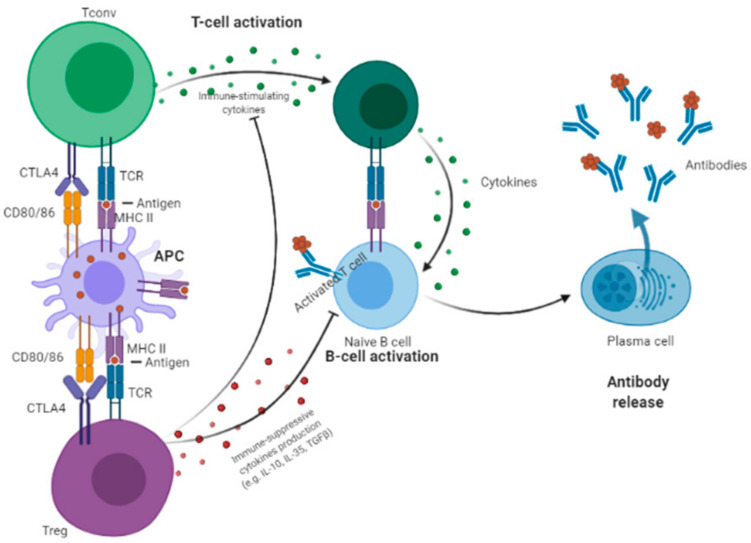
Immune checkpoint inhibitors (ICIs) have obtained durable responses in many cancers, making it possible to foresee their potential in improving the health of cancer patients. However, immunotherapies are currently limited to a minority of patients and there is a need to develop a better understanding of the basic molecular mechanisms and functions of pivotal immune regulatory molecules. Immune checkpoint cytotoxic T-lymphocyte-associated protein 4 (CTLA-4) and regulatory T (Treg) cells play pivotal roles in hindering the anticancer immunity. Treg cells suppress antigen-presenting cells (APCs) by depleting immune stimulating cytokines, producing immunosuppressive cytokines and constitutively expressing CTLA-4. CTLA-4 molecules bind to CD80 and CD86 with a higher affinity than CD28 and act as competitive inhibitors of CD28 in APCs. The purpose of this review is to summarize state-of-the-art understanding of the molecular mechanisms underlining CTLA-4 immune regulation and the correlation of the ICI response with CTLA-4 expression in Treg cells from preclinical and clinical studies for possibly improving CTLA-4-based immunotherapies, while highlighting the knowledge gap.
Keywords: CD28; CTLA-4; Treg cells; antigen-presenting cells; immune checkpoint inhibitors.
Conflict of interest statement
The authors declare no conflict of interest.
Figures
References
-
- Speiser D.E.E., Ho P.C.C., Verdeil G. Regulatory circuits of T cell function in cancer. Nat. Rev. Immunol. 2016;16:599–611. - PubMed
-
- Zou W. Regulatory T cells, tumour immunity and immunotherapy. Nat. Rev. Immunol. 2006;6:295–307. - PubMed
-
- Kennedy R., Celis E. Multiple roles for CD4+ T cells in anti-tumor immune responses. Immunol. Rev. 2008;222:129–144. - PubMed
Publication types
LinkOut - more resources
Full Text Sources
Other Literature Sources
Miscellaneous
