


Virtual Reality Customized 360-Degree Experiences for Stress Relief
- PMID: 33810135
- PMCID: PMC8004715
- DOI: 10.3390/s21062219
Virtual Reality Customized 360-Degree Experiences for Stress Relief
Abstract
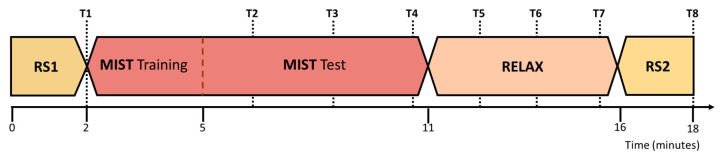
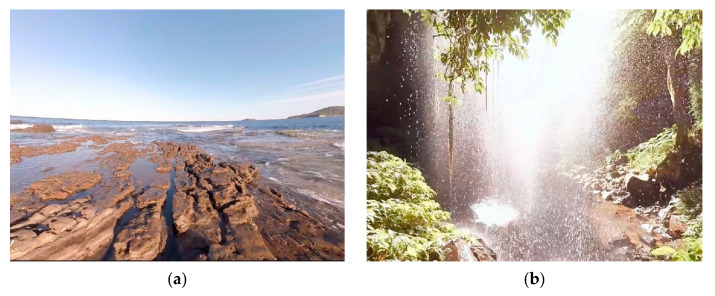
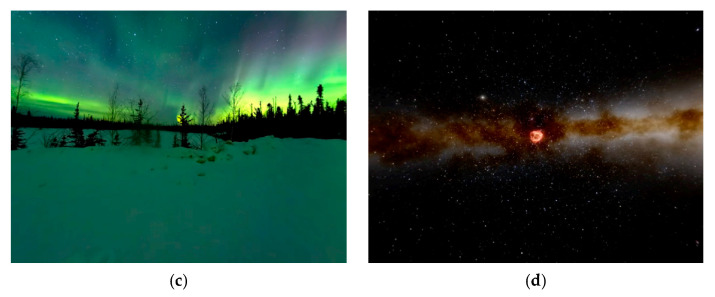
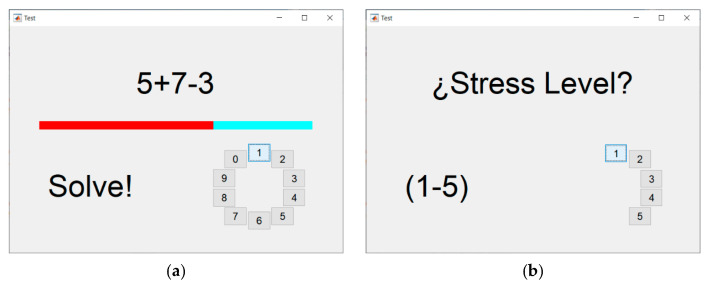
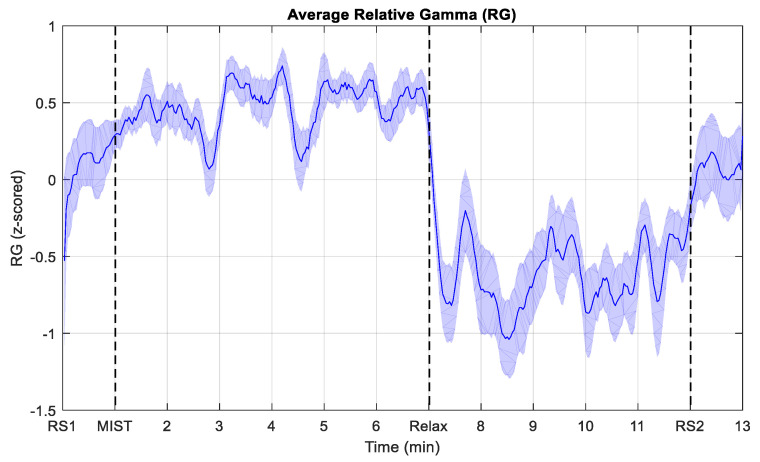
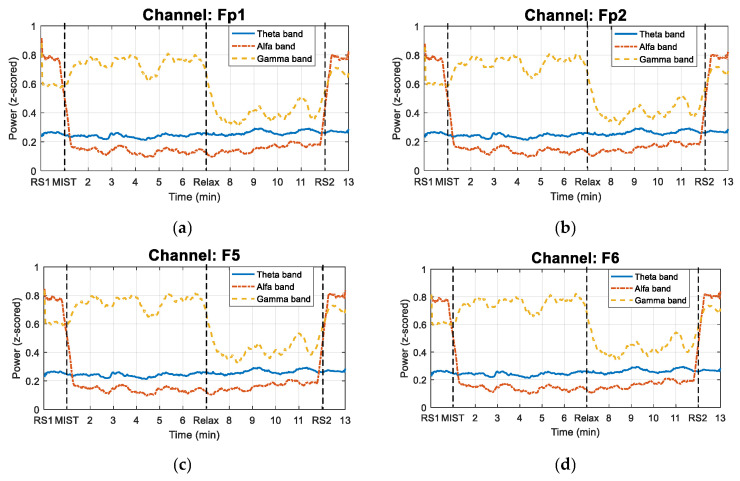
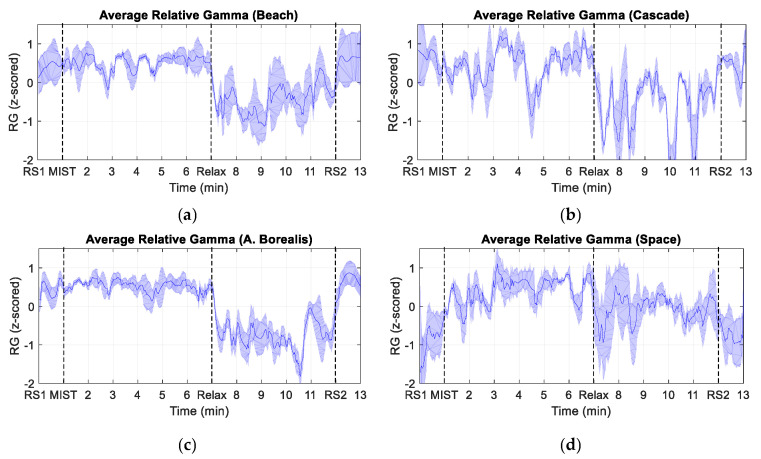
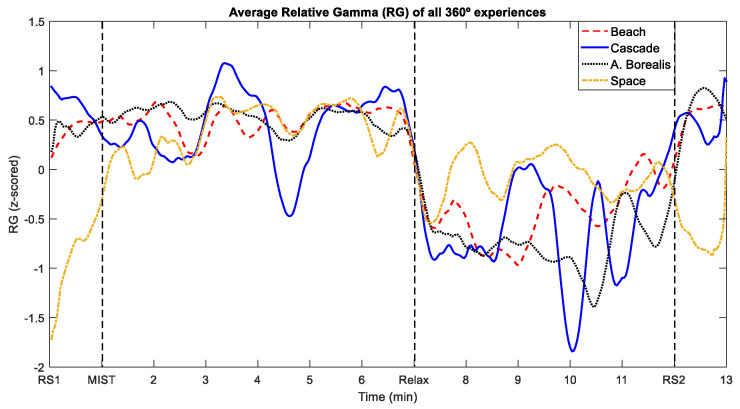
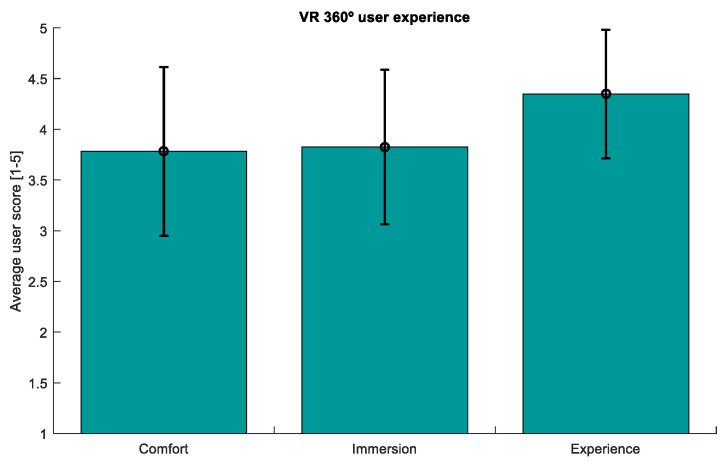
The latest studies in virtual reality (VR) have evidenced the potential of this technology to reproduce environments from multiple domains in an immersive way. For instance, in stress relief research, VR has been presented as a portable and inexpensive alternative to chromotherapy rooms, which require an adapted space and are expensive. In this work, we propose a portable and versatile alternative to the traditional chromotherapy color-loop treatment through four different 360-degree virtual experiences. A group of 23 healthy participants (mean age 22.65 ± 5.48) were conducted through a single-session experience divided into four phases while their electroencephalography (EEG) was recorded. First, they were stressed via the Montreal imaging stress task (MIST), and then relaxed using our VR proposal. We applied the Wilcoxon test to evaluate the relaxation effect in terms of the EEG relative gamma and self-perceived stress surveys. The results that we obtained validate the effectiveness of our 360-degree proposal to significantly reduce stress (p-value = 0.0001). Furthermore, the participants deemed our proposal comfortable and immersive (score above 3.5 out of 5). These results suggest that 360-degree VR experiences can mitigate stress, reduce costs, and bring stress relief assistance closer to the general public, like in workplaces or homes.
Keywords: EEG; emotions; stress; virtual reality.
Conflict of interest statement
The authors declare no conflict of interest.
Figures
References
-
- Carl E., Stein A.T., Levihn-Coon A., Pogue J.R., Rothbaum B., Emmelkamp P., Asmundson G.J.G., Carlbring P., Powers M.B. Virtual Reality Exposure Therapy for Anxiety and Related Disorders: A Meta-Analysis of Randomized Controlled Trials. J. Anxiety Disord. 2019;61:27–36. doi: 10.1016/j.janxdis.2018.08.003. - DOI - PubMed
-
- Ip H.H.S., Wong S.W.L., Chan D.F.Y., Byrne J., Li C., Yuan V.S.N., Lau K.S.Y., Wong J.Y.W. Enhance Emotional and Social Adaptation Skills for Children with Autism Spectrum Disorder: A Virtual Reality Enabled Approach. Comput. Educ. 2018;117:1–15. doi: 10.1016/j.compedu.2017.09.010. - DOI
-
- Maskey M., McConachie H., Rodgers J., Grahame V., Maxwell J., Tavernor L., Parr J.R. An Intervention for Fears and Phobias in Young People with Autism Spectrum Disorders Using Flat Screen Computer-Delivered Virtual Reality and Cognitive Behaviour Therapy. Res. Autism Spectr. Disord. 2019;59:58–67. doi: 10.1016/j.rasd.2018.11.005. - DOI
-
- Maggio M.G., Russo M., Cuzzola M.F., Destro M., La Rosa G., Molonia F., Bramanti P., Lombardo G., De Luca R., Calabrò R.S. Virtual Reality in Multiple Sclerosis Rehabilitation: A Review on Cognitive and Motor Outcomes. J. Clin. Neurosci. 2019;65:106–111. doi: 10.1016/j.jocn.2019.03.017. - DOI - PubMed
MeSH terms
LinkOut - more resources
Full Text Sources
Other Literature Sources
