


IL-33 in Mental Disorders
- PMID: 33810498
- PMCID: PMC8066291
- DOI: 10.3390/medicina57040315
IL-33 in Mental Disorders
Abstract
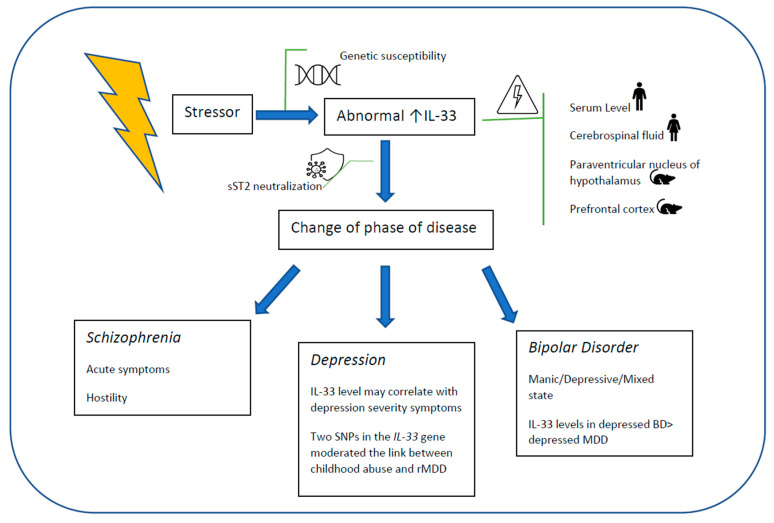
Mental disorders are common in the general population; every year about 25% of the total European population is affected by a mental condition. The prevalence of psychiatric disorders might be underestimated. Emerging evidence highlights the role of immune response as a key factor in MDs. Immunological biomarkers seem to be related to illness progression and to treatment effectiveness; several studies suggest strong associations among IL-6, TNFa, S100b, IL 1b, and PCR with affective or schizophrenic disorders. The purpose of this review is to examine and to understand the possible link between mental disorders and interleukin 33 to clarify the role of this axis in the immune system. We found 13 research papers that evaluated interleukin 33 or interleukin 31 levels in subjects affected by mental disorders. Eight studies investigated cytokines in affective disorders. Three studies measured levels of IL-33 in schizophrenia and two studies focused on patients affected by autism spectrum disorders. Alterations in brain structure and neurodevelopmental outcome are affected by multiple levels of organization. Disorders of the autoimmune response, and of the IL-33/31 axis, may therefore be one of the factors involved in this process. These results support the evidence that alarmins, particularly the IL-33/31 axis, need more consideration among researchers and practitioners.
Keywords: ASD; IL-33; alarmin; autism; bipolar; depression; inflammation; interleukin-33; mental disorders; psychiatric.
Conflict of interest statement
None of the author have any conflict of interests to declare.
Figures
References
-
- American Psychiatric Association . Diagnostic and Statistical Manual of Mental Disorders. American Psychiatric Association; Washington, DC, USA: 2013.
-
- Momen N.C., Plana-Ripoll O., Agerbo E., Benros M.E., Børglum A.D., Christensen M.K., Dalsgaard S., Degenhardt L., de Jonge P., Debost J.-C.P.G., et al. Association between Mental Disorders and Subsequent Medical Conditions. N. Engl. J. Med. 2020;382:1721–1731. doi: 10.1056/NEJMoa1915784. - DOI - PMC - PubMed
Publication types
MeSH terms
Substances
LinkOut - more resources
Full Text Sources
Other Literature Sources
Medical
Research Materials
Miscellaneous
