


Media usage predicts intention to be vaccinated against SARS-CoV-2 in the US and the UK
- PMID: 33810905
- PMCID: PMC9756787
- DOI: 10.1016/j.vaccine.2021.02.054
Media usage predicts intention to be vaccinated against SARS-CoV-2 in the US and the UK
Abstract
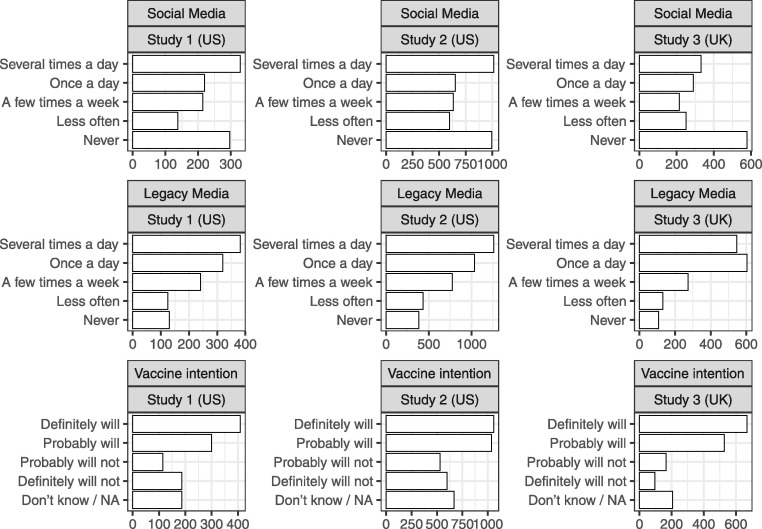
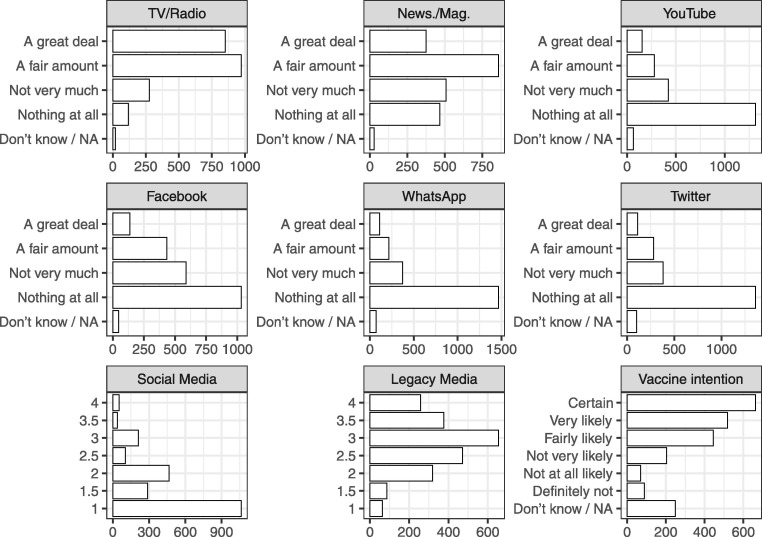
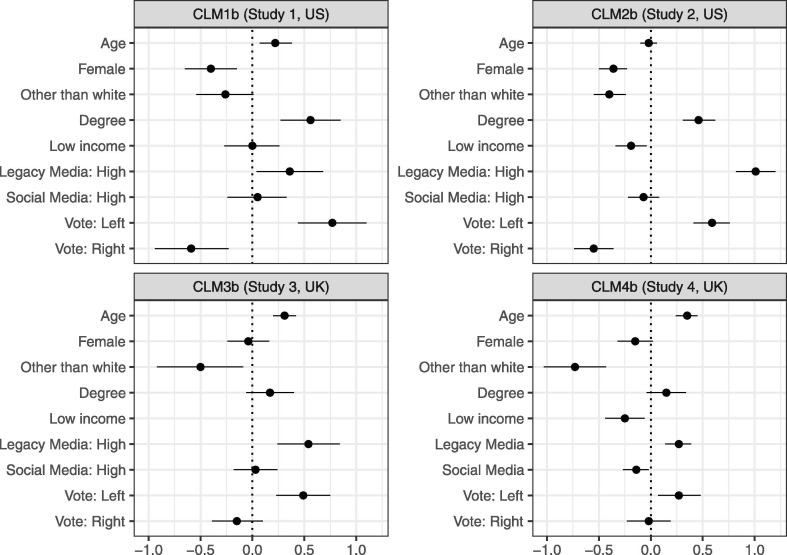
There is existing evidence of a relationship between media use and vaccine hesitancy. Four online questionnaires were completed by general population samples from the US and the UK in June 2020 (N = 1198, N = 3890, N = 1663, N = 2237). After controls, all four studies found a positive association between intention to be vaccinated and usage of broadcast and print media. The three studies which operationalised media usage in terms of frequency found no effect for social media. However, the study which operationalised media use in terms of informational reliance found a negative effect for social media. Youth, low household income, female gender, below degree-level of education, and membership of other than white ethnic groups were each also found to be associated with lower intentions to be vaccinated in at least two of the four studies. In all four studies, intention to be vaccinated was positively associated with having voted either for Hillary Clinton in the 2016 US presidential elections or for Labour Party candidates in the 2019 UK general election. Neither of the UK studies found an association with having voted for Conservative Party candidates, but both US studies found a negative association between intention to be vaccinated and having voted for Donald Trump. The consistent finding of greater intention to be vaccinated among users of legacy media but not among users of social media suggests that social media do not currently provide an adequate replacement for legacy media, at least in terms of public health communication. The finding of a negative association with social media in the study which measured informational reliance rather than frequency is consistent with the view that uncritical consumption of social media may be acting to promote vaccine hesitancy.
Keywords: Coronavirus; Covid-19; Media use; Vaccine hesitancy; Voting history.
Copyright © 2021 The Authors. Published by Elsevier Ltd.. All rights reserved.
Conflict of interest statement
Declaration of Competing Interest Siobhan McAndrew is a non-executive board member of the Center for Countering Digital Hate. The authors declare that they have no other known competing financial interests or personal relationships that could have appeared to influence the work reported in this paper.
Figures
References
-
- 1. ONS, Coronavirus and the impact on output in the UK economy: June 2020. 2020.
-
- BBC, Coronavirus: US economy sees sharpest contraction in decades, in British Broadcasting Corporation. 2020.
Publication types
MeSH terms
LinkOut - more resources
Full Text Sources
Other Literature Sources
Medical
Miscellaneous
