


Computer-delivered personalized feedback intervention for hazardous drinkers with elevated anxiety sensitivity: A pilot randomized controlled trial
- PMID: 33813352
- PMCID: PMC8119384
- DOI: 10.1016/j.brat.2021.103847
Computer-delivered personalized feedback intervention for hazardous drinkers with elevated anxiety sensitivity: A pilot randomized controlled trial
Abstract
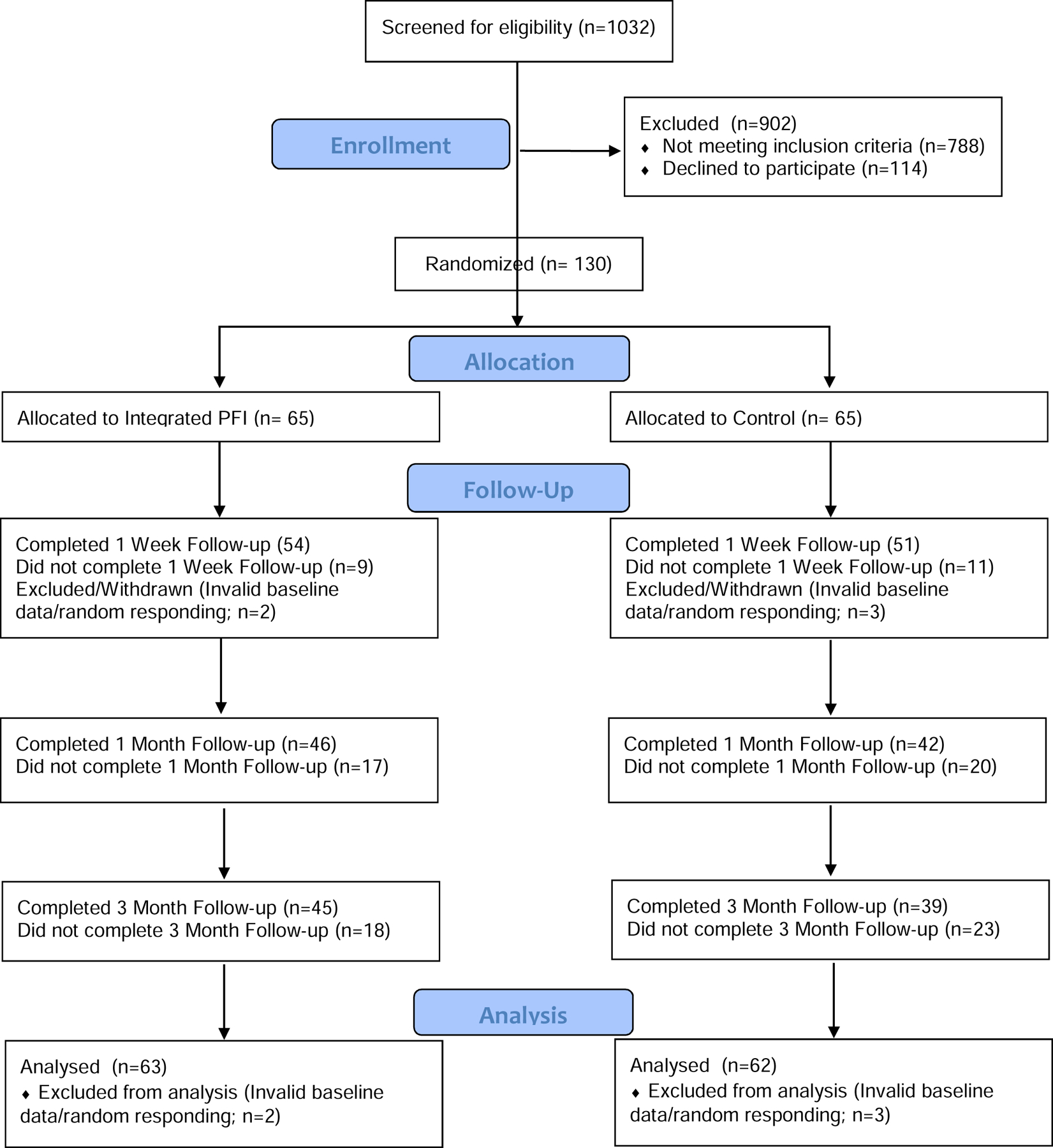
Hazardous drinkers with emotional vulnerabilities (e.g., elevated anxiety sensitivity) remain an underserved group. This study aimed to evaluate the feasibility, acceptability, and initial efficacy of a single session remotely-delivered personalized feedback intervention (PFI) targeting alcohol (mis)use and anxiety sensitivity among college students. Hazardous drinkers with elevated anxiety sensitivity (N = 125; 76.8% female; Mage = 22.14; 66.4% racial/ethnic minorities) were randomized to receive the integrated PFI (n = 63) or attention control (n = 62). Follow-up assessments were conducted one-week, one-month and three-months post-intervention. Latent growth curve modeling was used to test pilot outcomes. It was feasible to recruit and retain hazardous drinking students with elevated anxiety sensitivity through follow-up with no group differences in retention. The integrated PFI was rated as more acceptable than the control with medium/large differences (p's < 0.004; d's = 0.54-0.80). The integrated PFI group had statistically significantly greater change in primary outcomes: motivation, hazardous alcohol use, and anxiety sensitivity (p's < 0.05; d's = 0.08-0.37) with larger within-group effect sizes (d's = 0.48-0.61) than in control (d's = 0.26-0.54). Despite a small sample size, this one-session intervention offers promise among a high-risk group of drinkers with emotional vulnerabilities. The computer-based format may allow for mass distribution of a low-cost intervention in the future; however, follow-up testing in larger samples is needed.
Keywords: Affect; Comorbidity; Integrated; Intervention; Technology; Transdiagnostic.
Copyright © 2021 Elsevier Ltd. All rights reserved.
Conflict of interest statement
Conflicts of Interest
Authors report no conflicts of interest
Figures
References
-
- Babor TF, Higgins-Biddle JC, Saunders JB, & Monteiro MG (2001). The Alcohol Use Disorders Identification Test: Guidelines for Use in Primary Care. Geneva. World Health Organization, Department of Mental Health and Substance Dependence
Publication types
MeSH terms
Grants and funding
LinkOut - more resources
Full Text Sources
Other Literature Sources
Medical
