


Global orthopaedic trauma surgeons highlight telenomics during the COVID-19 era: A case for advancing telemedicine in orthopaedics
- PMID: 33814860
- PMCID: PMC7997301
- DOI: 10.1016/j.jcot.2021.03.015
Global orthopaedic trauma surgeons highlight telenomics during the COVID-19 era: A case for advancing telemedicine in orthopaedics
Erratum in
-
Erratum regarding previously published articles.J Clin Orthop Trauma. 2021 Jul 30;20:101539. doi: 10.1016/j.jcot.2021.101539. eCollection 2021 Sep. J Clin Orthop Trauma. 2021. PMID: 34405084 Free PMC article.
Abstract
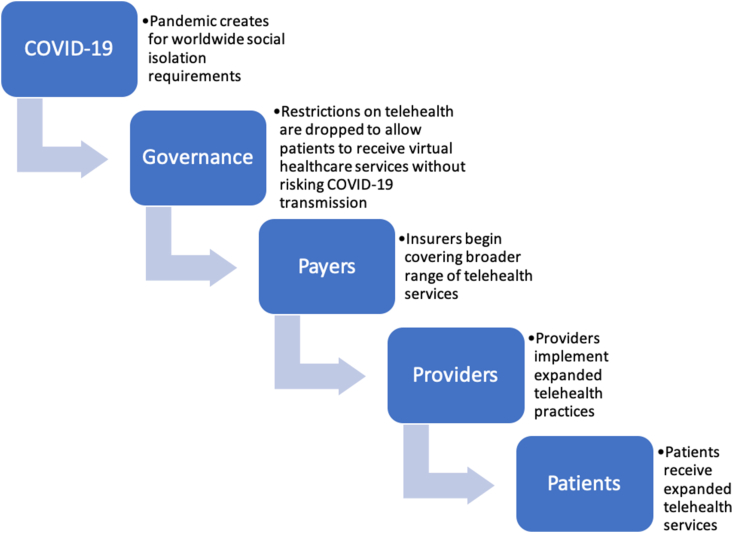
The Coronavirus (COVID-19) pandemic sparked rapid widespread adoption of telemedicine throughout specialties, including orthopaedics. A succession of factors, starting with payers, followed by provider adoption, and reciprocated by patient approval, created newly accepted telehealth practices that have moved from trial to norm in a short time span. Orthopaedic surgeons believe telehealth will endure as a permanent change to their practice beyond the COVID-19 era, however, many permanent changes must take place by payers, providers, and patients to sustain telehealth into the future. The goal of this paper is to highlight the indelibility of telemedicine adoption in orthopaedic practices globally, characterize the chain of events that led to its large-scale adoption, and catalyze discussion around actionable next steps to sustain its benefits.
Keywords: COVID-19; Coronavirus; Global health; Health policy; Orthopaedic trauma; Orthopaedics; Telehealth; Telemedicine; U.S. healthcare policy.
© 2021.
Figures
References
-
- Fact sheet: telehealth | AHA. https://www.aha.org/factsheet/telehealth Accessed July 2, 2020.
Publication types
LinkOut - more resources
Full Text Sources
Other Literature Sources
