


Patient-Derived Cancer Organoids as Predictors of Treatment Response
- PMID: 33816288
- PMCID: PMC8012903
- DOI: 10.3389/fonc.2021.641980
Patient-Derived Cancer Organoids as Predictors of Treatment Response
Abstract
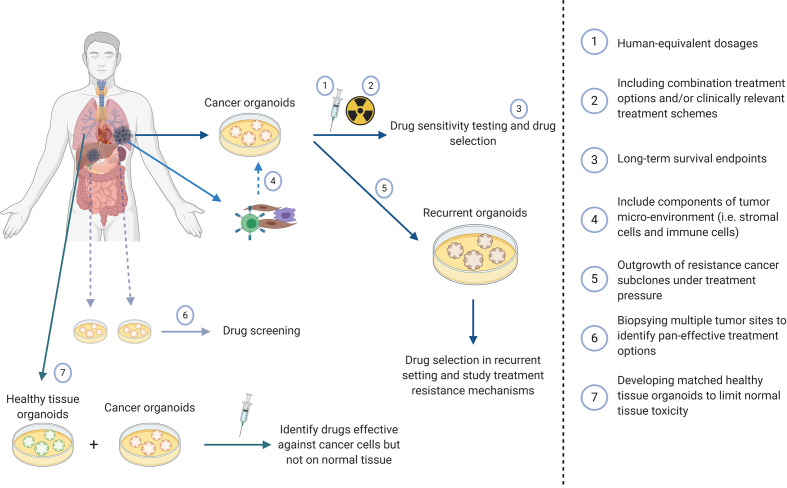
Patient-derived cancer organoids have taken a prominent role in pre-clinical and translational research and have been generated for most common solid tumors. Cancer organoids have been shown to retain key genetic and phenotypic characteristics of their tissue of origin, tumor subtype and maintain intratumoral heterogeneity and therefore have the potential to be used as predictors for individualized treatment response. In this review, we highlight studies that have used cancer organoids to compare the efficacy of standard-of-care and targeted combination treatments with clinical patient response. Furthermore, we review studies using cancer organoids to identify new anti-cancer treatments using drug screening. Finally, we discuss the current limitations and improvements needed to understand the full potential of cancer organoids as avatars for clinical management of cancer therapy.
Keywords: cancer; organoids; patient-derived; precision medicine; treatment prediction; treatment response.
Copyright © 2021 Verduin, Hoeben, De Ruysscher and Vooijs.
Conflict of interest statement
The authors declare that the research was conducted in the absence of any commercial or financial relationships that could be construed as a potential conflict of interest.
Figures
References
Publication types
LinkOut - more resources
Full Text Sources
Other Literature Sources
