


The Looming Effects of Estrogen in Covid-19: A Rocky Rollout
- PMID: 33816542
- PMCID: PMC8012689
- DOI: 10.3389/fnut.2021.649128
The Looming Effects of Estrogen in Covid-19: A Rocky Rollout
Abstract
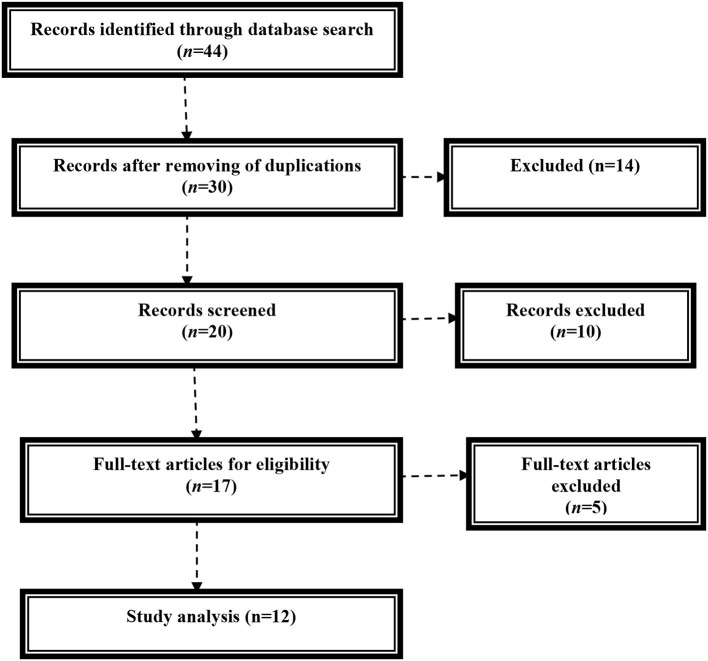
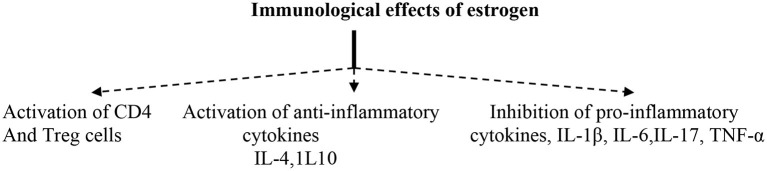
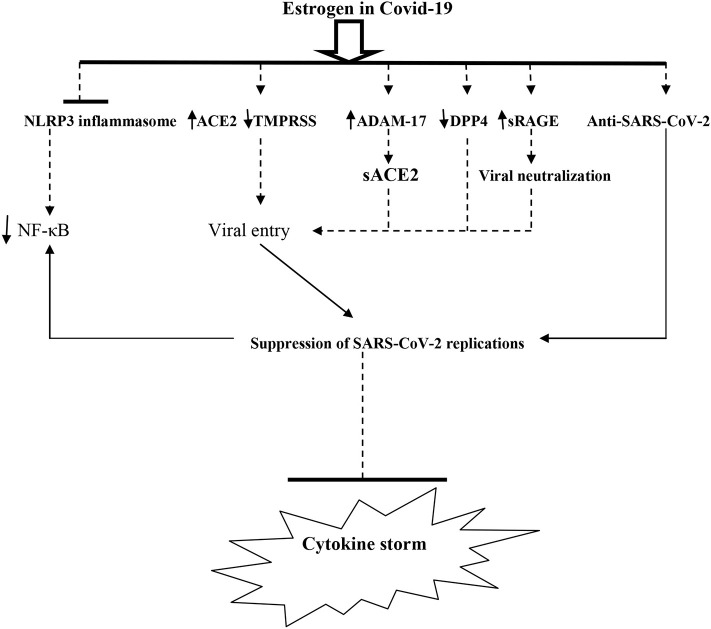
In the face of the Covid-19 pandemic, an intensive number of studies have been performed to understand in a deeper way the mechanisms behind better or worse clinical outcomes. Epidemiologically, men subjects are more prone to severe acute respiratory syndrome-coronavirus type 2 (SARS-CoV-2) infections than women, with a similar scenario being also stated to the previous coronavirus diseases, namely, SARS-CoV in 2003 and Middle East Respiratory Syndrome coronavirus diseases (MERS-CoV) in 2012. In addition, and despite that aging is regarded as an independent risk factor for the severe form of the disease, even so, women protection is evident. In this way, it has been expected that sex hormones are the main determinant factors in gender differences, with the immunomodulatory effects of estrogen in different viral infections, chiefly in Covid-19, attracting more attention as it might explain the case-fatality rate and predisposition of men for Covid-19 severity. Here, we aim to provide a mini-review and an overview on the protective effects of estrogen in Covid-19. Different search strategies were performed including Scopus, Web of Science, Medline, Pubmed, and Google Scholar database to find relative studies. Findings of the present study illustrated that women have a powerful immunomodulating effect against Covid-19 through the effect of estrogen. This study illustrates that estrogens have noteworthy anti-inflammatory and immuno-modulatory effects in Covid-19. Also, estrogen hormone reduces SARS-CoV-2 infectivity through modulation of pro-inflammatory signaling pathways. This study highlighted the potential protective effect of estrogen against Covid-19 and recommended for future clinical trial and prospective studies to elucidate and confirm this protective effect.
Keywords: Covid-19; SARS-CoV-2; angiotensin converting enzyme-2; estrogen; patients outcomes.
Copyright © 2021 Al-kuraishy, Al-Gareeb, Faidah, Al-Maiahy, Cruz-Martins and Batiha.
Conflict of interest statement
The authors declare that the research was conducted in the absence of any commercial or financial relationships that could be construed as a potential conflict of interest.
Figures
References
-
- Al-Kuraishy HM, Al-Naimi MS, Lungnier CM, Al-Gareeb AI. Macrolides and COVID-19: an optimum premise. Biomed Biotechnol Res J. (2020) 4:189. 10.4103/bbrj.bbrj_103_20 - DOI
-
- Al-Kuraishy HM, Hussien NR, Al-Naimi MS, Al-Buhadily AK, Al-Gareeb AI, Lungnier C. Is ivermectin–Azithromycin combination the next step for COVID-19?. Biomed Biotechnol Res J. (2020) 4:101. 10.4103/bbrj.bbrj_109_20 - DOI
-
- Al-Kuraishy HM, Hussien NR, Al-Naimi MS, Al-Buhadily AK, Al-Gareeb AI, Lungnier C. Renin–Angiotensin system and fibrinolytic pathway in COVID-19: One-way skepticism. Biomed Biotechnol Res J. (2020) 4:33. 10.4103/bbrj.bbrj_105_20 - DOI
-
- Conti P, Younes A. Coronavirus COV-19/SARS-CoV-2 affects women less than men: clinical response to viral infection. J Biol Regul Homeost Agents. (2020) 34:339–43. - PubMed
Publication types
LinkOut - more resources
Full Text Sources
Other Literature Sources
Miscellaneous
