. 2021 Jun 1;320(6):L1085-L1092.
doi: 10.1152/ajplung.00046.2021. Epub 2021 Apr 6.

Inhibition of the lipoxin A4 and resolvin D1 receptor impairs host response to acute lung injury caused by pneumococcal pneumonia in mice

Affiliations

Inhibition of the lipoxin A4 and resolvin D1 receptor impairs host response to acute lung injury caused by pneumococcal pneumonia in mice

Emily R Siegel et al. Am J Physiol Lung Cell Mol Physiol. .

Abstract

Resolution of the acute respiratory distress syndrome (ARDS) from pneumonia requires repair of the injured lung endothelium and alveolar epithelium, removal of neutrophils from the distal airspaces of the lung, and clearance of the pathogen. Previous studies have demonstrated the importance of specialized proresolving mediators (SPMs) in the regulation of host responses during inflammation. Although ARDS is commonly caused by Streptococcus pneumoniae, the role of lipoxin A4 (LXA4) and resolvin D1 (RvD1) in pneumococcal pneumonia is not well understood. In the present experimental study, we tested the hypothesis that endogenous SPMs play a role in the resolution of lung injury in a clinically relevant model of bacterial pneumonia. Blockade of formyl peptide receptor 2 (ALX/FPR2), the receptor for LXA4 and RvD1, with the peptide WRW4 resulted in more pulmonary edema, greater protein accumulation in the air spaces, and increased bacteria accumulation in the air spaces and the blood. Inhibition of this receptor was also associated with decreased levels of proinflammatory cytokines. Even in the presence of antibiotic treatment, WRW4 inhibited the resolution of lung injury. In summary, these experiments demonstrated two novel findings: LXA4 and RvD1 contribute to the resolution of lung injury due to pneumococcal pneumonia, and the mechanism of their benefit likely includes augmenting bacterial clearance and reducing pulmonary edema via the restoration of lung alveolar-capillary barrier permeability.

Keywords: ARDS; acute lung injury; infection; pneumonia; resolution.


Conflict of interest statement

No conflicts of interest, financial or otherwise, are declared by the authors.

Figures
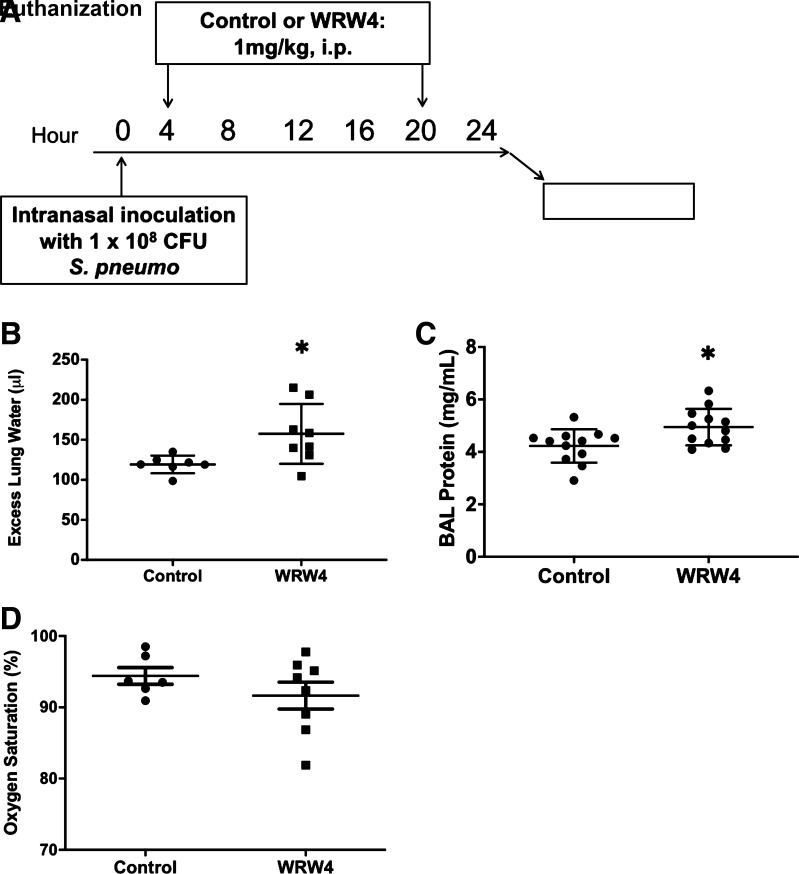
Figure 1.
Figure 1.
Pulmonary impact of formyl peptide receptor 2 (ALX/FPR2) inhibition. A: schematic depicting experimental procedures. Mice were inoculated with 1 × 10⁸ CFU of Streptococcus pneumoniae intranasally. Four and 20 hours after induction of injury, mice were either given 1 mg/kg of WRW4 or control (PBS) intraperitoneally (i.p.). Mice were euthanized at 24 h postinfection for bronchoalveolar lavage (BAL). B: pulmonary edema, as measured by excess lung water (ELW) in the interstitial and alveolar spaces, was increased in the mice that received WRW4 (n = 8) compared with those that received control (n = 7). *P = 0.02. C: BAL protein was increased in the mice that received WRW4 (n = 12) compared with those that received control (n = 12). *P = 0.02. D: mean arterial oxygenation saturation in mice given either WRW4 (n = 8) or control (n = 6). P = 0.27. CFU, colony-forming units.
Figure 2.
Figure 2.
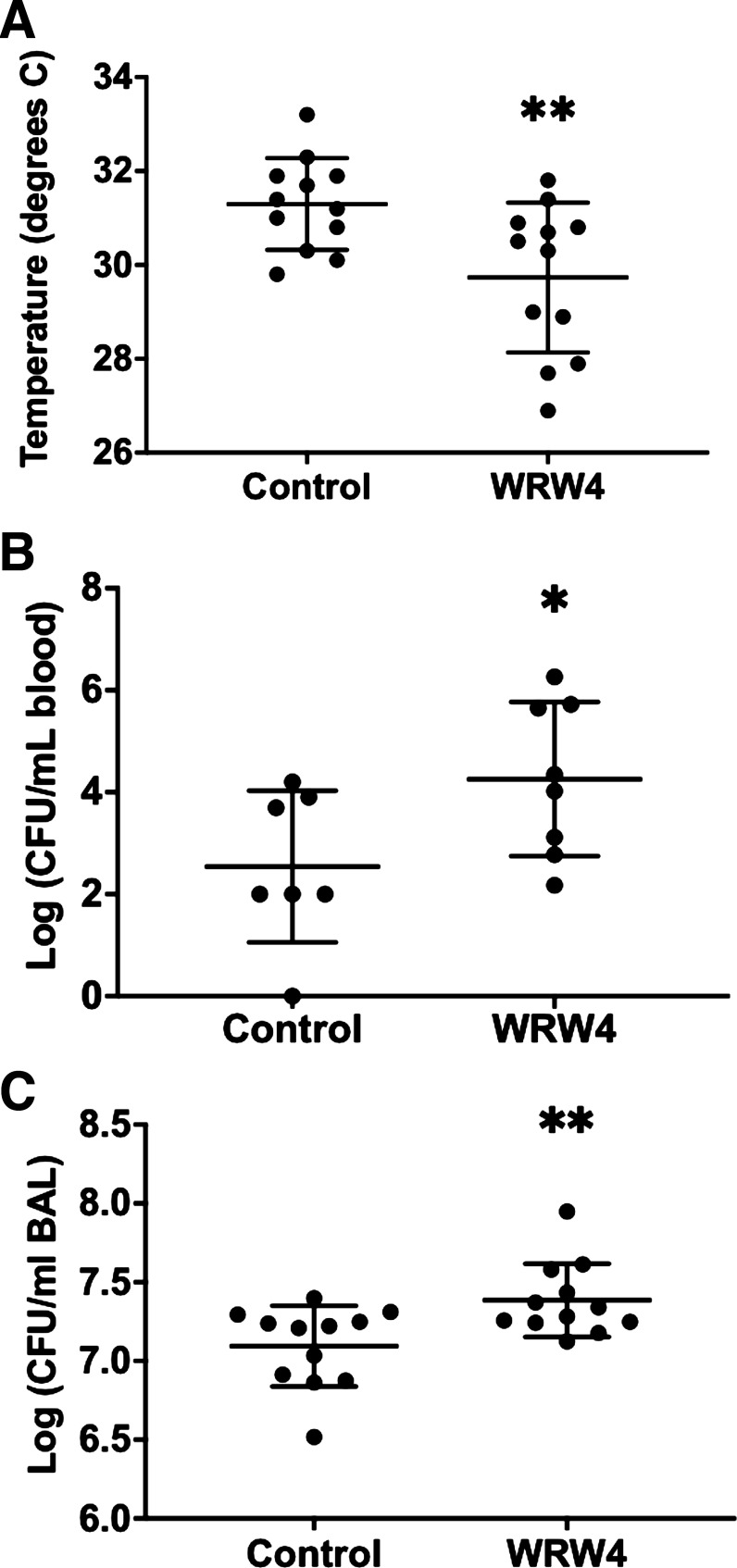
Microbiologic effects of formyl peptide receptor 2 (ALX/FPR2) inhibition. A: core body temperature at 24 h following intranasal inoculation with Streptococcus pneumoniae in mice given either WRW4 (n = 13) or control (n = 12). Both developed hypothermia. The temperature was significantly lower in mice that received WRW4. **P = 0.008. B: bacterial counts [as measured by colony-forming units (CFU)] in the peripheral blood of mice treated with WRW4 (n = 8) or control (n = 7). Bacteremia was greater in mice that had been given WRW4. *P = 0.05. C: airspace pneumococcal density was increased in the mice that received WRW4 (n = 12) compared with those that received control (n = 12). **P = 0.008. BAL, bronchoalveolar lavage.
Figure 3.
Figure 3.
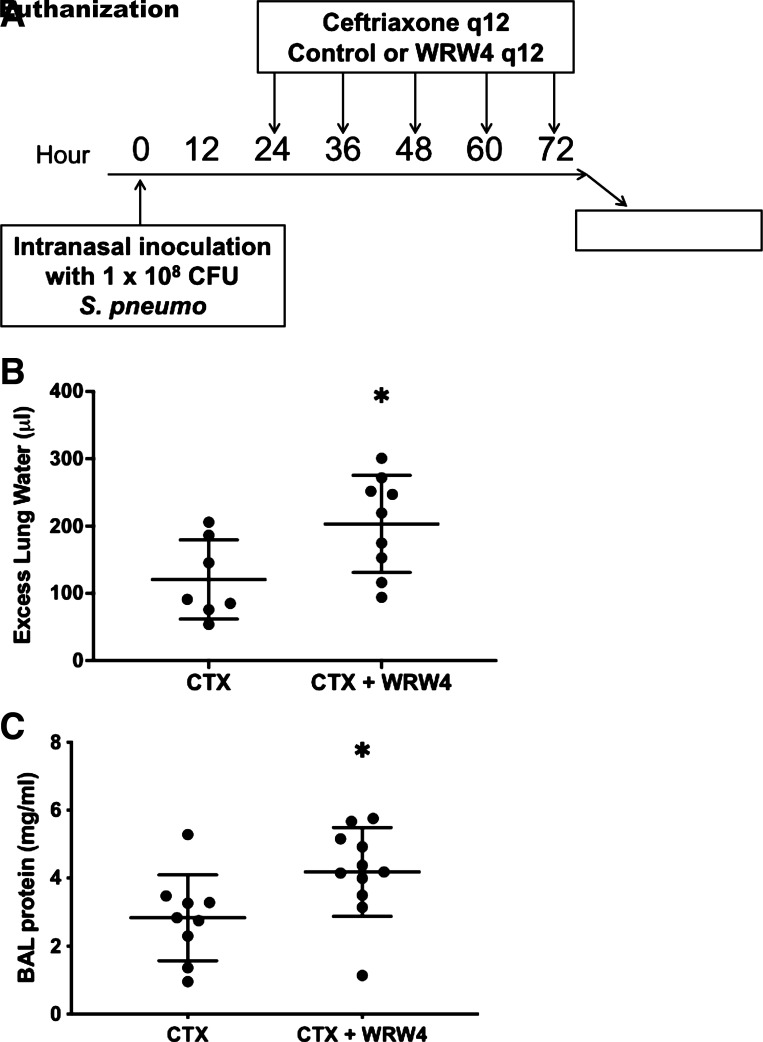
Influence of formyl peptide receptor 2 (ALX/FPR2) inhibition on lung injury in an antibiotic-treated pneumococcal pneumonia model. A: schematic depicting experimental procedures. Mice were inoculated with 1 × 10⁸ colony-forming units (CFU) of Streptococcus pneumoniae intranasally. The mice were then administered five doses of ceftriaxone (CTX) and five doses of either control (PBS) or WRW4 beginning 24 h after infection and then again every 12 h. The ceftriaxone, control, and WRW4 were all administered intraperitoneally. The mice were then euthanized for bronchoalveolar lavage (BAL) at 72 h postinfection. B: excess lung water was significantly higher in the mice that received both ceftriaxone and WRW4 (n = 9) as compared with the mice that only received ceftriaxone (n = 7). *P = 0.03. C: BAL protein was significantly higher in the mice that received both ceftriaxone and WRW4 (n = 11) as compared with the mice that only received ceftriaxone (n = 9). *P = 0.03.

References

    1. Rubenfeld GD, Caldwell E, Peabody E, Weaver J, Martin DP, Neff M, Stern EJ, Hudson LD. Incidence and outcomes of acute lung injury. N Engl J Med 353: 1685–1693, 2005. doi: 10.1056/NEJMoa050333. - DOI - PubMed
    1. Acute Respiratory Distress Syndrome Network; Brower RG, Matthay MA, Morris A, Schoenfeld D, Thompson BT, Wheeler A. Ventilation with lower tidal volumes as compared with traditional tidal volumes for acute lung injury and the acute respiratory distress syndrome. N Engl J Med 342: 1301–1308, 2000. doi: 10.1056/NEJM200005043421801. - DOI - PubMed
    1. National Heart Lung and Blood Institute Acute Respiratory Distress Syndrome (ARDS) Clinical Trials Network; Wiedemann HP, Wheeler AP, Bernard GR, Thompson BT, Hayden D, deBoisblanc B, Connors AF, Jr., Hite RD, Harabin AL. Comparison of two fluid-management strategies in acute lung injury. N Engl J Med 354: 2564–2575, 2006. doi: 10.1056/NEJMoa062200. - DOI - PubMed
    1. Matthay MA, Zemans RL, Zimmerman GA, Arabi YM, Beitler JR, Mercat A, Herridge M, Randolph AG, Calfee CS. Acute respiratory distress syndrome. Nat Rev Dis Primers 5: 18, 2019. doi: 10.1038/s41572-019-0069-0. - DOI - PMC - PubMed
    1. Headley AS, Tolley E, Meduri GU. Infections and the inflammatory response in acute respiratory distress syndrome. Chest 111: 1306–1321, 1997. doi: 10.1378/chest.111.5.1306. - DOI - PubMed

Publication types

MeSH terms

LinkOut - more resources