


Long-Term Outcomes in ICU Patients with Delirium: A Population-based Cohort Study
- PMID: 33823122
- PMCID: PMC8480248
- DOI: 10.1164/rccm.202002-0320OC
Long-Term Outcomes in ICU Patients with Delirium: A Population-based Cohort Study
Abstract
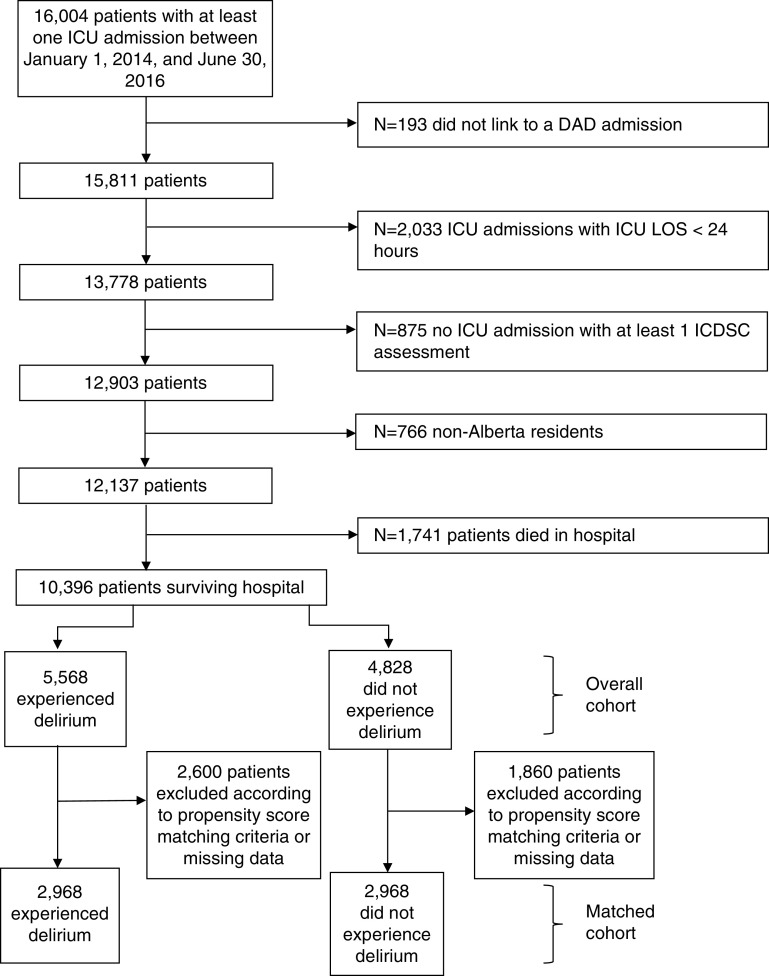
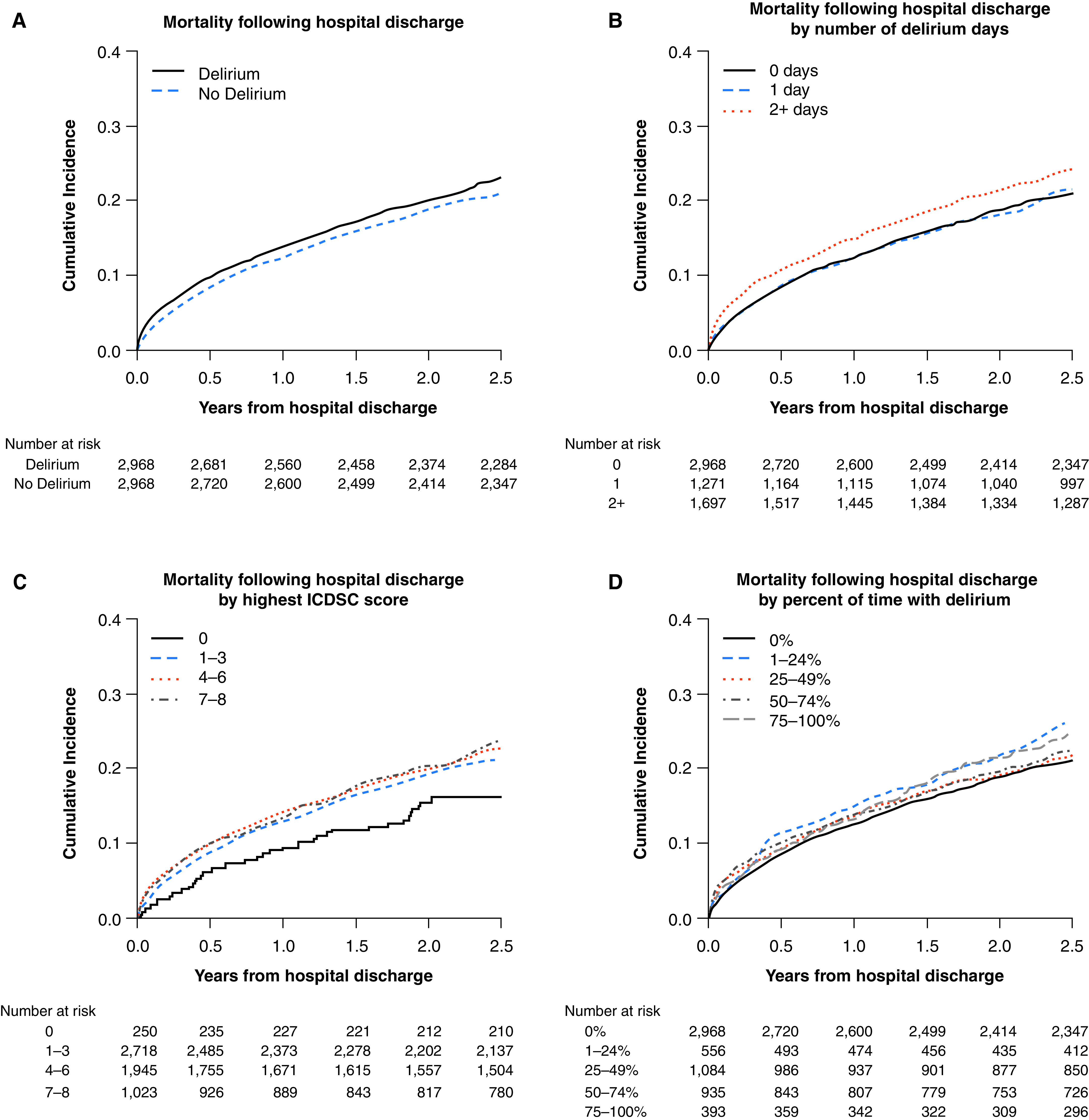
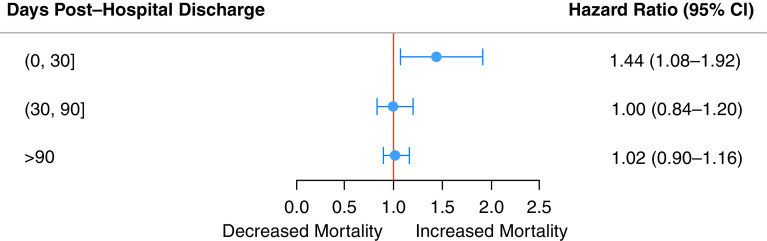
Rationale: Delirium is common in the ICU and portends worse ICU and hospital outcomes. The effect of delirium in the ICU on post-hospital discharge mortality and health resource use is less well known. Objectives: To estimate mortality and health resource use 2.5 years after hospital discharge in critically ill patients admitted to the ICU. Methods: This was a population-based, propensity score-matched, retrospective cohort study of adult patients admitted to 1 of 14 medical-surgical ICUs from January 1, 2014, to June 30, 2016. Delirium was measured by using the 8-point Intensive Care Delirium Screening Checklist. The primary outcome was mortality. The secondary outcome was a composite measure of subsequent emergency department visits, hospital readmission, or mortality. Measurements and Main Results: There were 5,936 propensity score-matched patients with and without a history of incident delirium who survived to hospital discharge. Delirium was associated with increased mortality 0-30 days after hospital discharge (hazard ratio, 1.44 [95% confidence interval, 1.08-1.92]). There was no significant difference in mortality more than 30 days after hospital discharge (delirium: 3.9%, no delirium: 2.6%). There was a persistent increased risk of emergency department visits, hospital readmissions, or mortality after hospital discharge (hazard ratio, 1.12 [95% confidence interval, 1.07-1.17]) throughout the study period. Conclusions: ICU delirium is associated with increased mortality 0-30 days after hospital discharge.
Keywords: critical care; delirium; mortality.
Figures
Comment in
-
Long-Term Outcomes after Delirium in the ICU: Addressing Gaps in Our Knowledge.Am J Respir Crit Care Med. 2021 Aug 15;204(4):383-385. doi: 10.1164/rccm.202104-0910ED. Am J Respir Crit Care Med. 2021. PMID: 34186012 Free PMC article. No abstract available.
References
-
- American Psychiatric Association. Diagnostic and statistical manual of mental disorders. 5th ed. Washington, DC: American Psychiatric Association; 2013.
-
- Ely EW, Inouye SK, Bernard GR, Gordon S, Francis J, May L, et al. Delirium in mechanically ventilated patients: validity and reliability of the confusion assessment method for the intensive care unit (CAM-ICU) JAMA . 2001;286:2703–2710. - PubMed
-
- Dubois MJ, Bergeron N, Dumont M, Dial S, Skrobik Y. Delirium in an intensive care unit: a study of risk factors. Intensive Care Med . 2001;27:1297–1304. - PubMed
-
- Bergeron N, Dubois MJ, Dumont M, Dial S, Skrobik Y. Intensive Care Delirium Screening Checklist: evaluation of a new screening tool. Intensive Care Med . 2001;27:859–864. - PubMed
-
- Girard TD, Kress JP, Fuchs BD, Thomason JW, Schweickert WD, Pun BT, et al. Efficacy and safety of a paired sedation and ventilator weaning protocol for mechanically ventilated patients in intensive care (Awakening and Breathing Controlled trial): a randomised controlled trial. Lancet . 2008;371:126–134. - PubMed
Publication types
MeSH terms
LinkOut - more resources
Full Text Sources
Other Literature Sources
Medical
