. 2021 Aug;11(8):1913-1922.
doi: 10.1158/2159-8290.CD-21-0365. Epub 2021 Apr 6.

Clinical Acquired Resistance to KRASG12C Inhibition through a Novel KRAS Switch-II Pocket Mutation and Polyclonal Alterations Converging on RAS-MAPK Reactivation

Affiliations

Clinical Acquired Resistance to KRASG12C Inhibition through a Novel KRAS Switch-II Pocket Mutation and Polyclonal Alterations Converging on RAS-MAPK Reactivation

Noritaka Tanaka et al. Cancer Discov. 2021 Aug.

Abstract

Mutant-selective KRASG12C inhibitors, such as MRTX849 (adagrasib) and AMG 510 (sotorasib), have demonstrated efficacy in KRAS G12C-mutant cancers, including non-small cell lung cancer (NSCLC). However, mechanisms underlying clinical acquired resistance to KRASG12C inhibitors remain undetermined. To begin to define the mechanistic spectrum of acquired resistance, we describe a patient with KRAS G12C NSCLC who developed polyclonal acquired resistance to MRTX849 with the emergence of 10 heterogeneous resistance alterations in serial cell-free DNA spanning four genes (KRAS, NRAS, BRAF, MAP2K1), all of which converge to reactivate RAS-MAPK signaling. Notably, a novel KRAS Y96D mutation affecting the switch-II pocket, to which MRTX849 and other inactive-state inhibitors bind, was identified that interferes with key protein-drug interactions and confers resistance to these inhibitors in engineered and patient-derived KRAS G12C cancer models. Interestingly, a novel, functionally distinct tricomplex KRASG12C active-state inhibitor RM-018 retained the ability to bind and inhibit KRASG12C/Y96D and could overcome resistance. SIGNIFICANCE: In one of the first reports of clinical acquired resistance to KRASG12C inhibitors, our data suggest polyclonal RAS-MAPK reactivation as a central resistance mechanism. We also identify a novel KRAS switch-II pocket mutation that impairs binding and drives resistance to inactive-state inhibitors but is surmountable by a functionally distinct KRASG12C inhibitor.See related commentary by Pinnelli and Trusolino, p. 1874.This article is highlighted in the In This Issue feature, p. 1861.


Conflict of interest statement

Conflicts of Interest:

JJL has served as a compensated consultant for Genentech, C4 Therapeutics, Blueprint Medicines, Nuvalent, Turning Point Therapeutics, and Elevation Oncology; received honorarium and travel support from Pfizer; received institutional research funds from Hengrui Therapeutics, Turning Point Therapeutics, Neon Therapeutics, Relay Therapeutics, Bayer, Elevation Oncology, Roche, and Novartis; received CME funding from OncLive, MedStar Health, and Northwell Health.

LK is an employee and shareholder of Guardant Health.

DJ has received scientific advisory board fee from Eisai, EMD Serono, Genentech, Ipsen, Novartis, Guardant, Petra Pharma, Mapkure, Vibliome Therapeutics, and Relay Therapeutics, and institutional research funds from Novartis, Genentech, EMD Serono, Eisai, Takeda, Placon Therapeutics, Takeda, Syros, Ribon Therapeutics, Infinity Pharmaceuticals, InventisBio and Amgen.

JFG has served as a compensated consultant or received honoraria from Bristol-Myers Squibb, Genentech, Ariad/Takeda, Loxo/Lilly, Blueprint, Oncorus, Regeneron, Gilead, AstraZeneca, Pfizer, Incyte, Novartis, Merck, Agios, Amgen, and Array; research support from Novartis, Genentech/Roche, and Ariad/Takeda; institutional research support from Bristol-Myers Squibb, Tesaro, Moderna, Blueprint, Jounce, Array Biopharma, Merck, Adaptimmune, Novartis, and Alexo; and has an immediate family member who is an employee with equity at Ironwood Pharmaceuticals.

SJK has served as a compensated consultant for Merck, BMS, Eli Lilly, Natera, Daiichi Sankyo and Pieris Oncology; owns stock/equity in Turning Point Therapeutics, Inc..

LBP is a co-founder/owns stock/equity and consults for Scorpion Therapeutics.

ANH has served as a compensated consultant for Nuvalent, Inc.; received research support from Amgen, Eli Lilly, Roche/Genentech, Relay Therapeutics, Blueprint Medicines, Nuvalent Inc., and Novartis.

RSH has received consulting honoraria from Novartis, Daichii Sankyo, EMD Serono, Boehringer Ingelheim, Tarveda, Apollomics, and has research funding (to institution, not to self) from Agios, Abbvie, Daichii Sankyo, Novartis, Lilly, Mirati, Corvus, Genentech Roche, Exelixis, Turning Point.

RBC has received consulting or speaking fees from Abbvie, Amgen, Array Biopharma/Pfizer, Asana Biosciences, Astex Pharmaceuticals, AstraZeneca, Avidity Biosciences, BMS, C4 Therapeutics, Chugai, Elicio, Erasca, Fog Pharma, Genentech, Guardant Health, Ipsen, Kinnate Biopharma, LOXO, Merrimack, Mirati Therapeutics, Natera, Navire, N-of-one/Qiagen, Novartis, nRichDx, Remix Therapeutics, Revolution Medicines, Roche, Roivant, Shionogi, Shire, Spectrum Pharmaceuticals, Symphogen, Tango Therapeutics, Taiho, Warp Drive Bio, Zikani Therapeutics; holds equity in Avidity Biosciences, C4 Therapeutics, Erasca, Kinnate Biopharma, nRichDx, Remix Therapeutics, and Revolution Medicines; and has received research funding from Asana, AstraZeneca, Lilly, Novartis, and Sanofi.

The remaining authors have no conflicts to disclose.

Figures
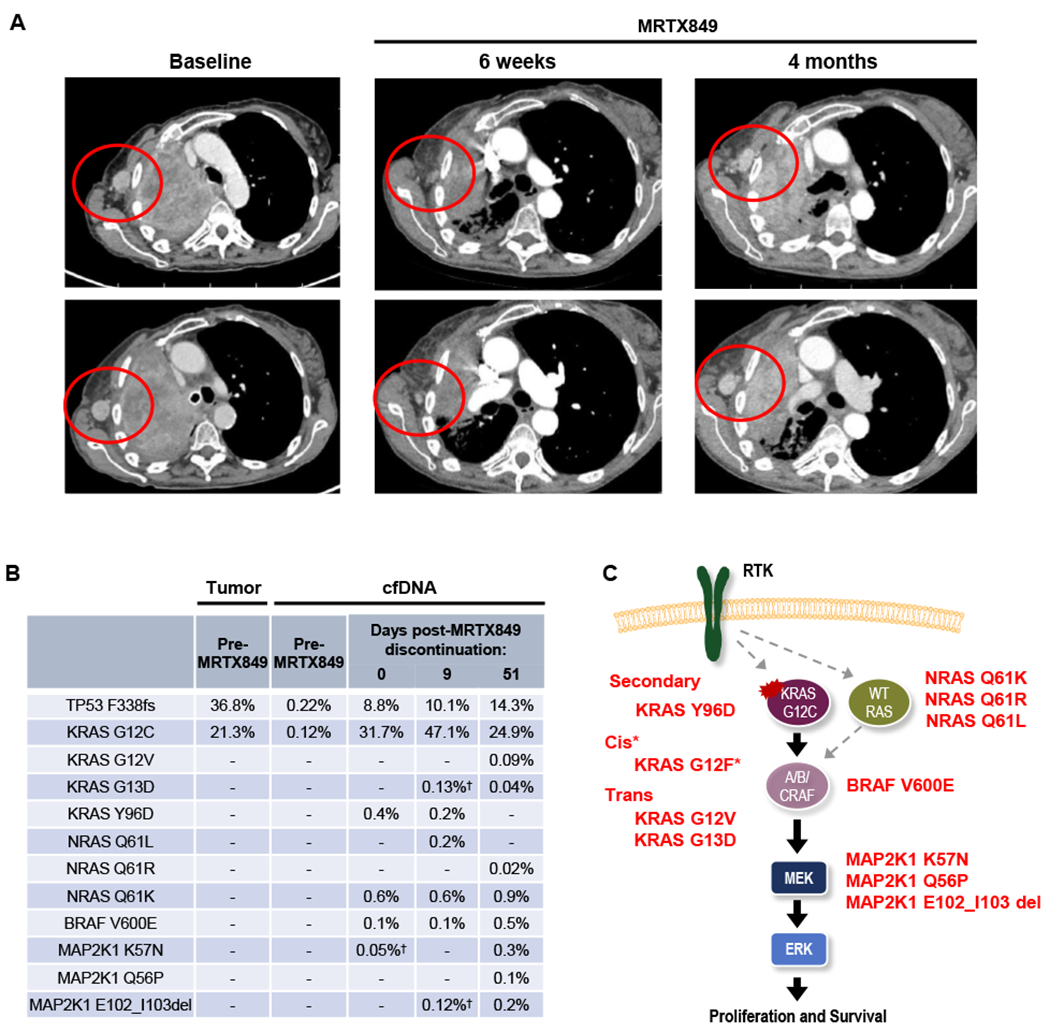
Figure 1.
Figure 1.. Acquired resistance to KRASG12C inhibitor MRTX849 (adagrasib).
A, Computed tomography (CT) images of the patient’s axillary lymph node metastasis at baseline, during response to MRTX849, and at progression on MRTX849. B, Variant allele fractions (VAFs) of mutations detected in the patient’s serial plasma samples. † indicates the mutations were detected by digital droplet PCR but not by plasma NGS. C, Alterations detected in post-MRTX849 cfDNA include acquired mutations in KRAS as well as multiple components of the MAPK signaling cascade. *KRASG12F represents a potential resistance mechanism supported by limited sequencing reads, as shown in Supplementary Figure S2.
Figure 2.
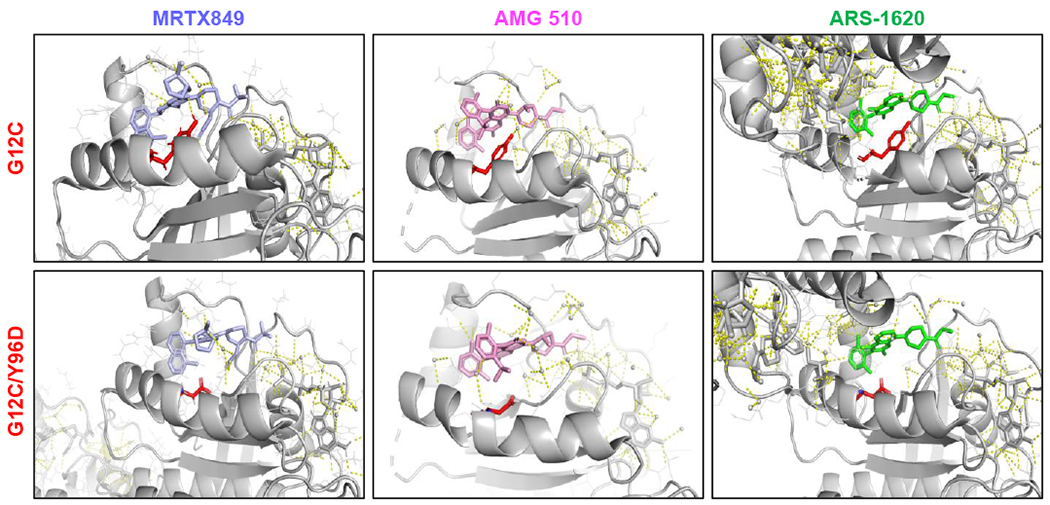
Figure 2.. Structural basis for resistance to KRAS G12C inhibition conferred by KRASY96D.
Shown are the modeled crystal structures of MRTX849 (6UT0), AMG 510 (6OIM), and ARS-1620 (5V9U) bound to KRASG12C (top panels) and KRASG12C/Y96D (bottom panels), highlighting the loss of the hydrogen bonds between MRTX849 or AMG 510 and the Y96 residue and the disruption of the switch II pocket dynamics between ARS-1620 and KRASG12C/Y96D.
Figure 3.
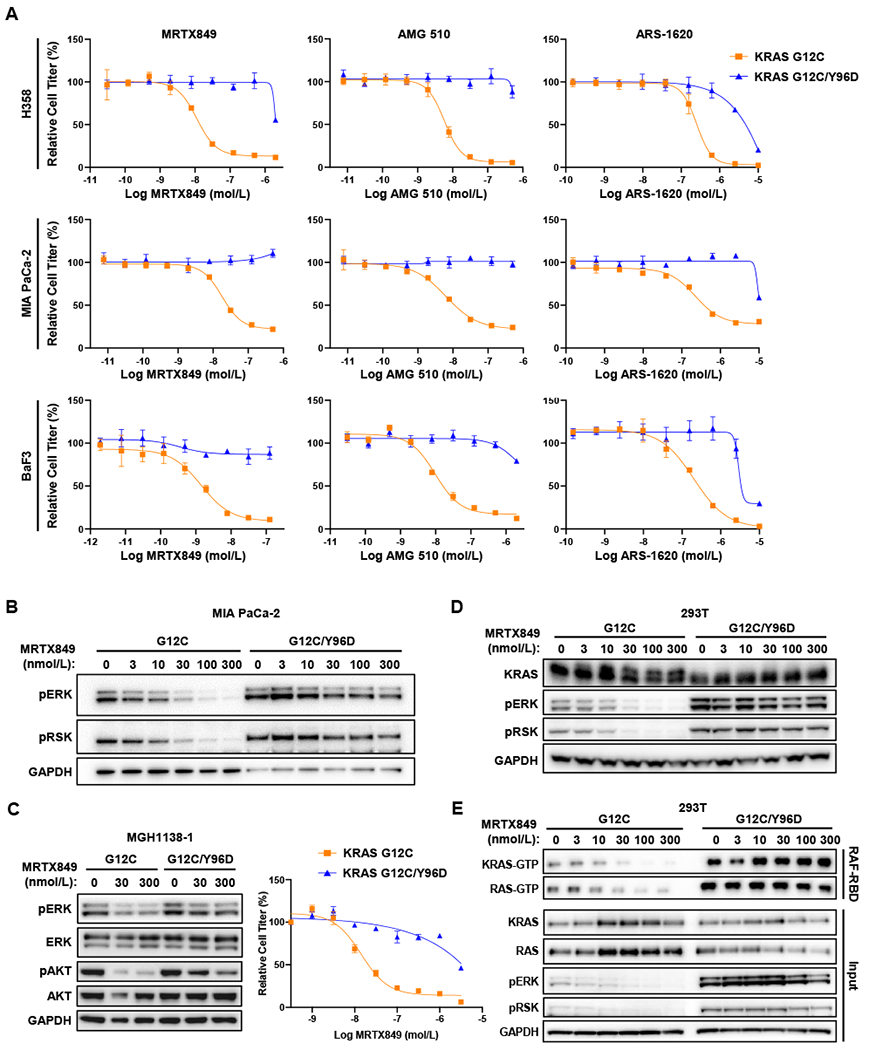
Figure 3.. Cellular characterization of KRASY96D in KRASG12C-mutant models.
A, Cell viability assays performed with NCI-H358, MIA PaCa-2 and Ba/F3 cells infected with retrovirus packaging KRAS (G12C or G12C/Y96D). Cell lines were treated with indicated drugs for 72 hours and the viabilities were measured with CellTiter-Glo. B, Western blot analysis was performed after treating MIA PaCa-2 cells stably expressing KRASG12C or KRASG12C/Y96D with MRTX849 for 4 hours. C, MGH1138-1 cells expressing KRASG12C or KRASG12C/Y96D were treated with MRTX849 for 4 hours and subjected to western blot analysis (left) and cell viability assay following 72 hours of treatment with the indicated concentrations of MRTX849 (right). D, Western blot analysis of HEK293T cells transiently expressing KRAS mutants after treatment with MRTX849 for 4 hours. E, RAS-GTP pulldown was performed after treating HEK293T stably expressing KRAS mutants with MRTX849.
Figure 4.
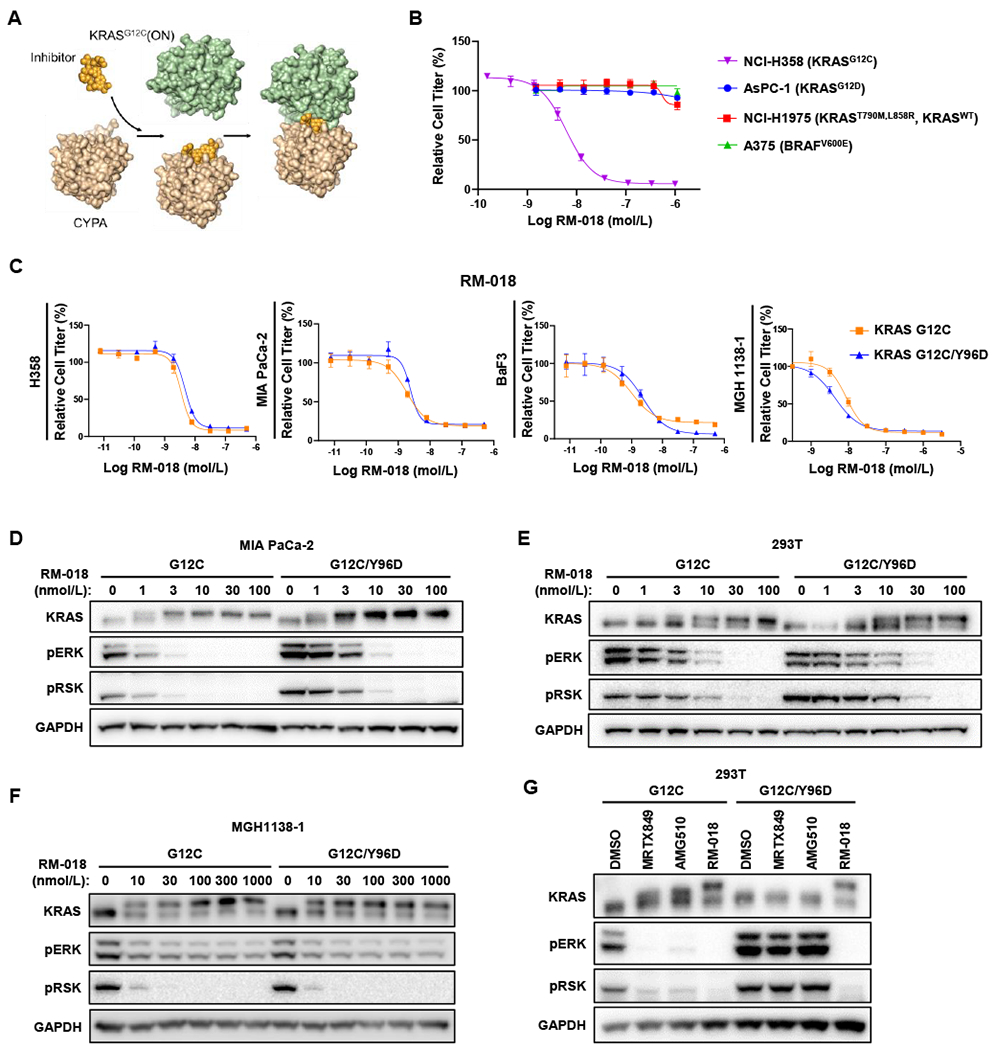
Figure 4.. Novel KRAS inhibitor RM-018 overcomes KRASG12C/Y96D.
A, Mechanism of action of RM-018. B, RM-018 selectively inhibits cell viability in cells harboring KRASG12C. C, Cell viability assays performed with NCI-H358, MIA PaCa-2, Ba/F3 and MGH1138-1 cells stably infected with KRASG12C or KRASG12C/Y96D treated for 72 hours with RM-018. D and E, Western blot analysis performed in MIA PaCa-2 stably expressing KRASG12C or KRASG12C/Y96D (D) and HEK293T cells transiently expressing KRAS mutant (E) after treatment of RM-018 for 4 hours. F, Western blot analysis of MGH1138-1 cells transiently expressing KRASG12C or KRASG12C/Y96D) after treatment with RM-018 for 4 hours. G, HEK293T cells transiently expressing KRAS mutant were treated with the indicated drug at 100 nmol/L each for 4 hours and then subjected to western blot analysis.

Comment in

References

    1. Fell JB, Fischer JP, Baer BR, Blake JF, Bouhana K, Briere DM, et al. Identification of the Clinical Development Candidate MRTX849, a Covalent KRAS(G12C) Inhibitor for the Treatment of Cancer. J Med Chem 2020;63(13):6679–93 doi 10.1021/acs.jmedchem.9b02052. - DOI - PubMed
    1. Lanman BA, Allen JR, Allen JG, Amegadzie AK, Ashton KS, Booker SK, et al. Discovery of a Covalent Inhibitor of KRAS(G12C) (AMG 510) for the Treatment of Solid Tumors. J Med Chem 2020;63(1):52–65 doi 10.1021/acs.jmedchem.9b01180. - DOI - PubMed
    1. Ostrem JM, Peters U, Sos ML, Wells JA, Shokat KM. K-Ras(G12C) inhibitors allosterically control GTP affinity and effector interactions. Nature 2013;503(7477):548–51 doi 10.1038/nature12796. - DOI - PMC - PubMed
    1. Hallin J, Engstrom LD, Hargis L, Calinisan A, Aranda R, Briere DM, et al. The KRAS(G12C) Inhibitor MRTX849 Provides Insight toward Therapeutic Susceptibility of KRAS-Mutant Cancers in Mouse Models and Patients. Cancer Discov 2020;10(1):54–71 doi 10.1158/2159-8290.CD-19-1167. - DOI - PMC - PubMed
    1. Hong DS, Fakih MG, Strickler JH, Desai J, Durm GA, Shapiro GI, et al. KRAS(G12C) Inhibition with Sotorasib in Advanced Solid Tumors. N Engl J Med 2020;383(13):1207–17 doi 10.1056/NEJMoa1917239. - DOI - PMC - PubMed

Publication types

MeSH terms