Alagille syndrome and non-syndromic paucity of the intrahepatic bile ducts
- PMID: 33824926
- PMCID: PMC7838527
- DOI: 10.21037/tgh-2020-03
Alagille syndrome and non-syndromic paucity of the intrahepatic bile ducts
Abstract
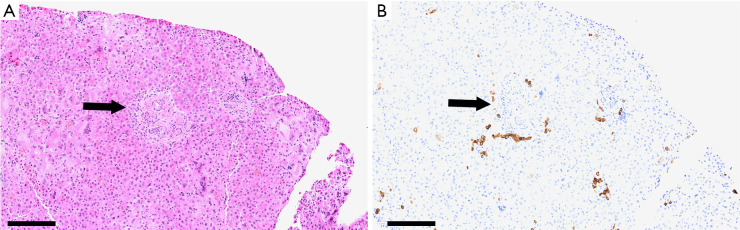
The observation of bile duct paucity is an important diagnostic finding in children, occurring in roughly 11% of pediatric liver biopsies. Alagille syndrome (ALGS) is a well-defined syndromic form of intrahepatic bile duct paucity that is accompanied by a number of other key features, including cardiac, facial, ocular, and vertebral abnormalities. In the absence of these additional clinical characteristics, intrahepatic bile duct paucity results in a broad differential diagnosis that requires supplementary testing and characterization. Nearly 30 years after ALGS was first described, genetic studies identified a causative gene, JAGGED1, which spearheaded over two decades of research aimed to meticulously delineate the molecular underpinnings of ALGS. These advancements have characterized ALGS as a genetic disease and led to testing strategies that offer the ability to detect a pathogenic genetic variant in almost 97% of individuals with ALGS. Having a molecular understanding of ALGS has allowed for the development of numerous in vitro and in vivo disease models, which have provided hope and promise for the future generation of gene-based and protein-based therapies. Generation of these disease models has offered scientists a mechanism to study the dynamics of bile duct development and regeneration, and in doing so, produced tools that are applicable to the understanding of other congenital and acquired liver diseases.
Keywords: Alagille syndrome (ALGS); JAG1; NOTCH2; Notch signaling; bile duct paucity; cholestasis; liver disease.
2021 Translational Gastroenterology and Hepatology. All rights reserved.
Conflict of interest statement
Conflicts of Interest: Both authors have completed the ICMJE uniform disclosure form (available at http://dx.doi.org/10.21037/tgh-2020-03). The series “Recent Advances in Rare Liver Diseases” was commissioned by the editorial office without any funding or sponsorship. MAG reports personal fees from Retrophin, outside the submitted work. KML reports grants and personal fees from Mirum Pharma, grants and personal fees from Albireo Pharma, other from Retrophin, outside the submitted work.
Figures
References
Publication types
LinkOut - more resources
Full Text Sources
Other Literature Sources
Miscellaneous