The acute hepatic porphyrias
- PMID: 33824928
- PMCID: PMC7838531
- DOI: 10.21037/tgh-2020-01
The acute hepatic porphyrias
Abstract
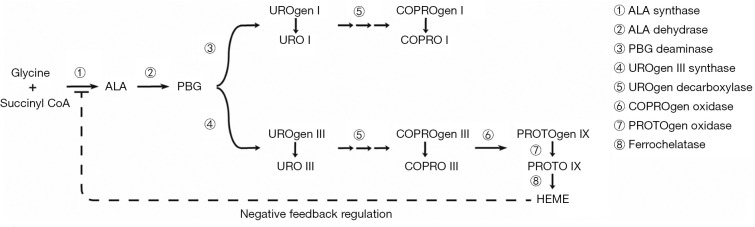
The acute hepatic porphyrias (AHP) are a group of four inherited diseases of heme biosynthesis. They present with similar severe, episodic, acute neurovisceral symptoms due to abnormally elevated levels of porphyrin precursors delta-aminolevulinic acid (ALA). Recently genetic screening indicates that the prevalence of mutation carrier state is more common than previously thought, occurring in 1 in 1,500, though the clinical penetrance of symptomatic AHP is low at ~1%. Symptomatic attacks occur primarily in females during their reproductive years. In an acute porphyria attack, the primary symptom is abdominal pain, due to intestinal dysmotility from autonomic nerve injury. Other manifestations include seizures, weakness and mood changes, point to injury involving peripheral and central nervous system. Due to the non-specific nature of the symptoms and signs in AHP, the diagnosis is often delayed by many years. The diagnosis of AHP depends on biochemical evidence of elevated ALA and PBG levels in urine during symptomatic attacks. Genetic testing is used for confirmation of the gene involved and the exact mutation. Treatment involves administration of heme, which downregulates production of ALA. Long-term management centers on educating genetic carriers on avoiding triggers that increase the risk of acute attacks and screening family members.
Keywords: Porphyria; genetic disease; heme; neurovisceral attacks; rare diseases.
2021 Translational Gastroenterology and Hepatology. All rights reserved.
Conflict of interest statement
Conflicts of Interest: The author has completed the ICMJE uniform disclosure form (available at http://dx.doi.org/10.21037/tgh-2020-01). The series “Recent Advances in Rare Liver Diseases” was commissioned by the editorial office without any funding or sponsorship. Dr. Wang reports personal fees from Recordati Rare Diseases, personal fees from Alnylam Pharmaceuticals, outside the submitted work. The author has no other conflicts of interest to declare.
Figures
References
-
- Sardh E, Rejkjaer L, Andersson DE, et al. Safety, pharmacokinetics and pharmocodynamics of recombinant human porphobilinogen deaminase in healthy subjects and asymptomatic carriers of the acute intermittent porphyria gene who have increased porphyrin precursor excretion. Clin Pharmacokinet 2007;46:335-49. 10.2165/00003088-200746040-00006 - DOI - PubMed
Publication types
Grants and funding
LinkOut - more resources
Full Text Sources
Other Literature Sources