


Transgenerational effects of polychlorinated biphenyls: 2. Hypothalamic gene expression in rats†
- PMID: 33824955
- PMCID: PMC8444700
- DOI: 10.1093/biolre/ioab066
Transgenerational effects of polychlorinated biphenyls: 2. Hypothalamic gene expression in rats†
Abstract
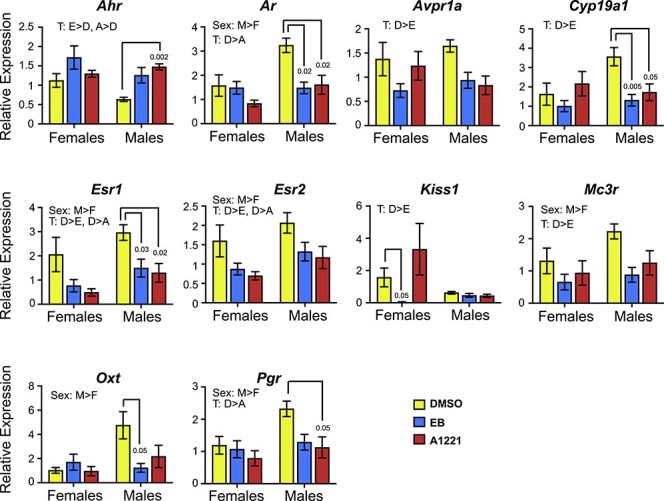
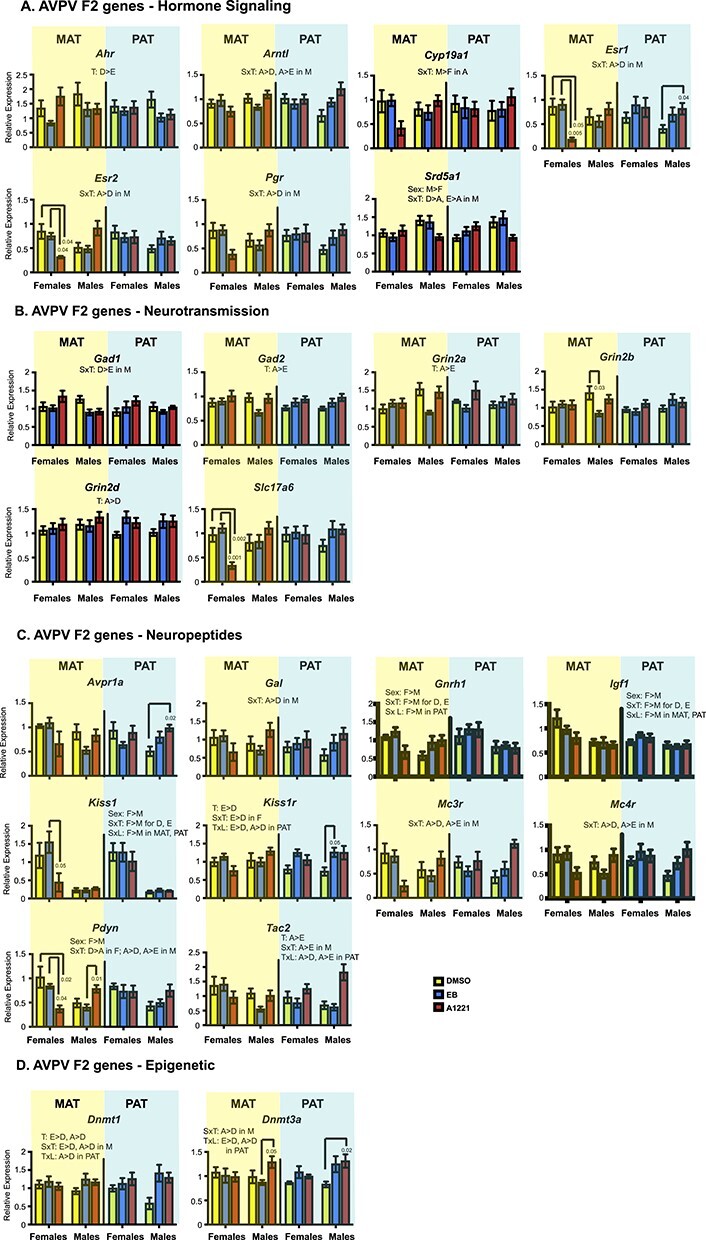
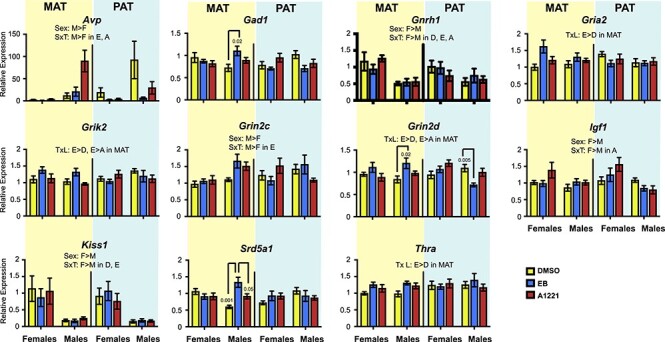
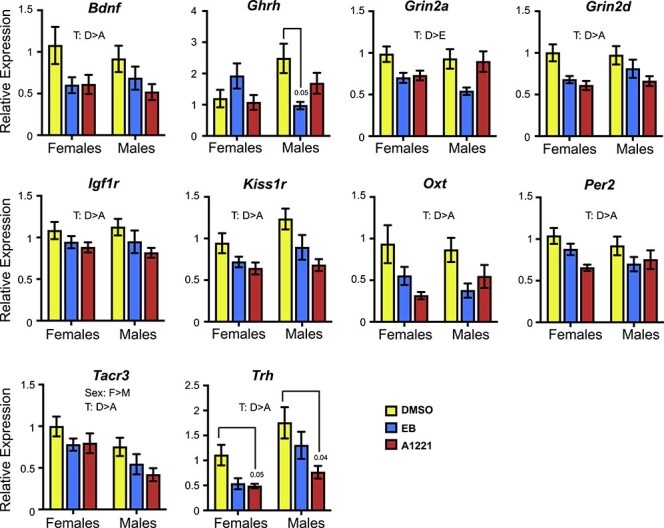
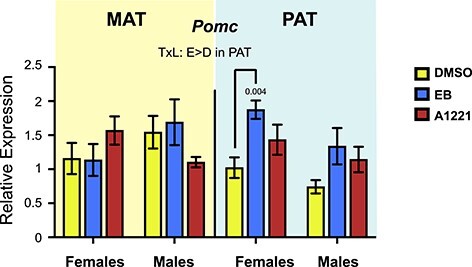
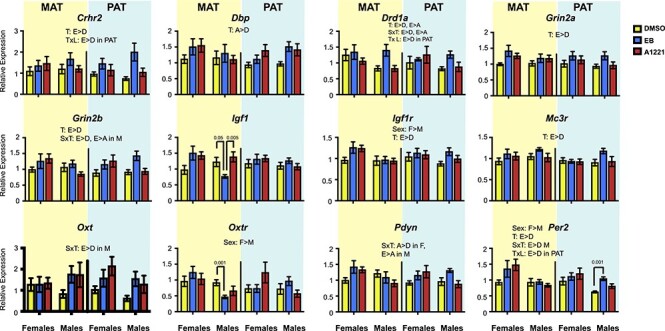
Polychlorinated biphenyls (PCBs) are endocrine-disrupting chemicals (EDCs) with well-established effects on reproduction and behavior in developmentally-exposed (F1) individuals. Because of evidence for transgenerational effects of EDCs on the neuroendocrine control of reproductive physiology, we tested the hypothesis that prenatal PCB exposure leads to unique hypothalamic gene-expression profiles in three generations. Pregnant Sprague-Dawley rats were treated on gestational days 16 and 18 with the PCB mixture Aroclor 1221 (A1221), vehicle (3% DMSO in sesame oil), or estradiol benzoate (EB, 50 μg/kg), the latter a positive control for estrogenic effects of A1221. Maternal- and paternal-lineage F2 and F3 generations were bred using untreated partners. The anteroventral periventricular nucleus (AVPV) and arcuate nucleus (ARC), involved in the hypothalamic control of reproduction, were dissected from F1 to F3 females and males, RNA extracted, and gene expression measured in a qPCR array. We detected unique gene-expression profiles in each generation, which were sex- and lineage-specific. In the AVPV, treatment significantly changed 10, 25, and 11 transcripts in F1, F2, and F3 generations, whereas 10, 1, and 12 transcripts were changed in these generations in the ARC. In the F1 AVPV and ARC, most affected transcripts were decreased by A1221. In the F2 AVPV, most effects of A1221 were observed in females of the maternal lineage, whereas only Pomc expression changed in the F2 ARC (by EB). The F3 AVPV and ARC were mainly affected by EB. It is notable that results in one generation do not predict results in another, and that lineage was a major determinant in results. Thus, transient prenatal exposure of F1 rats to A1221 or EB can alter hypothalamic gene expression across three generations in a sex- and lineage-dependent manner, leading to the conclusion that the legacy of PCBs continues for generations.
Keywords: Aroclor 1221 (A1221); anteroventral periventricular nucleus; arcuate nucleus; endocrine-disrupting chemical; estrogen; hypothalamus; neuroendocrine; polychlorinated biphenyls; sex difference; transgenerational.
© The Author(s) 2021. Published by Oxford University Press. All rights reserved. For Permissions, please email: journals.permissions@oup.com.
Figures
References
-
- Streifer M, Gore AC. Epigenetics, estrogenic endocrine-disrupting chemicals (EDCs), and the brain. Adv Pharmacol 2021; in press. - PubMed
-
- Krishnan V, Safe S. Polychlorinated biphenyls (PCBs), dibenzo-p-dioxins (PCDDs), and dibenzofurans (PCDFs) as antiestrogens in MCF-7 human breast cancer cells: quantitative structure-activity relationships. Toxicol Appl Pharmacol 1993; 120:55–61. - PubMed
-
- Hamers T, Kamstra JH, Cenijn PH, Pencikova K, Palkova L, Simeckova P, Vondracek J, Andersson PL, Stenberg M, Machala M. In vitro toxicity profiling of ultrapure non-dioxin-like polychlorinated biphenyl congeners and their relative toxic contribution to PCB mixtures in humans. Toxicol Sci 2011; 121:88–100. - PubMed
Publication types
MeSH terms
Substances
Grants and funding
LinkOut - more resources
Full Text Sources
Other Literature Sources
Miscellaneous
