. 2021 Apr 7;11(1):7607.
doi: 10.1038/s41598-021-87070-9.

Gaussian graphical modeling of the serum exposome and metabolome reveals interactions between environmental chemicals and endogenous metabolites

Affiliations

Gaussian graphical modeling of the serum exposome and metabolome reveals interactions between environmental chemicals and endogenous metabolites

Vincent Bessonneau et al. Sci Rep. .

Abstract

Given the complex exposures from both exogenous and endogenous sources that an individual experiences during life, exposome-wide association studies that interrogate levels of small molecules in biospecimens have been proposed for discovering causes of chronic diseases. We conducted a study to explore associations between environmental chemicals and endogenous molecules using Gaussian graphical models (GGMs) of non-targeted metabolomics data measured in a cohort of California women firefighters and office workers. GGMs revealed many exposure-metabolite associations, including that exposures to mono-hydroxyisononyl phthalate, ethyl paraben and 4-ethylbenzoic acid were associated with metabolites involved in steroid hormone biosynthesis, and perfluoroalkyl substances were linked to bile acids-hormones that regulate cholesterol and glucose metabolism-and inflammatory signaling molecules. Some hypotheses generated from these findings were confirmed by analysis of data from the National Health and Nutrition Examination Survey. Taken together, our findings demonstrate a novel approach to discovering associations between chemical exposures and biological processes of potential relevance for disease causation.


Conflict of interest statement

RAR, RG, and VB, are employed at the Silent Spring Institute, a scientific research organization dedicated to studying environmental factors in women’s health. The Institute is a 501(c)3 public charity funded by federal grants and contracts, foundation grants, and private donations, including from breast cancer organizations. HB is former president and member of United Fire Service Women, a 501(c)3 public charity dedicated to supporting the welfare of women in the San Francisco Fire Department. The authors declare they have no actual or potential competing financial interests.

Figures
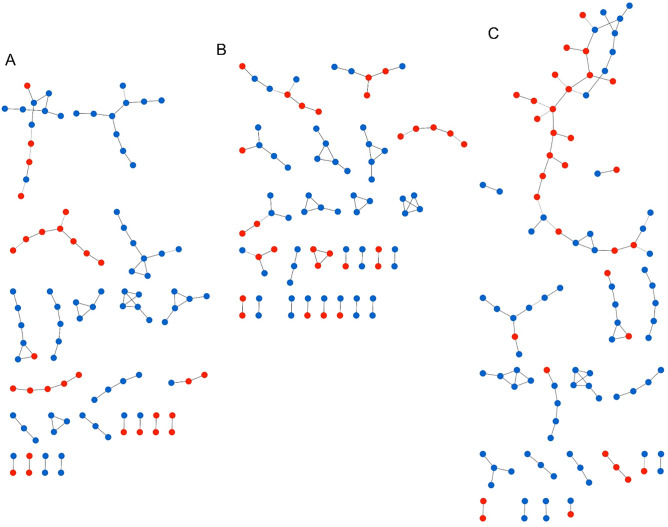
Figure 1
Figure 1
Network representation of Gaussian graphical models (GGM) of the serum exposome and metabolome measured in the whole cohort (A), in women office workers (B), and in women firefighters (C). Blue and red nodes represent endogenous metabolites and environmental chemicals, respectively. Edges connecting nodes represent significant partial correlations at FDR < 10%.
Figure 2
Figure 2
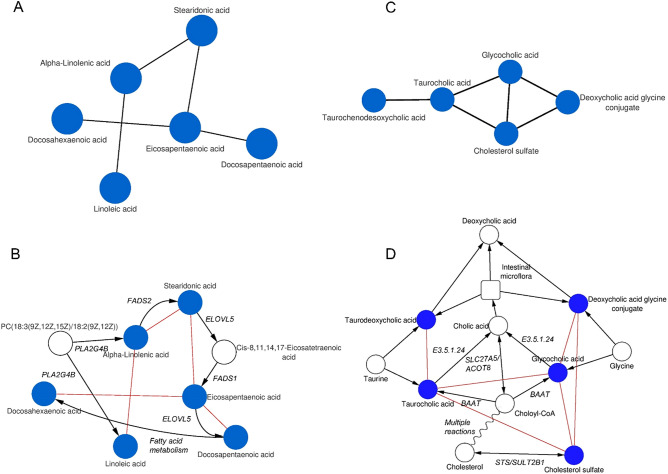
Linoleic acid (A,B) and bile acid metabolism (C,D) models inferred from GGMs of women FF and OW. (A) and (C) represent the sub-networks obtained from GGMs. (B) and (D) represent overlapping sub-networks of known biochemical reactions (black edges; labels correspond to regulating genes) obtained from KEGG pathway and from GGMs (red edges).
Figure 3
Figure 3
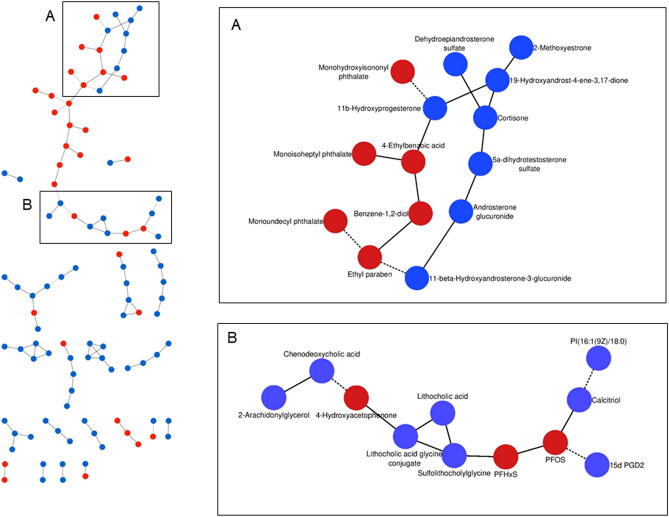
Exposure-metabolites subnetworks identified by the GGMs inferred from the women FF metabolomics dataset. The subnetwork A represents associations of phenols and phthalates with metabolites involved in steroid hormone biosynthesis. The subnetwork B shows associations between 4-hydroxyacetophenone, PFOS and PFHxS and metabolites involved bile acids, arachidonic and vitamin D metabolism. Blue and red nodes represent endogenous metabolites and environmental chemicals, respectively. Plain and dashed edges connecting nodes represent positive partial correlations and negative partial correlations, respectively. Edges connecting nodes represent significant partial correlations at FDR < 10%.
Figure 4
Figure 4
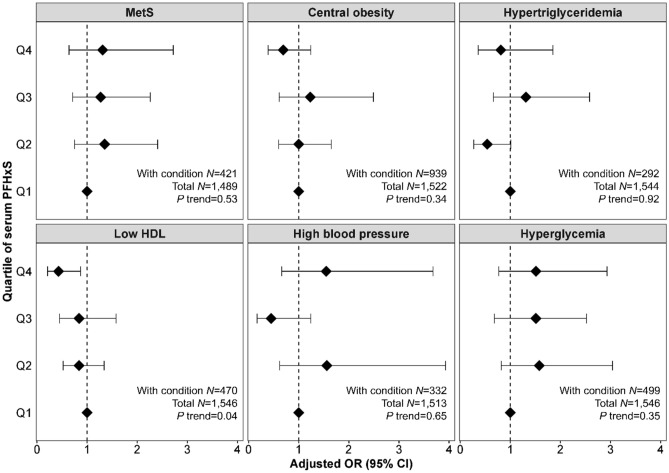
Odds ratio (95% CI) for metabolic syndrome (MetS) and individual components of MetS in women 20–79 years of age enrolled in NHANES 2003–2014 by quartile of serum PFHxS concentration. Models were adjusted for age, race/ethnicity, poverty, total caloric intake, physical activity, and smoking status. Central obesity: waist circumference ≥ 88 cm; hypertriglyceridemia: blood triglyceride ≥ 150 mg/dL; low HDL: high density lipid (HDL) cholesterol < 50 mg/dL; high blood pressure: blood pressure ≥ 130/85 mmHg or treatment for hypertension; hyperglycemia: fasting blood glucose ≥ 100 mg/dL or treatment for diabetes.

References

    1. Rappaport SM. Genetic factors are not the major causes of chronic diseases. PLoS ONE. 2016;11:e0154387. doi: 10.1371/journal.pone.0154387. - DOI - PMC - PubMed
    1. Wild CP. Complementing the genome with an ‘exposome’: the outstanding challenge of environmental exposure measurement in molecular epidemiology. Cancer Epidemiol. Biomark. Prev. Publ. Am. Assoc. Cancer Res. Cosponsored Am. Soc. Prev. Oncol. 2005;14:1847–1850. doi: 10.1158/1055-9965.EPI-05-0456. - DOI - PubMed
    1. Bessonneau V, Pawliszyn J, Rappaport SM. The saliva exposome for monitoring of individuals’ health trajectories. Environ. Health Perspect. 2017;125:077014. doi: 10.1289/EHP1011. - DOI - PMC - PubMed
    1. German JB, Hammock BD, Watkins SM. Metabolomics: building on a century of biochemistry to guide human health. Metabolomics Off. J. Metabolomic Soc. 2005;1:3–9. - PMC - PubMed
    1. Nicholson JK, Wilson ID. Opinion: understanding ‘global’ systems biology: metabonomics and the continuum of metabolism. Nat. Rev. Drug Discov. 2003;2:668–676. doi: 10.1038/nrd1157. - DOI - PubMed

Publication types