


Trends in treatment of Peyronie's disease in adult men in the United States from 2008 to 2017-results from an encounter and claims database
- PMID: 33828265
- PMCID: PMC8494877
- DOI: 10.1038/s41443-021-00430-x
Trends in treatment of Peyronie's disease in adult men in the United States from 2008 to 2017-results from an encounter and claims database
Abstract
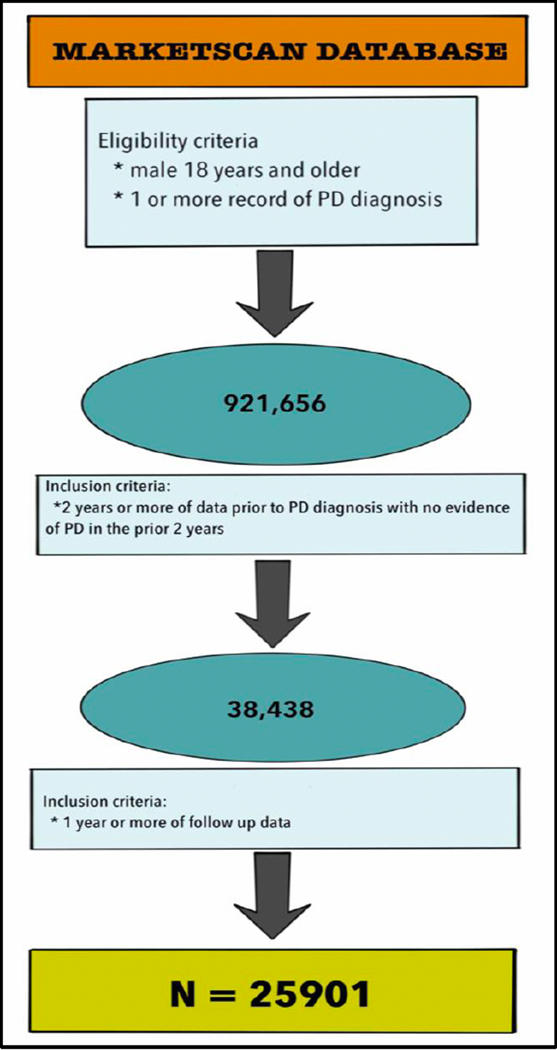
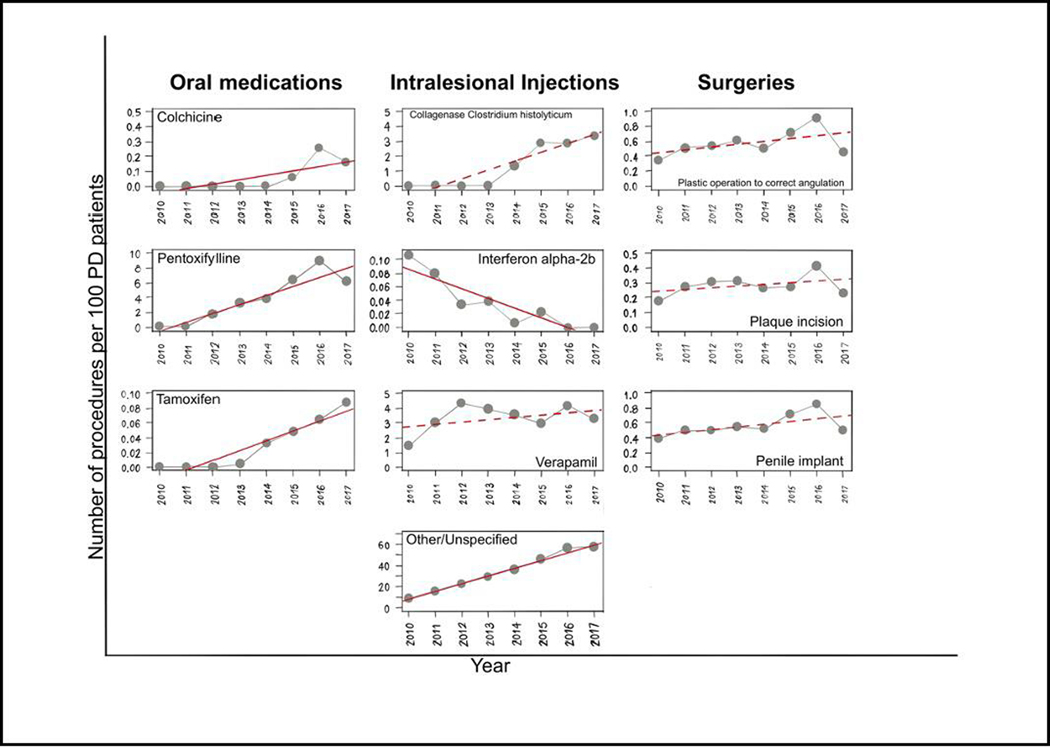
Treatments for Peyronie's Disease (PD) include oral medications, intralesional injections, and surgery. Collagenase Clostridium histolyticum (CCh) is the only FDA-approved treatment for PD. We sought to examine current trends in treatment of PD across the United States. Using data in the MarketScan Database, we conducted a retrospective study of men with PD in the United States. Cases were identified by ICD-9 and 10 codes, and treatments were identified using NDC and CPT codes. Treatment rates were analyzed using a linear regression model, and a Cox proportional hazard function test was performed for time-to-treatment analysis. About 27.8% of men with PD were treated within a year of diagnosis. The annual treatment rate increased from 23.2 to 35.4%, and intralesional injection was the most used treatment. Over the study period, the percentage of men receiving treatment with oral medication increased from 0.66 to 20.5%, while the use of intralesional injection and surgery decreased. Increased odds of treatment were observed in men 45-54 years (odds ratio [OR] 1.35; 95% confidence interval [CI], 1.21-1.50; p = 0) and in the southern region (OR 1.48; 95% CI, 1.39-1.56; p = 0). Trends in treatment of PD have changed over time. Intralesional injection remains the most used treatment option for men with PD.
© 2021. The Author(s), under exclusive licence to Springer Nature Limited.
Conflict of interest statement
Conflict of interest:
Dr. Pastuszak declares the following conflict (s) of interest
1. Endo Pharmaceuticals – advisor, consultant, speaker, research support, fellowship support
2. Antares Pharmaceuticals – advisor
3. Bayer AG- speaker
4. Inherent Biosciences – advisor
5. Allotrope Medical – advisor
6. Woven Health – founder and leadership role
7. Vault Health – leadership role
Dr. Hotaling declares the following conflict(s) of interest
1. Endo pharmaceuticals – educational and research grants
2. Boston Scientific -educational grants
3. StreamDx, Nanonc, Andro360 -founder/own equity (early-stage startups)
4. Inherent Biosciences – own equity
5. Turtle Health – advisor
Dr. Moghalu, Mr. Das, Dr. Horns and Mr. Campbell have no conflicts of interest to declare
Figures
References
MeSH terms
Substances
Grants and funding
LinkOut - more resources
Full Text Sources
Other Literature Sources
