EMBRACE intervention to improve the continuum of care in maternal and newborn health in Ghana: The RE-AIM framework-based evaluation
- PMID: 33828845
- PMCID: PMC8005313
- DOI: 10.7189/jogh.11.04017
EMBRACE intervention to improve the continuum of care in maternal and newborn health in Ghana: The RE-AIM framework-based evaluation
Abstract
Background: Improving maternal and newborn health remains one of the most critical public health challenges, particularly in low- and lower-middle-income countries. To overcome this challenge, interventions to improve the continuum of care based on real-world settings need to be provided. The Ghana Ensure Mothers and Babies Regular Access to Care (EMBRACE) Implementation Research Team conducted a unique intervention program involving over 21 000 women to improve the continuum of care, thereby demonstrating an intervention program's effectiveness in a real-world setting. This study evaluates the implementation process of the EMBRACE intervention program based on the RE-AIM framework.
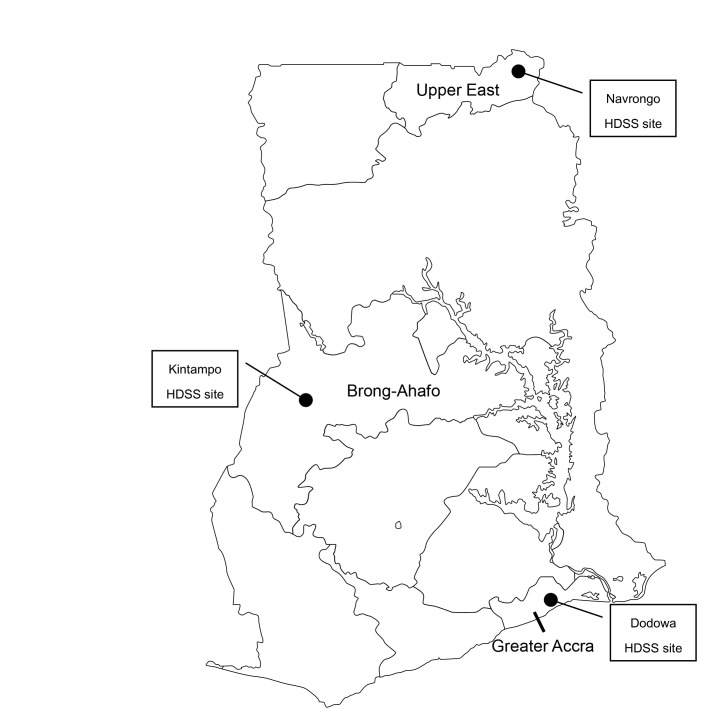
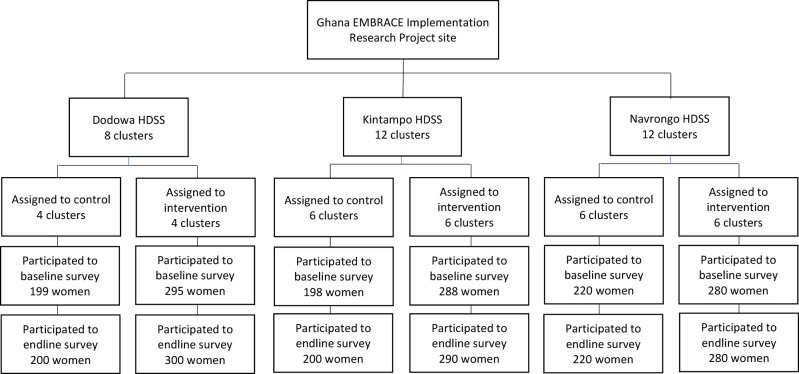
Methods: A cluster-randomized controlled trial was conducted in 32 sub-district-based clusters in Ghana. Interventions comprised of four components, and to evaluate the implementation process, we conducted baseline and endline questionnaire surveys for women who gave birth and lived in the study site. The key informant interviews of health workers and intervention monitoring were conducted at the health facilities in the intervention area. The data were analyzed using 34 components of the RE-AIM framework and classified under five general criteria (Reach, Effectiveness, Adoption, Implementation, and Maintenance).
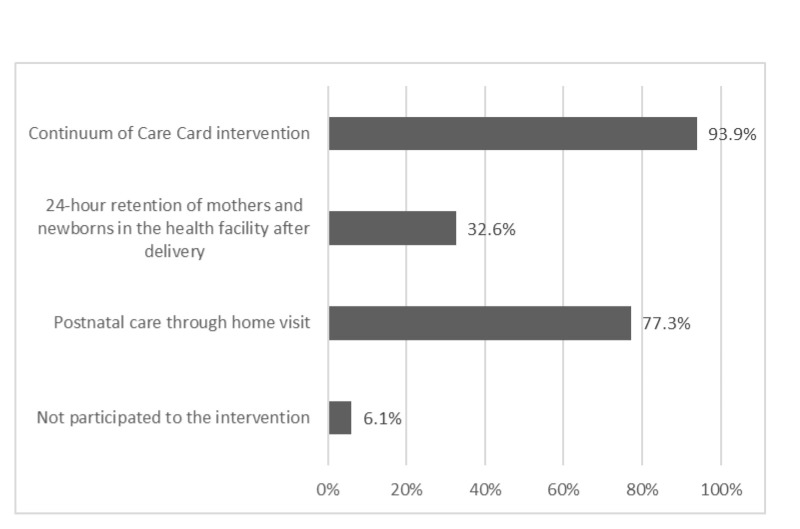
Results: In total, 1480 and 1490 women participated in the baseline and endline questionnaire survey, respectively. In the intervention area, 83.8% of women participated (reach). The completion rate of the continuum of care increased from 7.5% to 47.1%. Newborns who had danger signs immediately after birth decreased after the intervention (relative risk = 0.82, 95% confidence interval = 0.68-0.99) (effectiveness). In the intervention area, 94% of all health facilities participated. Mothers willing to use their continuum of care cards in future pregnancies reached 87% (adoption). Supervision and manual use resolved the logistical and human resource challenges identified initially (implementation). The government included the continuum of care measures in their routine program and developed a new Maternal and Child Health Record Book, which was successfully disseminated nationwide (maintenance).
Conclusions: Following the RE-AIM framework evaluation, the EMBRACE intervention program was considered effective and as having great potential for scaling across in real-world settings, especially where the continuum of care needs to be improved.
Trial registration: ISRCTN 90618993.
Copyright © 2021 by the Journal of Global Health. All rights reserved.
Conflict of interest statement
Competing interests: The authors have completed the ICMJE COI form (available upon request from the corresponding author) and declare no conflicts of interest.
Figures
References
-
- World Health Organization. Global health observatory data. Geneva: WHO; 2015.
-
- United Nations. Sustainable Development Goals. New York, NY: UN; 2016.
Publication types
MeSH terms
LinkOut - more resources
Full Text Sources
Other Literature Sources