


French Translation and Validation of the Rating-of-Fatigue Scale
- PMID: 33829336
- PMCID: PMC8026791
- DOI: 10.1186/s40798-021-00316-8
French Translation and Validation of the Rating-of-Fatigue Scale
Abstract
Background: The Rating of Fatigue (ROF) scale can measure changes in perceived fatigue in a variety of contexts.
Objective: The aim of the present study was to translate and subsequently validate the ROF scale in the French language.
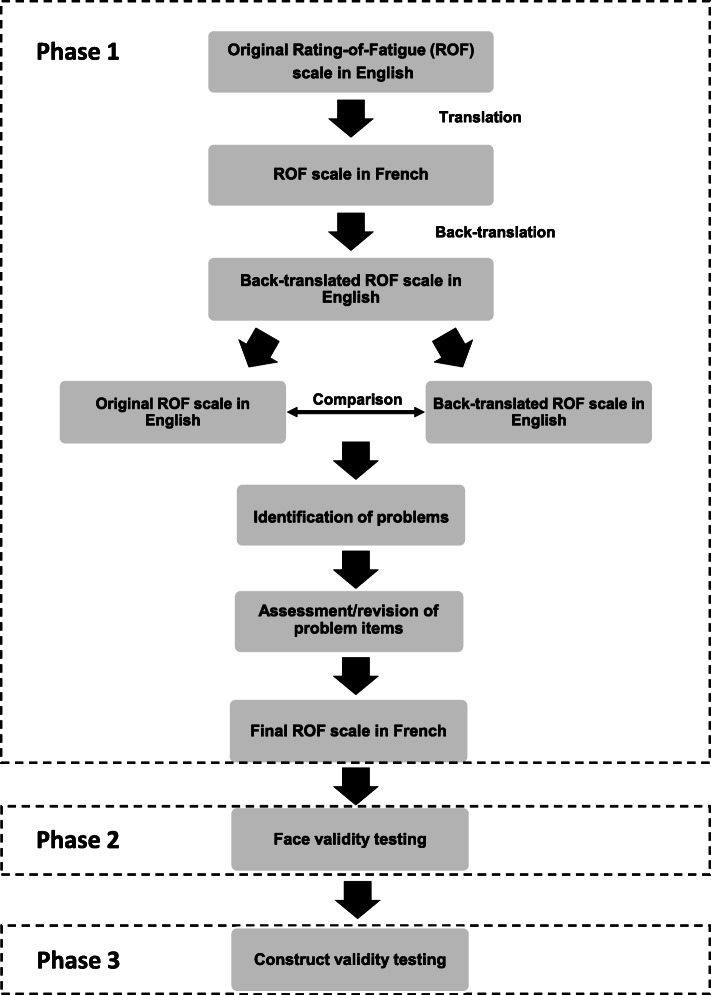
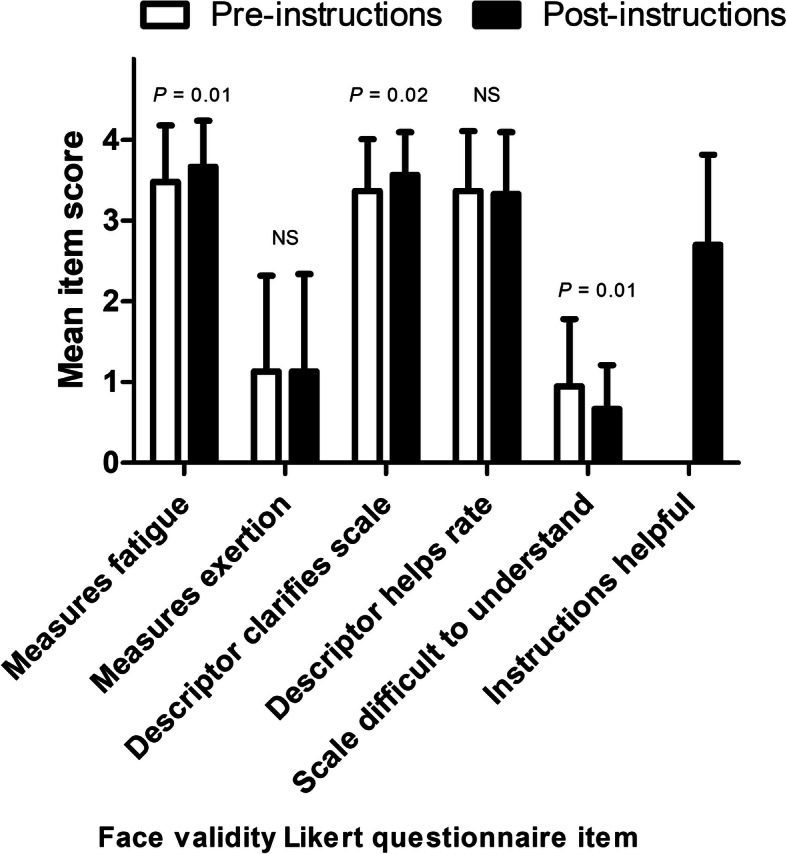
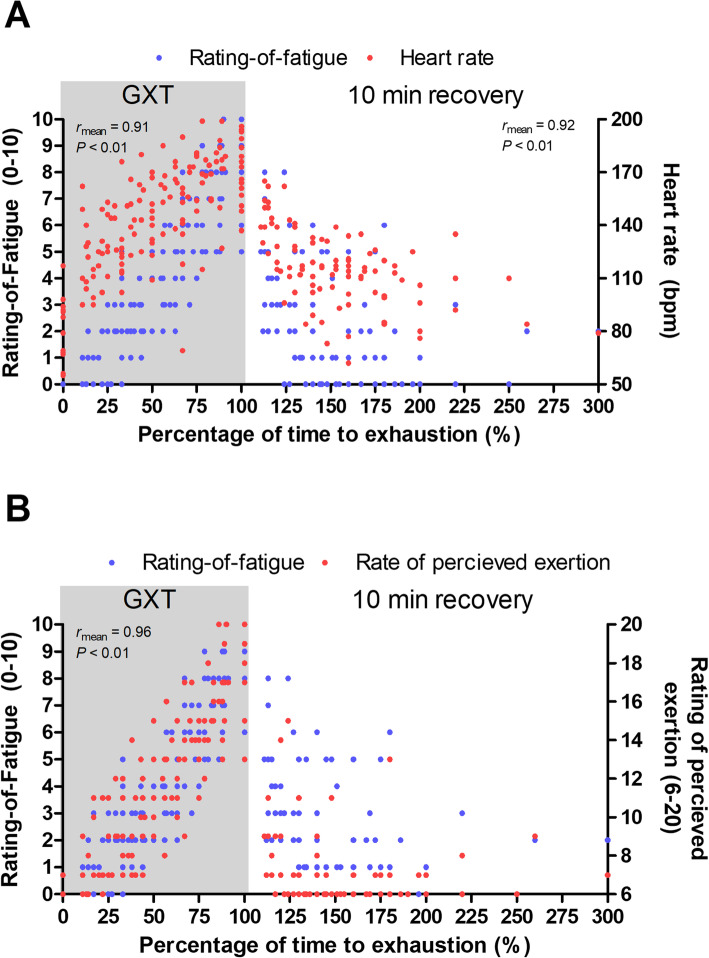
Methods: The study was composed of three phases. Phase 1 involved a comprehensive translation, back-translation, and consolidation process in order to produce the French ROF scale. During phase 2, the face validity of the French ROF scale was assessed. A cohort of 60 native French speaking participants responded to a range of Likert scale items which probed the purposes of the ROF scale and what it is intended to measure. During phase 3, the convergent and divergent validity of the ROF scale was assessed during ramped cycling to exhaustion and 10 min of resting recovery.
Results: The results from phase 1 demonstrated comparability and interpretability between the original and back-translated ROF scale. In phase 2, participants reported a high face validity, with a score of 3.48 ± 0.70 out of 4 when given the item probing whether the scale "measures fatigue". This score further improved (3.67 ± 0.57, P = 0.01) after participants read the accompanying instructions. Participants were able to distinguish the purposes of the scale for measuring fatigue rather than exertion. In phase 3, strong correlations were found between ROF and heart rate (HR) both during exercise (r = 0.91, P < 0.01) and recovery (r = 0.92, P < 0.01), while discriminant validity between ROF and rating of perceived exertion (RPE) was found during recovery.
Conclusion: The present study permits the applications of the ROF scale in the French language.
Conflict of interest statement
The authors, Callum Brownstein, Diana Rimaud, Benjamin Singh, Laurie-Anne Fruleux-Santos, Marine Sorg, Dominic Micklewright, and Guillaume Millet, declare that they have no competing interests.
Figures
References
LinkOut - more resources
Full Text Sources
Other Literature Sources
