. 2021 Apr 8;11(1):7748.
doi: 10.1038/s41598-021-87147-5.

Anthracene induces oxidative stress and activation of antioxidant and detoxification enzymes in Ulva lactuca (Chlorophyta)

Affiliations

Anthracene induces oxidative stress and activation of antioxidant and detoxification enzymes in Ulva lactuca (Chlorophyta)

Alberto González et al. Sci Rep. .

Abstract

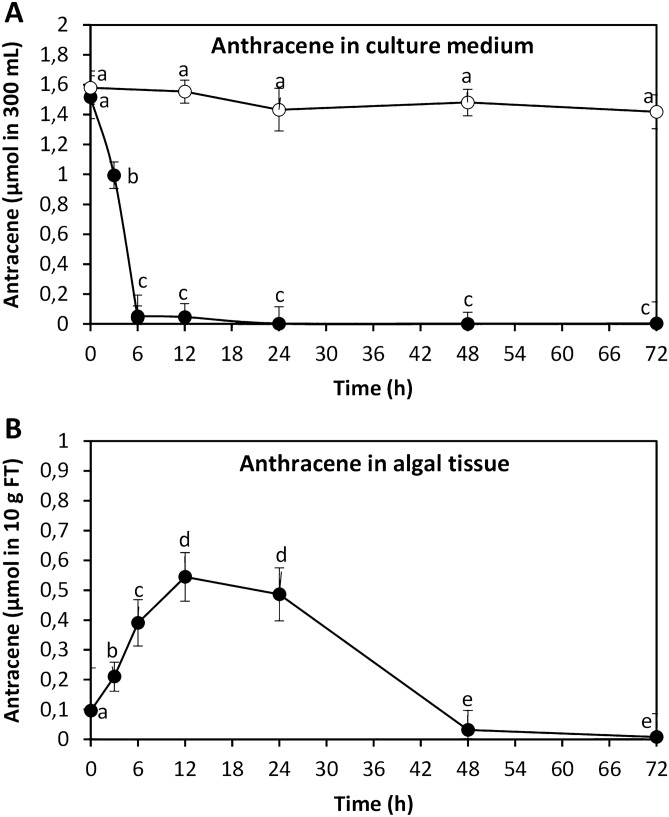
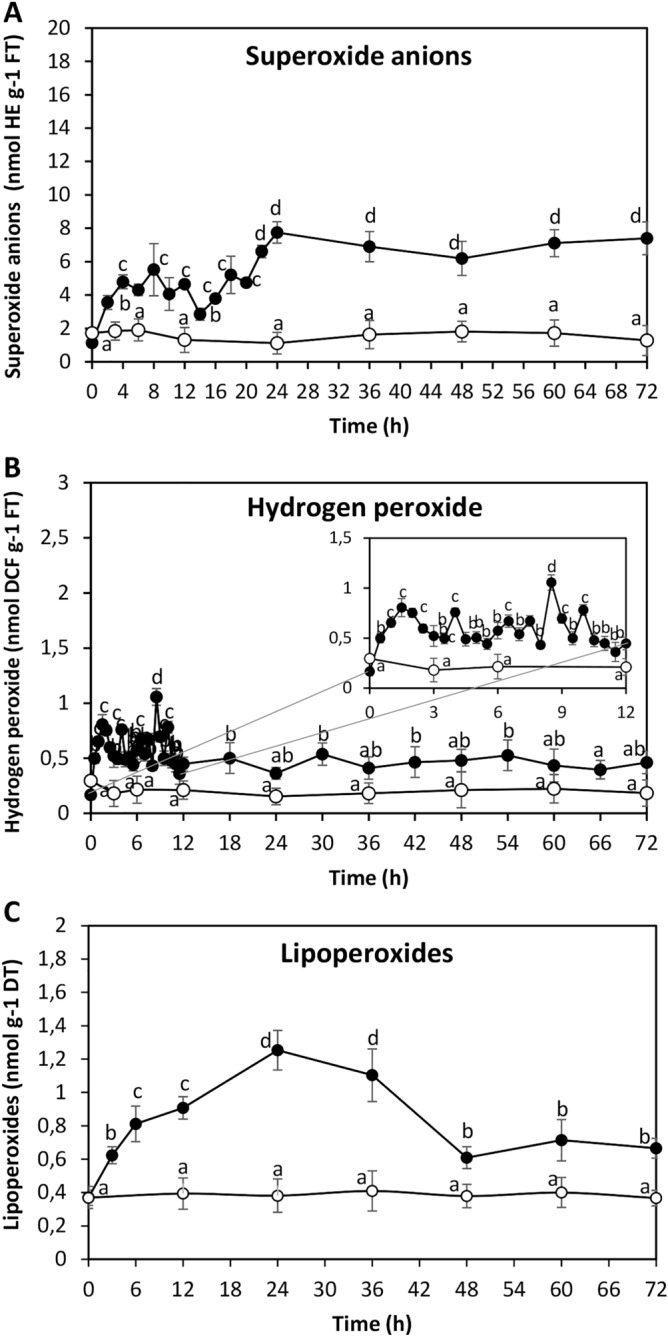
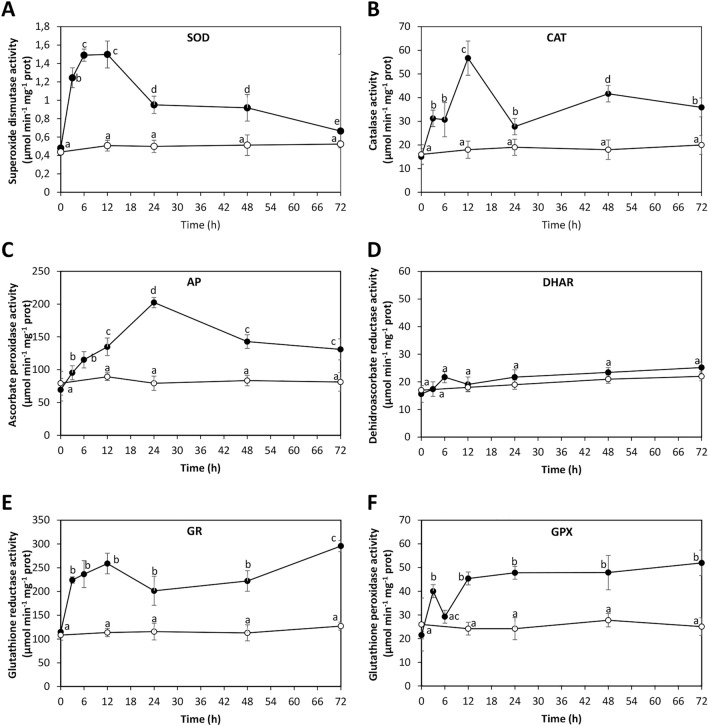
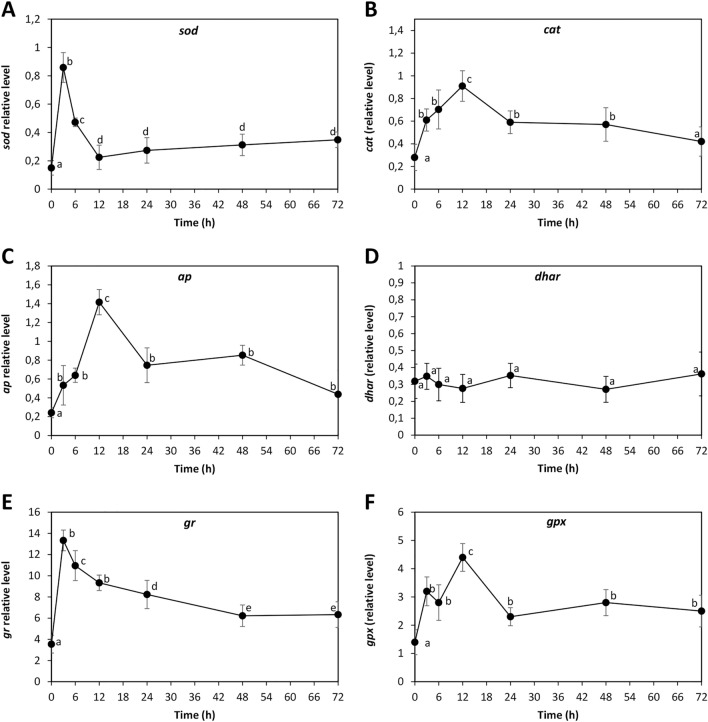
In order to analyze whether the marine macroalga Ulva lactuca can absorb and metabolize anthracene (ANT), the alga was cultivated with 5 µM ANT for 0-72 h, and the level of ANT was detected in the culture medium, and in the alga. The level of ANT rapidly decreased in the culture medium reaching a minimal level at 6 h, and rapidly increased in the alga reaching a maximal level at 12 h and then decreased to reach a minimal level at 48 h of culture. In addition, ANT induced an increase in hydrogen peroxide that remained until 72 h and a higher increase in superoxide anions that reach a maximal level at 24 h and remained unchanged until 72 h, indicating that ANT induced an oxidative stress condition. ANT induced an increase in lipoperoxides that reached a maximal level at 24 h and decreased at 48 h indicating that oxidative stress caused membrane damage. The activity of antioxidant enzymes SOD, CAT, AP, GR and GP increased in the alga treated with ANT whereas DHAR remained unchanged. The level of transcripts encoding these antioxidant enzymes increased and those encoding DHAR did not change. Inhibitors of monooxygenases, dioxygenases, polyphenol oxidases, glutathione-S-transferases and sulfotransferases induced an increase in the level of ANT in the alga cultivated for 24 h. These results strongly suggest that ANT is rapidly absorbed and metabolized in U. lactuca and the latter involves Phase I and II metabolizing enzymes.


Conflict of interest statement

The authors declare no competing interests.

Figures
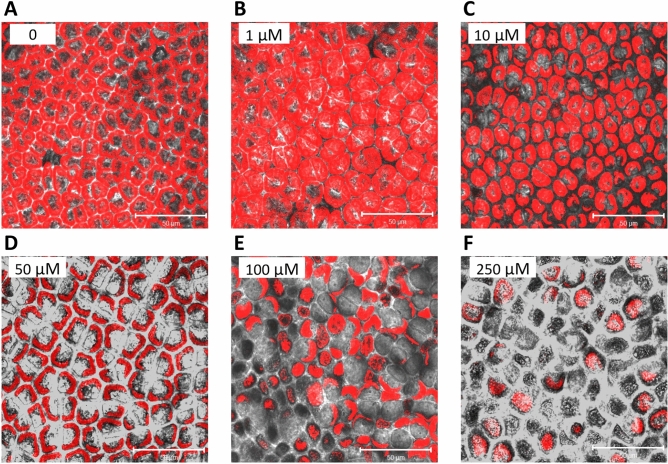
Figure 1
Figure 1
Visualization of U. lactuca cells cultivated with 0–250 μM of anthracene for 7 days. The viability of the cells was analyzed based on the red autofluorescence of chlorophylls in chloroplasts by confocal microscopy.
Figure 2
Figure 2
Level of anthracene (ANT) in the culture medium (A) and in U. lactuca (B) cultivated with 1.6 μmol of ANT in 300 mL of culture medium (5 μM) for 0–72. Black circles represent the level of ANT in the culture with ANT and open circles represent the level of ANT in the culture medium with ANT but without the alga. Symbols represent mean values of three independent experiments ± SD. Letters indicate significant differences among experiments (P < 0.05).
Figure 3
Figure 3
Level of superoxide anions (A), hydrogen peroxide (B) and lipoperoxides (C) in U. lactuca cultivated without ANT (open circles) and with 5 μM of ANT (black circles) for 0–72 h. The level of superoxide anions and hydrogen peroxide are expressed as nanomole per gram of fresh tissue (FT) and lipoperoxides in nanomole per gram of dry tissue (DT) and time in hours. The subframe represents the level of hydrogen peroxide from 0 to 12 h of culture. Symbols represent mean values of three independent experiments ± SD. Letters indicate significant differences among experiments (P < 0.05).
Figure 4
Figure 4
Activities of antioxidant enzymes superoxide dismutase (A), catalase (B), ascorbate peroxidase (C), dehydroascorbate reductase (D), glutathione reductase (E) and glutathione reductase (F) in U. lactuca cultivated without anthracene (open circles) and with 5 μM anthracene (black circles) for 0–72 h. Activities of antioxidant enzymes are expressed as micromole per minute per gram of fresh tissue (FT) and time in hours. Symbols represent mean values of three independent experiments ± SD. Letters indicate significant differences among experiments (P < 0.05).
Figure 5
Figure 5
Relative level of transcripts encoding antioxidant enzymes superoxide dismutase (A), catalase (B), ascorbate peroxidase (C), dehydroascorbate reductase (D), glutathione reductase (E) and glutathione reductase (F) in U. lactuca cultivated with 5 μM anthracene for 0–72 h (black circles). The relative level of transcripts is expressed as 2−ΔΔCT. Symbols represent mean values of three independent experiments ± SD. Letters indicate significant differences among experiments (P < 0.05).
Figure 6
Figure 6
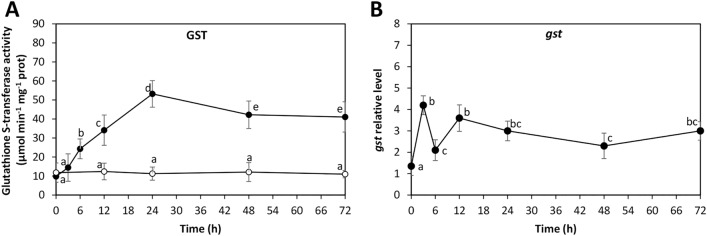
Activity of glutathione-S-transferase (GST, A) in U. lactuca cultivated without anthracene (open circles) and with 5 μM of ANT (black circles) for 0–72 h. The activity of GST is expressed as micromole per gram of fresh tissue (FT). Relative level of GST transcripts (B) in the alga cultivated with 5 μM of ANT (black circles). The relative level of GST transcripts is expressed as 2−ΔΔCT. Symbols represent mean values of three independent experiments ± SD. Letters indicate significant differences among experiments (P < 0.05).
Figure 7
Figure 7
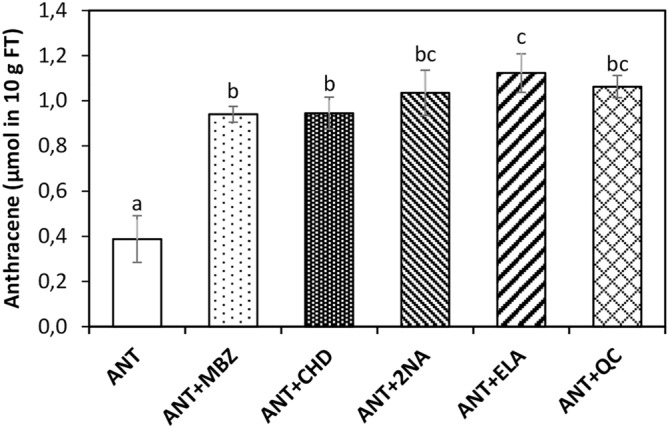
Level of anthracene in U. lactuca cultivated with 5 μM of ANT for 24 h (ANT, open bar) and with 0.5 μM of mebendazole (MBZ), an inhibitor of monooxygenases, cyclohexanedione (CHD), an inhibitor of dioxygenases, 2-naphtoic acid (2-NA), an inhibitor of polyphenol oxidases, ellagic acid (ELA), an inhibitor of GST, and quercetin (QC), an inhibitor of sulfotransferases, and with 5 µM of ANT for 24 h (dashed bars). The level of ANT is expressed as micromole in 10 g of algae fresh tissue (FT). Bars represent mean values of three independent experiments. Letters indicate significant differences among experiments (P < 0.05).
Figure 8
Figure 8
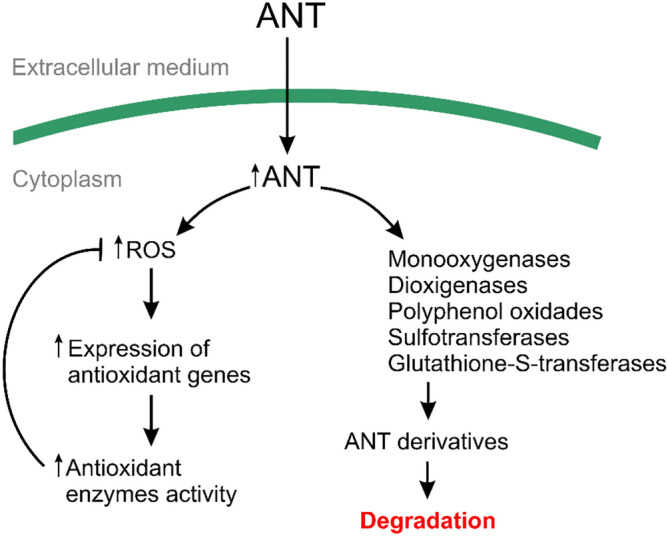
Model of anthracene detoxification in the marine alga U. lactuca. The alga cultivated with ANT rapidly incorporate and degrade this molecule showing an increase in ANT in the alga. ANT induces an oxidative stress condition leading to an increased expression of genes encoding antioxidant enzymes and their activities. Intracellular ANT is the substrate of metabolizing enzymes such as monooxygenases, dioxygenases, polyphenol oxidases, glutathione-S-transferases, and sulfotransferases.

References

    1. Mojiri A, Zhou JI, Ohashi A, Ozaki N, Kindaichi T. Comprehensive review of polycyclic aromatic hydrocarbons in water sources, their effects and treatment. Sci. Total Environ. 2019;696:133971. doi: 10.1016/j.scitotenv.2019.133971. - DOI - PubMed
    1. Huang XD, Dixon DG, Greenberg BM. Impact of UV radiation and photomodification on the toxicity of PAHs to the higher plant Lemna gibba (duckweed) Environ. Toxicol. Chem. 1993;12:1067–1077.
    1. Huang XD, Dixon DG, Greenberg BM. Increased polycyclic hydrocarbons following their photomodification in natural sunlight: Impact on the duckweed Lemna gibba L. G-3. Ecotox. Environ. Saf. 1995;32:194–200. doi: 10.1006/eesa.1995.1102. - DOI - PubMed
    1. Oyarzo-Miranda C, et al. Costal pollution from industrial park Quintero bay of central Chile: Effects on abundance morphology, and development of the kelp Lessonia spicata (Phaeophyceae) PLoS One. 2020;15:e0240581. doi: 10.1371/journal.pone.0240581. - DOI - PMC - PubMed
    1. Carranza DM, et al. Socio-environmental conflicts: An underestimated threat to biodiversity conservation in Chile. Environ. Sci. Pol. 2020;110:46–59. doi: 10.1016/j.envsci.2020.04.006. - DOI

Publication types