


How will artificial intelligence and bioinformatics change our understanding of IgA Nephropathy in the next decade?
- PMID: 33835214
- PMCID: PMC8551101
- DOI: 10.1007/s00281-021-00847-y
How will artificial intelligence and bioinformatics change our understanding of IgA Nephropathy in the next decade?
Erratum in
-
Correction to: How will artificial intelligence and bioinformatics change our understanding of IgA Nephropathy in the next decade?Semin Immunopathol. 2021 Oct;43(5):753. doi: 10.1007/s00281-021-00858-9. Semin Immunopathol. 2021. PMID: 33963429 Free PMC article. No abstract available.
Abstract
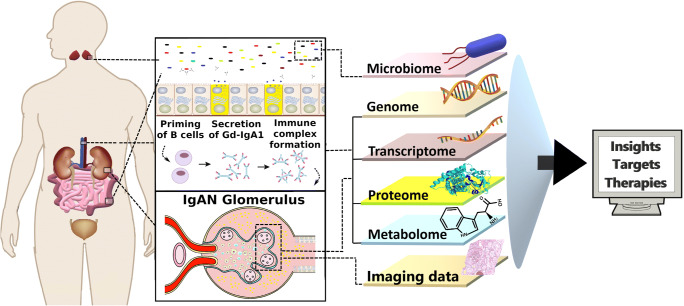
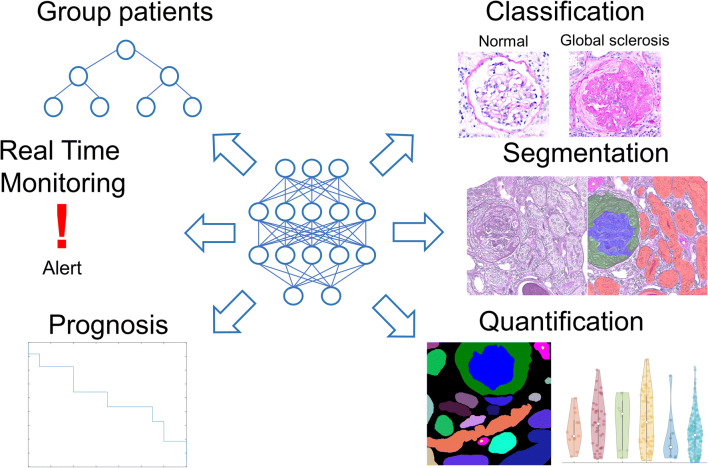
IgA nephropathy (IgAN) is the most common glomerulonephritis. It is characterized by the deposition of immune complexes containing immunoglobulin A (IgA) in the kidney's glomeruli, triggering an inflammatory process. In many patients, the disease has a progressive course, eventually leading to end-stage kidney disease. The current understanding of IgAN's pathophysiology is incomplete, with the involvement of several potential players, including the mucosal immune system, the complement system, and the microbiome. Dissecting this complex pathophysiology requires an integrated analysis across molecular, cellular, and organ scales. Such data can be obtained by employing emerging technologies, including single-cell sequencing, next-generation sequencing, proteomics, and complex imaging approaches. These techniques generate complex "big data," requiring advanced computational methods for their analyses and interpretation. Here, we introduce such methods, focusing on the broad areas of bioinformatics and artificial intelligence and discuss how they can advance our understanding of IgAN and ultimately improve patient care. The close integration of advanced experimental and computational technologies with medical and clinical expertise is essential to improve our understanding of human diseases. We argue that IgAN is a paradigmatic disease to demonstrate the value of such a multidisciplinary approach.
Keywords: Artificial intelligence; Bioinformatics; IgA nephropathy; Imaging; Omics.
© 2021. The Author(s).
Conflict of interest statement
JSR receives funding from GSK and Sanofi and consultant fees from Travere Therapeutics.
Figures
References
Publication types
MeSH terms
Substances
LinkOut - more resources
Full Text Sources
Other Literature Sources
Miscellaneous
