


Corporal Punishment and Elevated Neural Response to Threat in Children
- PMID: 33835477
- PMCID: PMC8237681
- DOI: 10.1111/cdev.13565
Corporal Punishment and Elevated Neural Response to Threat in Children
Abstract
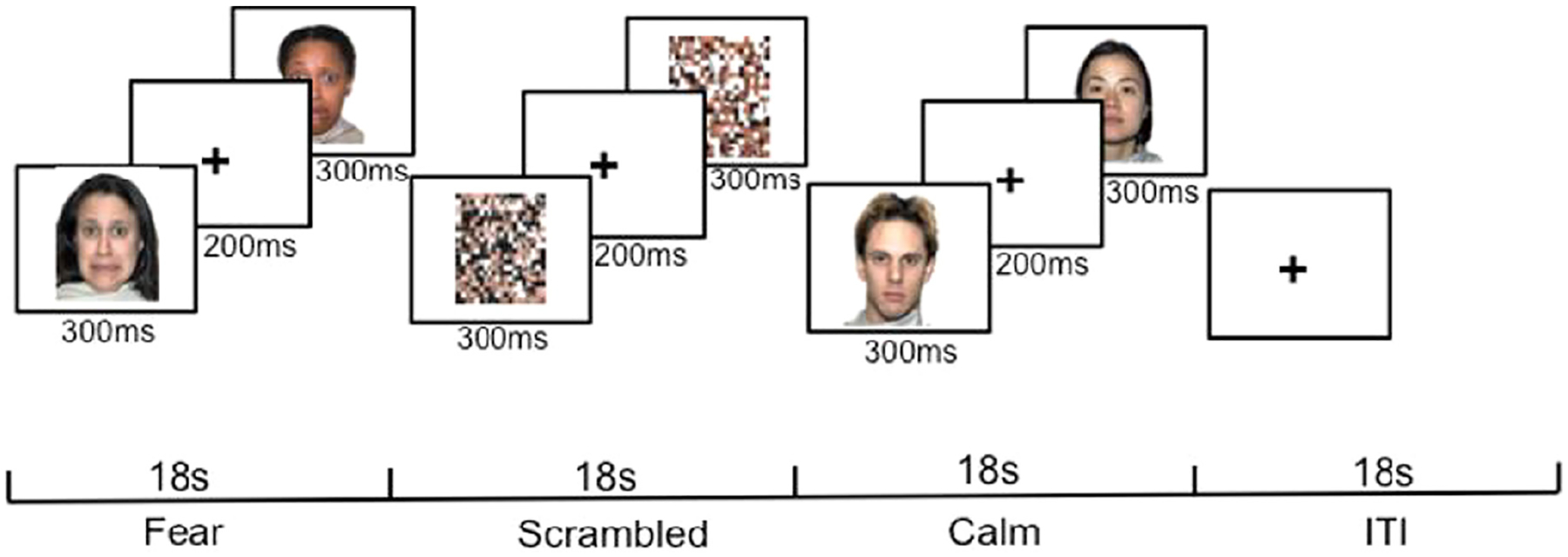
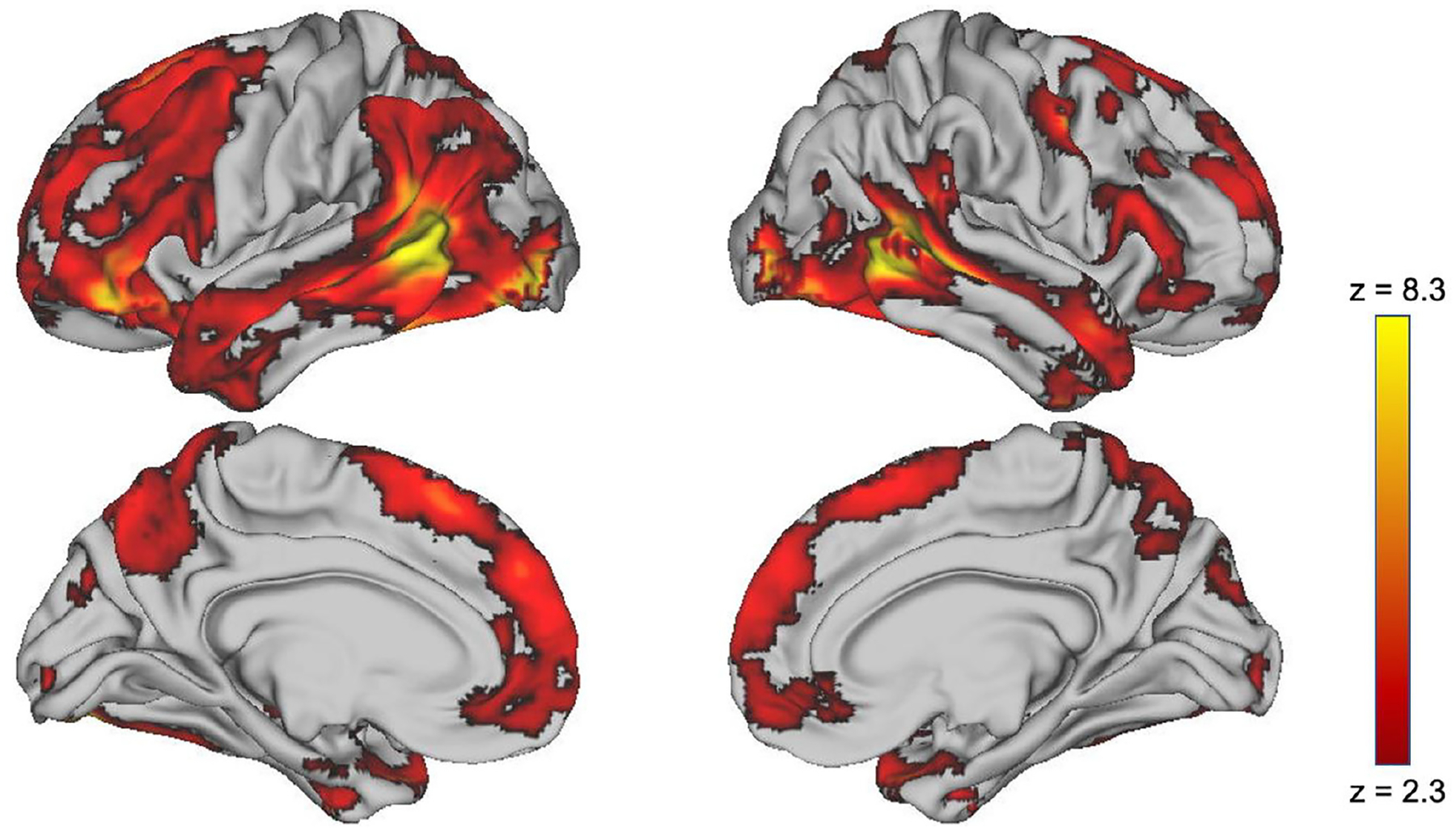
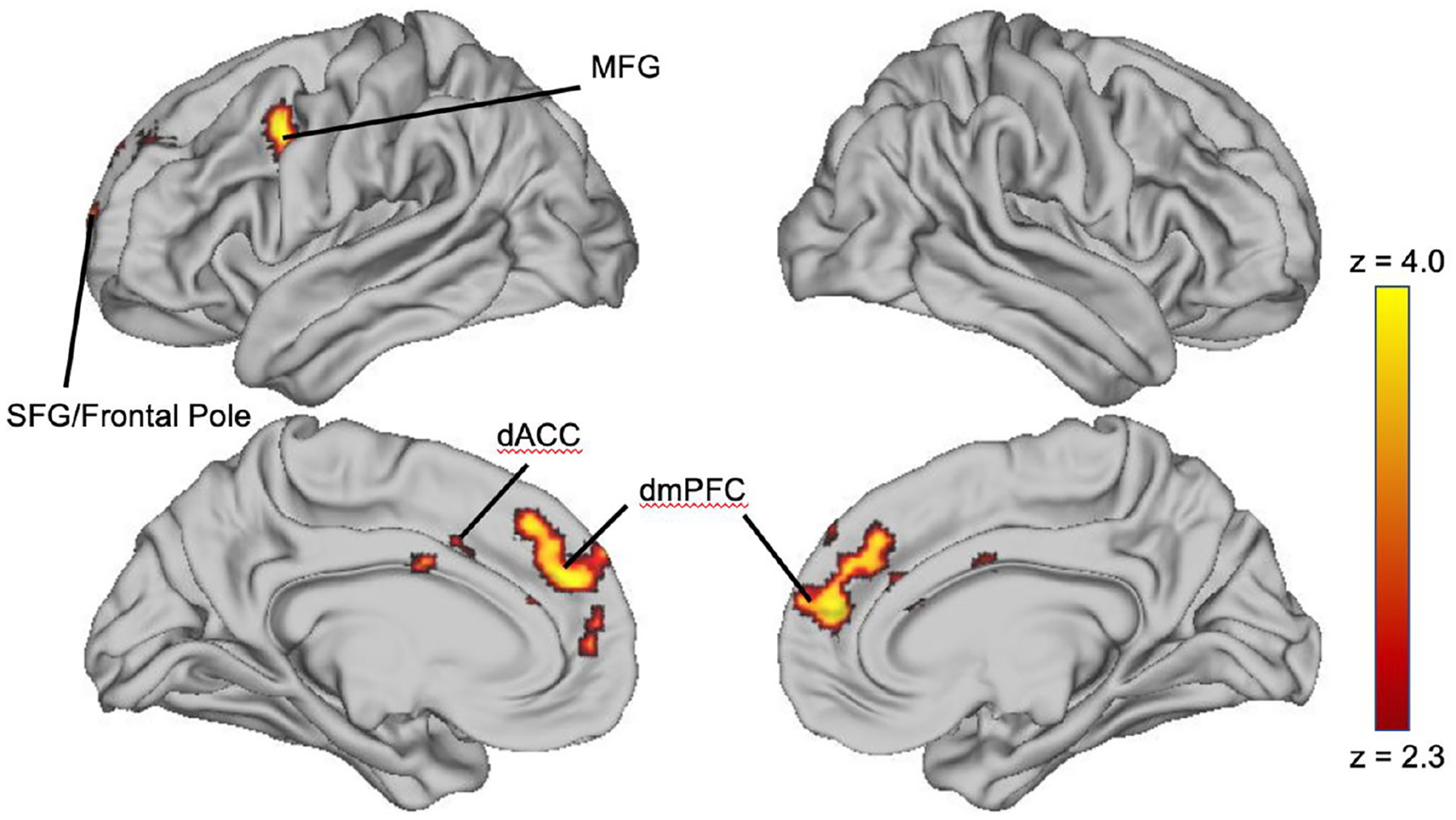
Spanking remains common around the world, despite evidence linking corporal punishment to detrimental child outcomes. This study tested whether children (Mage = 11.60) who were spanked (N = 40) exhibited altered neural function in response to stimuli that suggest the presence of an environmental threat compared to children who were not spanked (N = 107). Children who were spanked exhibited greater activation in multiple regions of the medial and lateral prefrontal cortex (PFC), including dorsal anterior cingulate cortex, dorsomedial PFC, bilateral frontal pole, and left middle frontal gyrus in response to fearful relative to neutral faces compared to children who were not spanked. These findings suggest that spanking may alter neural responses to environmental threats in a manner similar to more severe forms of maltreatment.
© 2021 The Authors. Child Development © 2021 Society for Research in Child Development.
Figures
References
-
- Buckner RL, Andrews-Hanna JR, & Schacter DL (2008). The brain’s default network: Anatomy, function, and relevance to disease. In Kingstone A, & Miller MB (Eds.), Annals of the New York Academy of Sciences: Vol. 1124. The year in cognitive neuroscience 2008 (pp. 1–38). Oxford, UK: Blackwell. - PubMed
Publication types
MeSH terms
Grants and funding
LinkOut - more resources
Full Text Sources
Other Literature Sources
Medical
Miscellaneous