


Do Inhibitory Metabolites Impact DDI Risk Assessment? Analysis of in vitro and in vivo Data from NDA Reviews Between 2013 and 2018
- PMID: 33835478
- PMCID: PMC9794360
- DOI: 10.1002/cpt.2259
Do Inhibitory Metabolites Impact DDI Risk Assessment? Analysis of in vitro and in vivo Data from NDA Reviews Between 2013 and 2018
Abstract
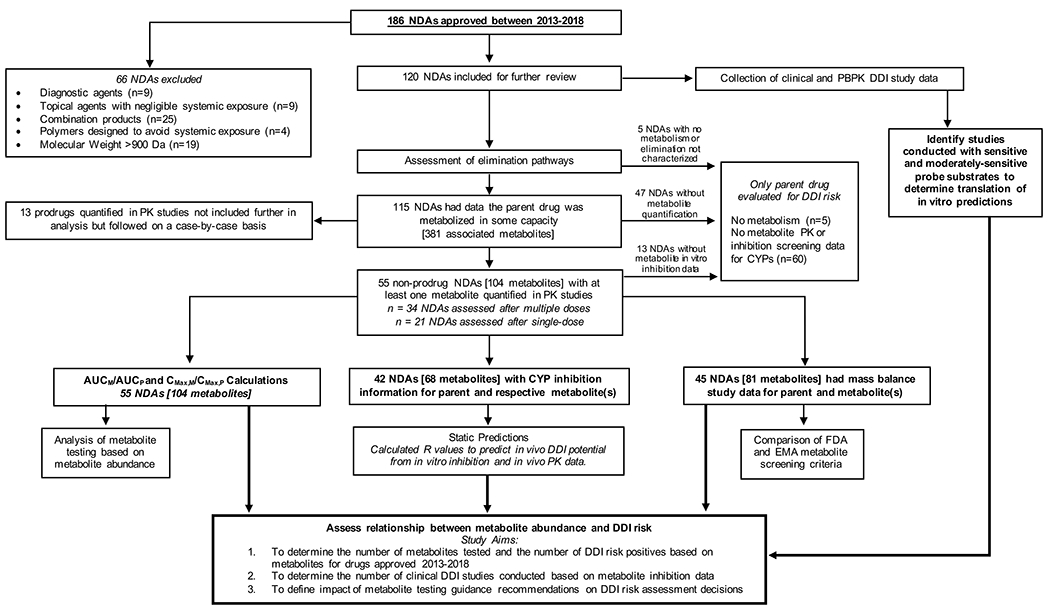
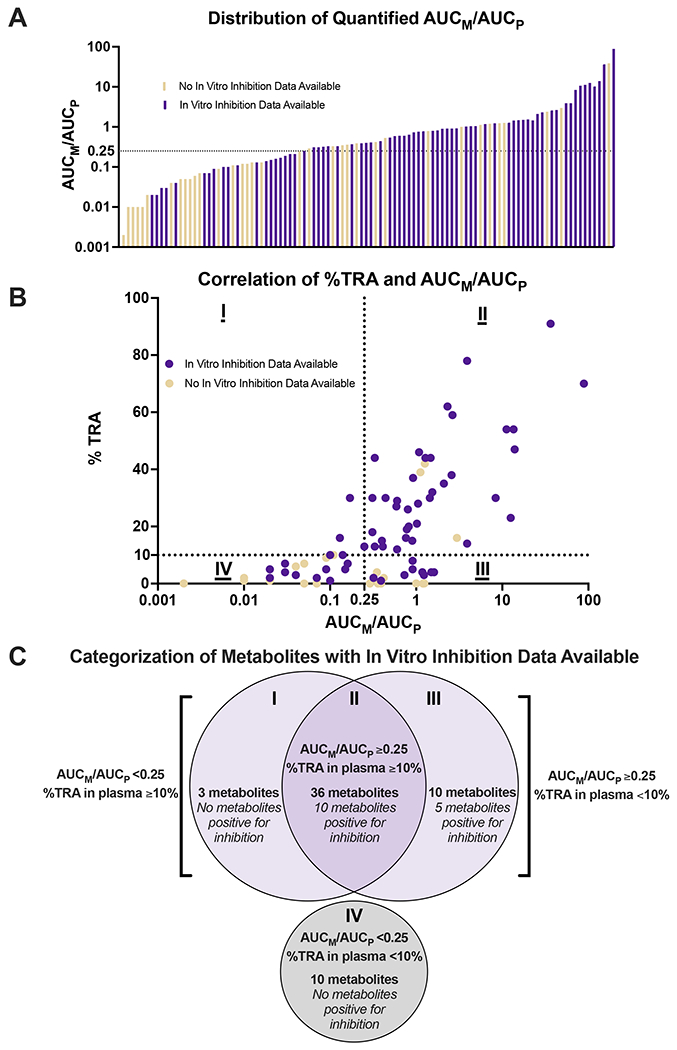
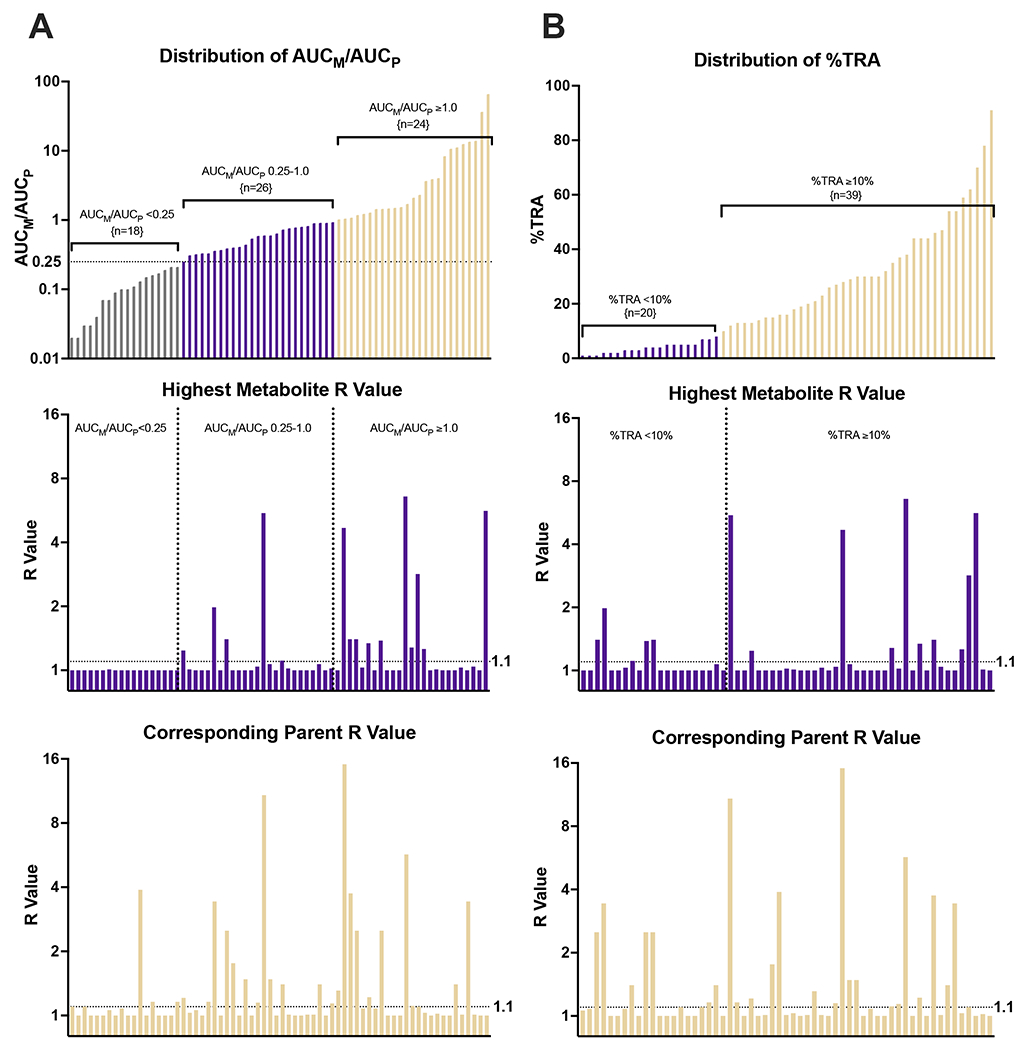
Evaluating the potential of new drugs and their metabolites to cause drug-drug interactions (DDIs) is critical for understanding drug safety and efficacy. Although multiple analyses of proprietary metabolite testing data have been published, no systematic analyses of metabolite data collected according to current testing criteria have been conducted. To address this knowledge gap, 120 new molecular entities approved between 2013 and 2018 were reviewed. Comprehensive data on metabolite-to-parent area under the curve ratios (AUCM /AUCP ), inhibitory potency of parent and metabolites, and clinical DDIs were collected. Sixty-four percent of the metabolites quantified in vivo had AUCM /AUCP ≥ 0.25 and 75% of these metabolites were tested for cytochrome P450 (CYP) inhibition in vitro, resulting in 15 metabolites with potential DDI risk identification. Although 50% of the metabolites with AUCM /AUCP < 0.25 were also tested in vitro, none of them showed meaningful CYP inhibition potential. The metabolite percentage of plasma total radioactivity cutoff of ≥ 10% did not appear to add value to metabolite testing strategies. No relationship between metabolite versus parent drug polarity and inhibition potency was observed. Comparison of metabolite and parent maximum concentration (Cmax ) divided by inhibition constant (Ki ) values suggested that metabolites can contribute to in vivo DDIs and, hence, quantitative prediction of clinical DDI magnitude may require both parent and metabolite data. This systematic analysis of metabolite data for newly approved drugs supports an AUCM /AUCP cutoff of ≥ 0.25 to warrant metabolite in vitro CYP screening to adequately characterize metabolite inhibitory DDI potential and support quantitative DDI predictions.
© 2021 The Authors. Clinical Pharmacology & Therapeutics © 2021 American Society for Clinical Pharmacology and Therapeutics.
Figures
References
-
- Obach RS, Walsky RL, Venkatakrishnan K, Houston JB, Tremaine LM. In vitro cytochrome P450 inhibition data and the prediction of drug-drug interactions: Qualitative relationships, quantitative predictions, and the rank-order approach. Clin Pharmacol Ther. 2005;78(6):582–592. doi:10.1016/j.clpt.2005.09.004 - DOI - PubMed
-
- Brown HS, Ito K, Galetin A, Houston JB. Prediction of in vivo drug-drug interactions from in vitro data: Impact of incorporating parallel pathways of drug elimination and inhibitor absorption rate constant. Br J Clin Pharmacol. 2005;60(5):508–518. doi:10.1111/j.1365-2125.2005.02483.x - DOI - PMC - PubMed
Publication types
MeSH terms
Substances
Grants and funding
LinkOut - more resources
Full Text Sources
Other Literature Sources
Medical
Miscellaneous
