


HIV voluntary counseling and testing uptake and associated factors among Ethiopian youths: evidence from the 2016 EDHS using multilevel modeling
- PMID: 33836650
- PMCID: PMC8033676
- DOI: 10.1186/s12879-021-06021-x
HIV voluntary counseling and testing uptake and associated factors among Ethiopian youths: evidence from the 2016 EDHS using multilevel modeling
Abstract
Background: Existing evidence showed that Human Immunodeficiency Virus counselling and testing uptake among Ethiopian youths is low, and factors contributing to it are not well studied. Therefore, this study aims to assess the status of uptake and identify its determinants using the 2016 Ethiopia Demographic and Health Survey data.
Method: Data of 10,903 Ethiopian youths were extracted from the 2016 Ethiopian Demographic and Health Survey. The association between the response variable and the predictors was modeled by multilevel binary logistic regression, whereas adjusted odds ratio and confidence intervals were used to measure associations and their statistical significance. The variation in the uptake of counselling and testing of HIV across regions of Ethiopia was quantified by intra-class correlation.
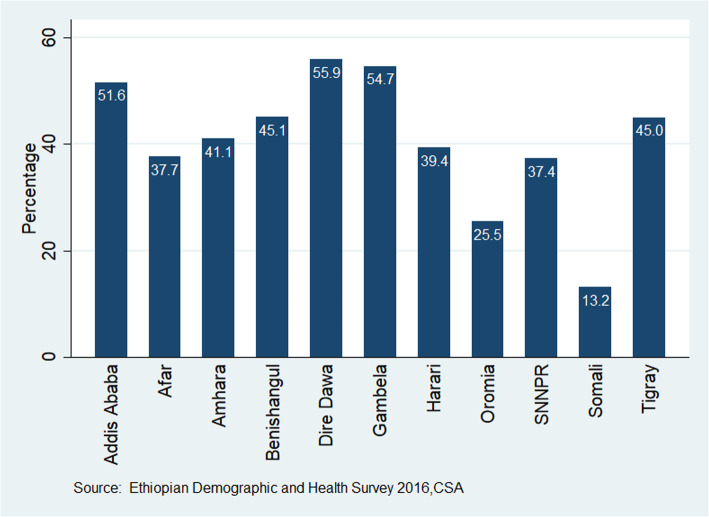
Result: The current study revealed that, overall, 34.9% (95% CI: 33.5, 36.2%) Ethiopian youths were ever tested for human immunodeficiency virus. Results show that about 9% of the variation in the probability of being tested for the disease was due to the regional variations. Moreover, having moderate and comprehensive HIV knowledge, being rich, having risky sexual behaviour, having a better educational level, having professional work, being married, owning of mobile, and having access to media were positively associated with human immunodeficiency virus voluntary counselling and testing uptake. On the other hand, being male, following protestant religion, following Muslim religion, and following other religions than orthodox religion were negatively associated with the uptake of human immunodeficiency virus counselling and testing.
Conclusion: Voluntary human immunodeficiency virus counselling and testing uptake among Ethiopian youths is very low and varies across the regions which might hamper the ambitious plan of Ethiopia to end the disease as a public health threat by 2030. Emphasis should be given to promoting the youths' HIV-related knowledge through community-based education, encouraging and empowering the youths to participate in professional works by giving due focus to poor youths, and promoting mass media utilization to better achieve the plan.
Keywords: And testing; EDHS; Multilevel; Voluntary HIV counselling; Youths.
Conflict of interest statement
The authors declare that there is no competing of interests in this study.
Figures
References
-
- WHO. Maternal, newborn, child, and adolescent health HIV and youth. Geneva; 2020.
-
- HAPCO. Guidelines for HIV Counselling and testing in Ethiopia. Addis Ababa; 2007.
-
- WHO. HIV/AIDS Key facts. Geneva; 2019.
-
- WHO. Global Health Observatory (GHO) data. Geneva; 2020.
-
- UNAIDS. Global HIV statistics. Geneva; 2019.
MeSH terms
LinkOut - more resources
Full Text Sources
Other Literature Sources
Medical
