


Effects of weather-related social distancing on city-scale transmission of respiratory viruses: a retrospective cohort study
- PMID: 33836685
- PMCID: PMC8033554
- DOI: 10.1186/s12879-021-06028-4
Effects of weather-related social distancing on city-scale transmission of respiratory viruses: a retrospective cohort study
Abstract
Background: Unusually high snowfall in western Washington State in February 2019 led to widespread school and workplace closures. We assessed the impact of social distancing caused by this extreme weather event on the transmission of respiratory viruses.
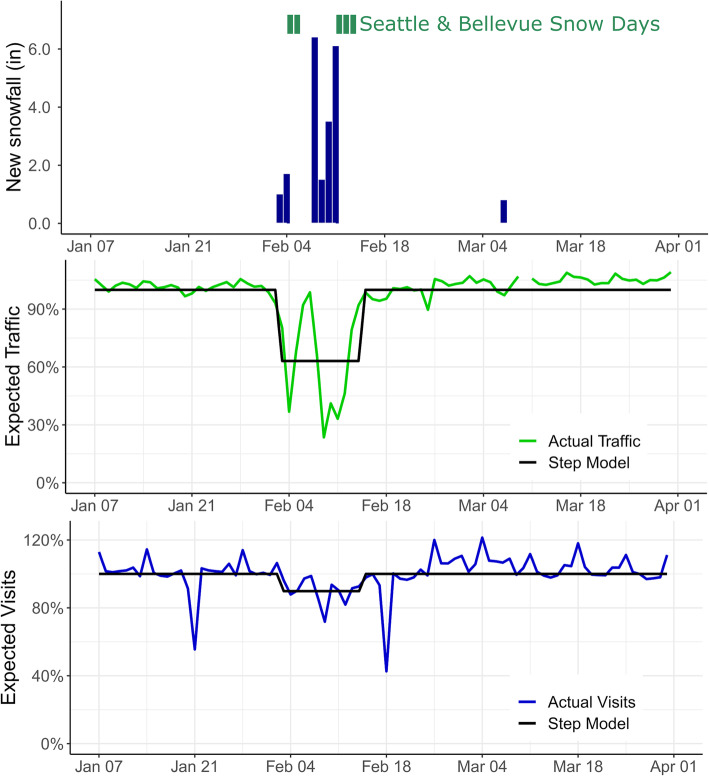
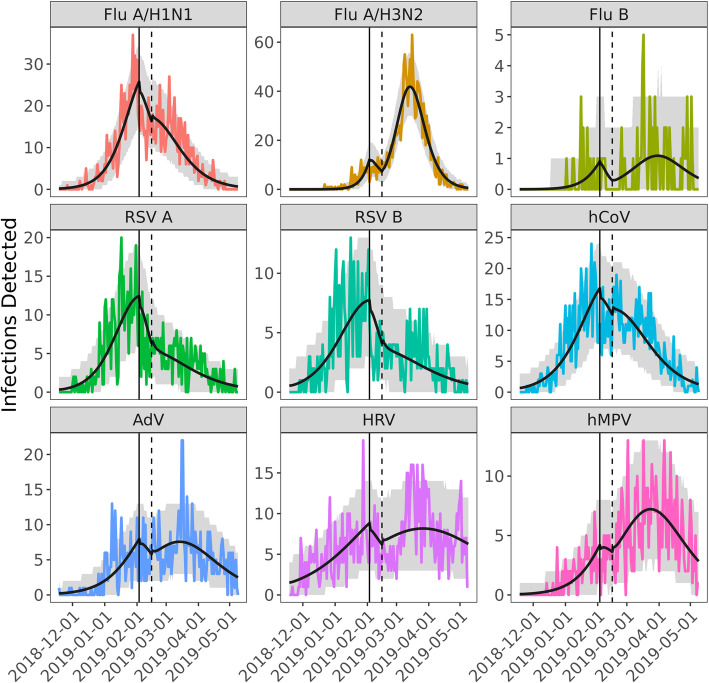
Methods: Residual specimens from patients evaluated for acute respiratory illness at hospitals in the Seattle metropolitan area were screened for a panel of respiratory viruses. Transmission models were fit to each virus to estimate the magnitude reduction in transmission due to weather-related disruptions. Changes in contact rates and care-seeking were informed by data on local traffic volumes and hospital visits.
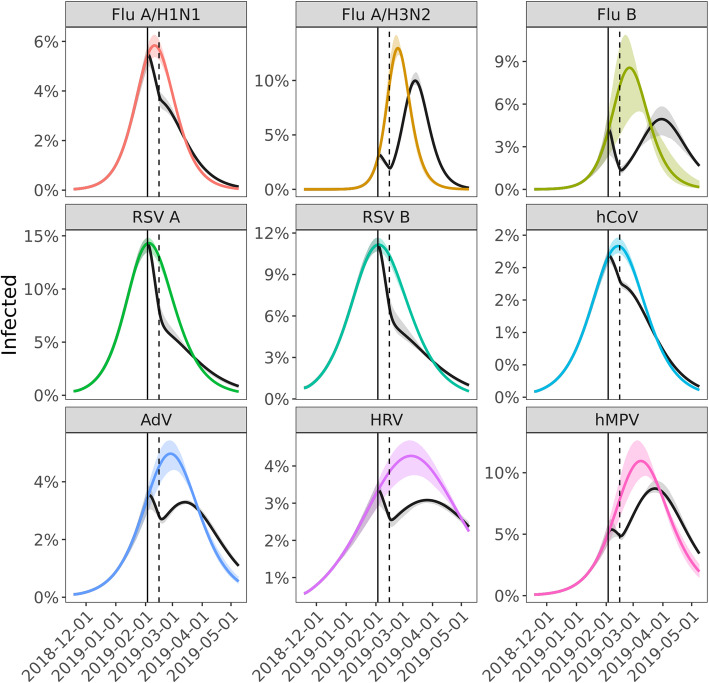
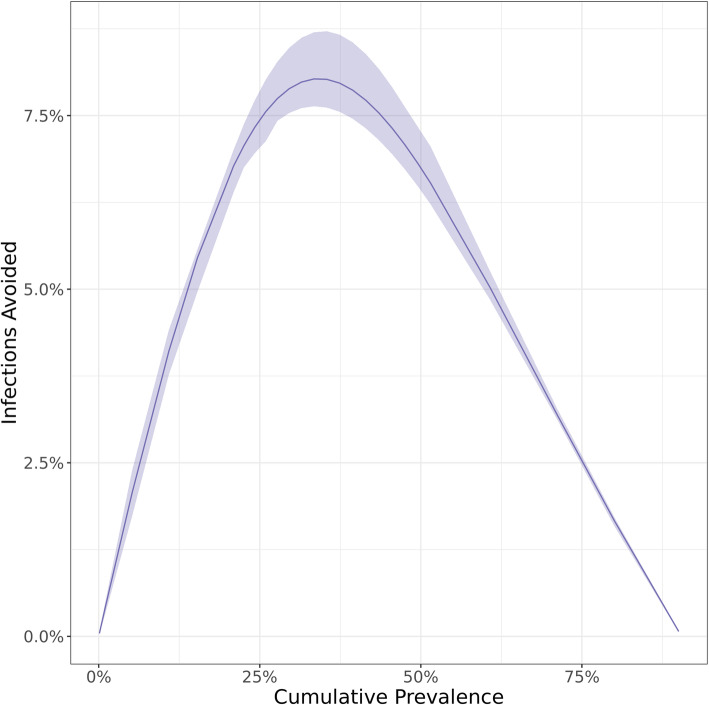
Results: Disruption in contact patterns reduced effective contact rates during the intervention period by 16 to 95%, and cumulative disease incidence through the remainder of the season by 3 to 9%. Incidence reductions were greatest for viruses that were peaking when the disruption occurred and least for viruses in an early epidemic phase.
Conclusion: High-intensity, short-duration social distancing measures may substantially reduce total incidence in a respiratory virus epidemic if implemented near the epidemic peak. For SARS-CoV-2, this suggests that, even when SARS-CoV-2 spread is out of control, implementing short-term disruptions can prevent COVID-19 deaths.
Keywords: Epidemiology; Influenza, human; Non-Pharmaceutical Interventions; Respiratory syncytial virus, human.
Conflict of interest statement
Michael L. Jackson has received grant funding from Sanofi Pasteur, unrelated to the present work. Janet A. Englund is a consultant for Sanofi Pasteur and Meissa Vaccines, Inc., and receives research support from GlaxoSmithKline, AstraZeneca, and Novavax. Helen Chu is a consultant for Merck and GlaxoSmithKline. Gregory R. Hart, Denise J. McCulloch, Amanda Adler, Elisabeth Brandstetter, Kairsten Fay, Peter Han, Kirsten Lacombe, Jover Lee, Thomas R. Sibley, Deborah A. Nickerson, Mark J. Rieder, Lea M. Starita, Amanda Adler, Trevor Bedford, and Michael Famulare declare no competing interests.
Figures
References
-
- Kang M, Wu J, Ma W, He J, Lu J, Liu T, et al. Evidence and characteristics of human-to-human transmission of SARS-CoV-2. MedRxiv. 2020. 10.1101/2020.02.03.20019141.
-
- Perez-Padilla R, de la Rosa-Zamboni D, Ponce de Leon S, Hernandez M, Quinones-Falconi F, Bautista E, Ramirez-Venegas A, Rojas-Serrano J, Ormsby CE, Corrales A, et al. Pneumonia and respiratory failure from swine-origin influenza A (H1N1) in Mexico. N Engl J Med. 2009;361(7):680–689. doi: 10.1056/NEJMoa0904252. - DOI - PubMed
MeSH terms
Grants and funding
LinkOut - more resources
Full Text Sources
Other Literature Sources
Miscellaneous
