


Neuroendocrine control of appetite and metabolism
- PMID: 33837263
- PMCID: PMC8102538
- DOI: 10.1038/s12276-021-00597-9
Neuroendocrine control of appetite and metabolism
Abstract
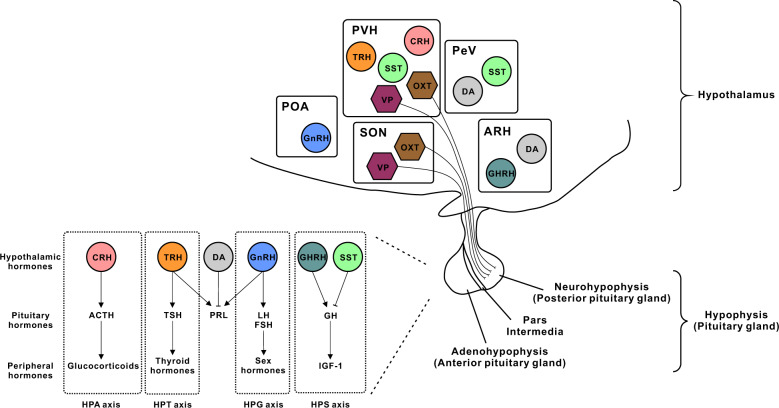
Body homeostasis is predominantly controlled by hormones secreted by endocrine organs. The central nervous system contains several important endocrine structures, including the hypothalamic-pituitary axis. Conventionally, neurohormones released by the hypothalamus and the pituitary gland (hypophysis) have received much attention owing to the unique functions of the end hormones released by their target peripheral organs (e.g., glucocorticoids released by the adrenal glands). Recent advances in mouse genetics have revealed several important metabolic functions of hypothalamic neurohormone-expressing cells, many of which are not readily explained by the action of the corresponding classical downstream hormones. Notably, the newly identified functions are better explained by the action of conventional neurotransmitters (e.g., glutamate and GABA) that constitute a neuronal circuit. In this review, we discuss the regulation of appetite and metabolism by hypothalamic neurohormone-expressing cells, with a focus on the distinct contributions of neurohormones and neurotransmitters released by these neurons.
Conflict of interest statement
The authors declare no competing interests.
Figures
References
-
- Clarke IJ. Hypothalamus as an endocrine organ. Compr. Physiol. 2015;5:217–253. - PubMed
-
- Chiamolera MI, Wondisford FE. Minireview: Thyrotropin-releasing hormone and the thyroid hormone feedback mechanism. Endocrinology. 2009;150:1091–1096. - PubMed
-
- Berthon BS, MacDonald-Wicks LK, Wood LG. A systematic review of the effect of oral glucocorticoids on energy intake, appetite, and body weight in humans. Nutr. Res. 2014;34:179–190. - PubMed
Publication types
MeSH terms
Substances
LinkOut - more resources
Full Text Sources
Other Literature Sources
