


Clinical evaluation of a novel subcutaneous lactate monitor
- PMID: 33837904
- PMCID: PMC8536260
- DOI: 10.1007/s10877-021-00685-1
Clinical evaluation of a novel subcutaneous lactate monitor
Abstract
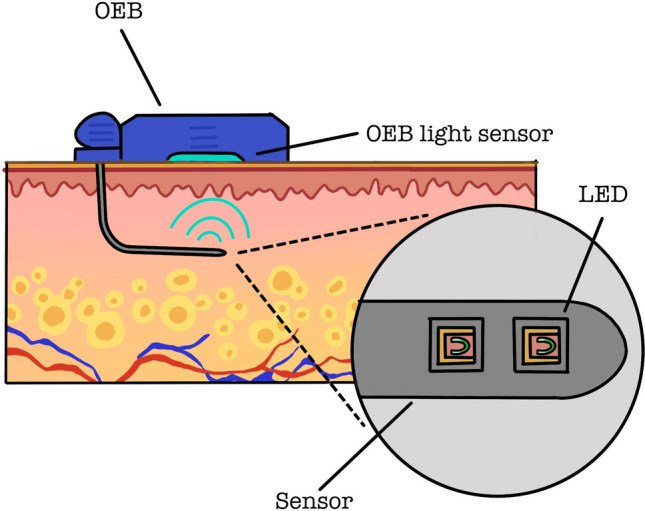
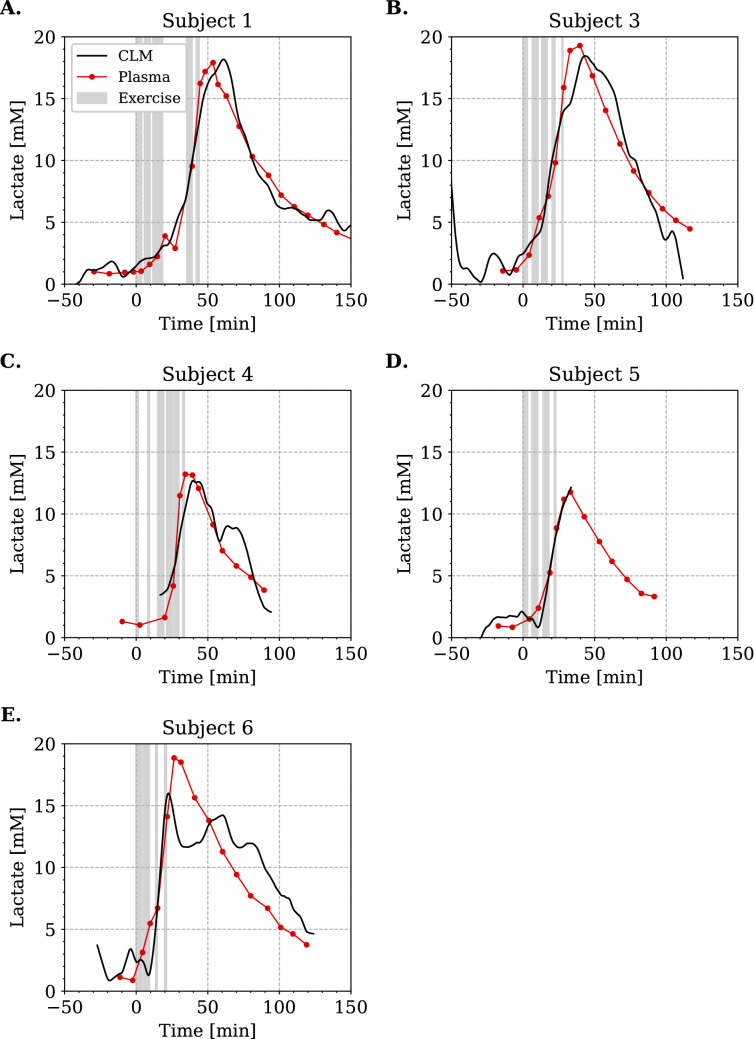
Lactate levels are commonly used as an indirect measure to assess metabolic stress in clinical conditions like sepsis. Dynamic lactate measurements are recommended to assess and guide treatment in patients with shock and other critical care conditions. A minimally invasive, continuous lactate monitor has potential to improve clinical decisions and patient care. The purpose of the study was to evaluate continuous lactate measurements of a novel enzymatic Continuous Lactate Monitor (CLM) developed in our laboratory. Lactate levels were monitored during incremental cycling exercise challenges as a tool for hyperlactatemia. Six healthy individuals 18-45 y/o (4 males, 2 females) participated in the study. CLM devices were inserted subcutaneously in the postero-lateral trunk below the renal angle, one hour before the exercise challenge. Each exercise challenge consisted of a 3 to 12-min warm up period, followed by up to 7, 4-min incremental workload bouts separated by rest intervals. Continuous lactate measurements obtained from CLM were compared with commercial lactate analyzer (Abbott iSTAT) measurements of venous blood (plasma) drawn from the antecubital vein. Blood was drawn at up to 25 time points spanning the duration of before exercise, during exercise, and up to 120 min post exercise. Area under the curve (AUC), and delay time were calculated to compare the CLM readings with plasma lactate concentration. Average plasma lactate concentration increased from 1.02 to 16.21 mM. Ratio of AUC derived from CLM to plasma lactate was 1.025 (0.990-1.058). Average dynamic delay time of CLM to venous plasma lactate was 5.22 min (2.87-10.35). Insertion sites examined 48 h after CLM removal did not show signs of side effects and none required medical attention upon examination. The newly developed CLM has shown to be a promising tool to continuously measure lactate concentration in a minimally invasive fashion. Results indicate the CLM can provide needed trends in lactate over time. Such a device may be used in the future to improve treatment in clinical conditions such as sepsis.
Keywords: Continuous lactate monitor; Exercise physiology; Lactate; Lactic acid; Optode; Real-time monitoring.
© 2021. The Author(s).
Conflict of interest statement
The authors have no conflicts of interest to report.
Figures
References
-
- Singer M, Deutschman CS, Seymour C, Shankar-Hari M, Annane D, Bauer M, Bellomo R, Bernard GR, Chiche JD, Coopersmith CM, Hotchkiss RS, Levy MM, Marshall JC, Martin GS, Opal SM, Rubenfeld GD, Poll TD, Vincent JL, Angus DC. The third international consensus definitions for sepsis and septic shock (sepsis-3) JAMA. 2016;315(8):801–810. doi: 10.1001/jama.2016.0287. - DOI - PMC - PubMed
-
- Han X, Edelson DP, Snyder A, Pettit N, Sokol S, Barc C, Howell MD, Churpek MM. Implications of centers for medicare & medicaid services severe sepsis and septic shock early management bundle and initial lactate measurement on the management of sepsis. Chest. 2018;154(2):302–308. doi: 10.1016/j.chest.2018.03.025. - DOI - PMC - PubMed
-
- Jansen TC, Van Bommel J, Schoonderbeek FJ, Sleeswijk Visser SJ, Van Der Klooster JM, Lima AP, Willemsen SP, Bakker J. Early lactate-guided therapy in intensive care unit patients: a multicenter, open-label, randomized controlled trial. Am J Respir Crit Care Med. 2010;182(6):752–761. doi: 10.1164/rccm.200912-1918OC. - DOI - PubMed
Publication types
MeSH terms
Substances
Grants and funding
LinkOut - more resources
Full Text Sources
Other Literature Sources
Medical
