


Understanding the cellular origin and progression of esophageal cancer using esophageal organoids
- PMID: 33838281
- PMCID: PMC8493518
- DOI: 10.1016/j.canlet.2021.03.031
Understanding the cellular origin and progression of esophageal cancer using esophageal organoids
Abstract
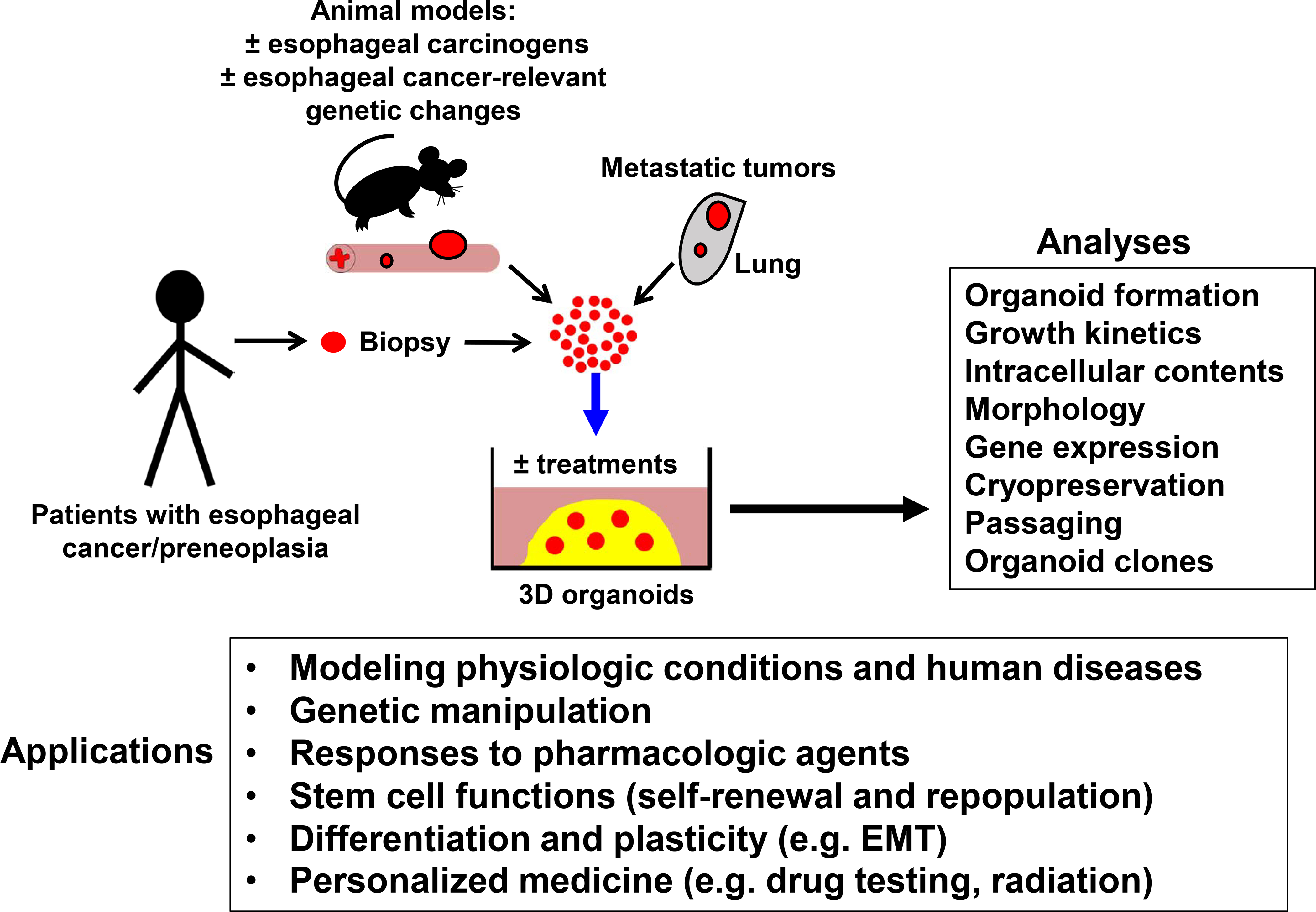
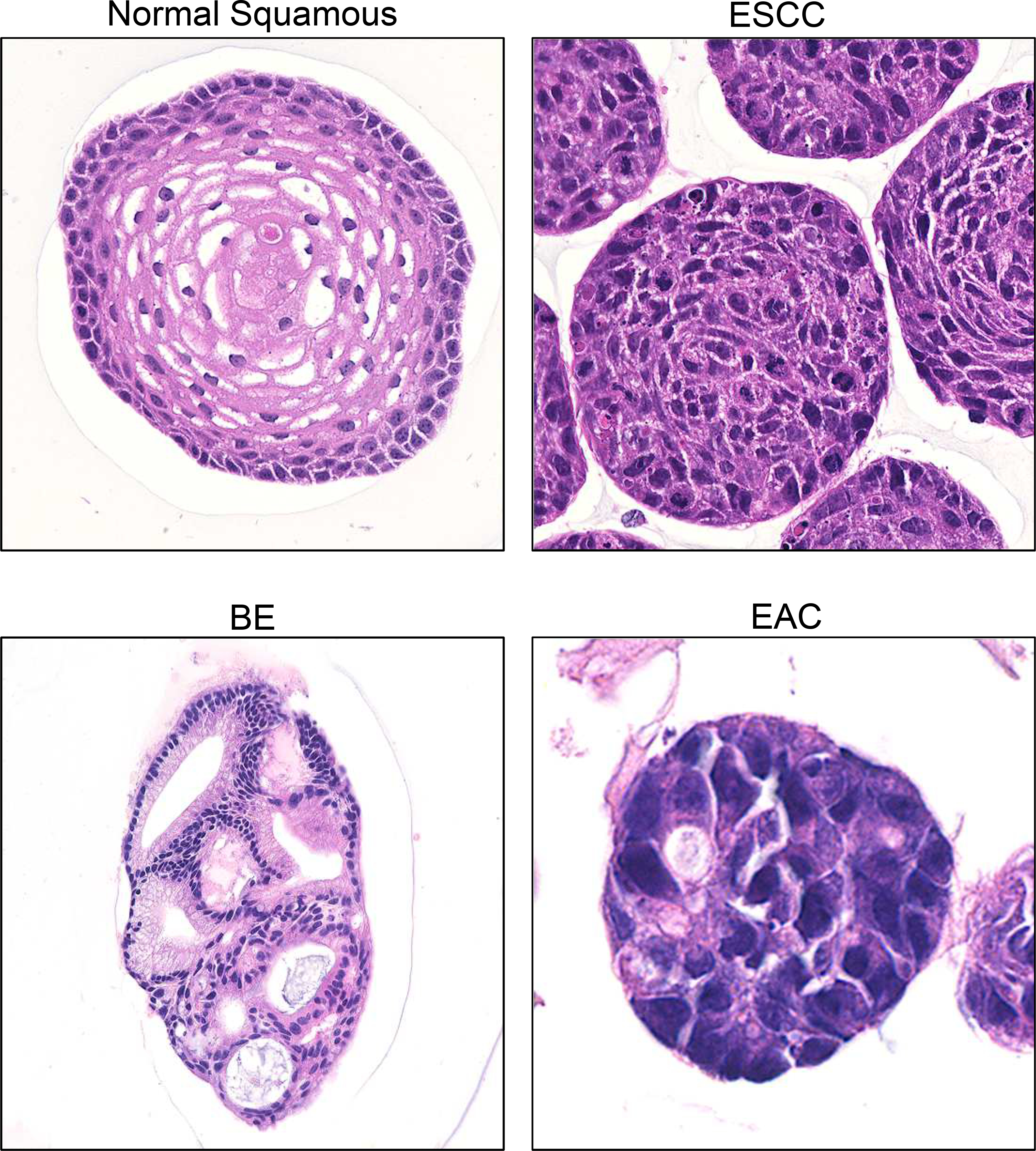
Three-dimensional (3D) organoids are a novel tool to model epithelial cell biology and human diseases of the esophagus. 3D organoid culture systems have been utilized to investigate the pathobiology of esophageal cancer, including both squamous cell carcinoma and adenocarcinoma. Additional organoid-based approaches for study of esophageal development and benign esophageal diseases have provided key insights into esophageal keratinocyte differentiation and mucosal regeneration. These investigations have implications for the identification of esophageal cancer stem cells, as well as the potential to halt malignant progression through induction of differentiation pathways. Patient-derived organoids (PDOs) from human tissue samples allow for unique and faithful in vitro modeling of esophageal cancers, and provide an exciting platform for investigation into personalized medicine and targeted treatment approaches, as well as new models for understanding therapy resistance and recurrent disease. Future directions include high-throughput genomic screening using PDOs, and study of tumor-microenvironmental interactions through co-culture with immune and stromal cells and novel extracellular matrix complexes.
Keywords: 3D organoids; Barrett's esophagus; Esophageal adenocarcinoma; Esophageal squamous cell carcinoma; Esophageal stem cells.
Copyright © 2021 Elsevier B.V. All rights reserved.
Conflict of interest statement
Conflicts of interest
The authors have no conflicts of interest to disclose.
Declaration of interests
The authors declare that they have no known competing financial interests or personal relationships that could have appeared to influence the work reported in this paper.
Figures
References
-
- Karakasheva TA, Kijima T, Shimonosono M, Maekawa H, Sahu V, Gabre JT, Cruz-Acuna R, Giroux V, Sangwan V, Whelan KA, Natsugoe S, Yoon AJ, Philipone E, Klein-Szanto AJ, Ginsberg GG, Falk GW, Abrams JA, Que J, Basu D, Ferri L, Diehl JA, Bass AJ, Wang TC, Rustgi AK, Nakagawa H, Generation and Characterization of Patient-Derived Head and Neck, Oral, and Esophageal Cancer Organoids, Curr Protoc Stem Cell Biol, 53 (2020) e109. - PMC - PubMed
-
- Gunther C, Neumann H, Vieth M, Esophageal epithelial resistance, Dig Dis, 32 (2014) 6–10. - PubMed
Publication types
MeSH terms
Supplementary concepts
Grants and funding
LinkOut - more resources
Full Text Sources
Other Literature Sources
Medical
Molecular Biology Databases
