


Relative Predictive Value of Circulating Immune Markers in US Adults Without Cardiovascular Disease: Implications for Risk Reclassification
- PMID: 33840521
- PMCID: PMC8683138
- DOI: 10.1016/j.mayocp.2020.11.027
Relative Predictive Value of Circulating Immune Markers in US Adults Without Cardiovascular Disease: Implications for Risk Reclassification
Abstract
Objective: To investigate the relative predictive value of circulating immune cell markers for cardiovascular mortality in ambulatory adults without cardiovascular disease.
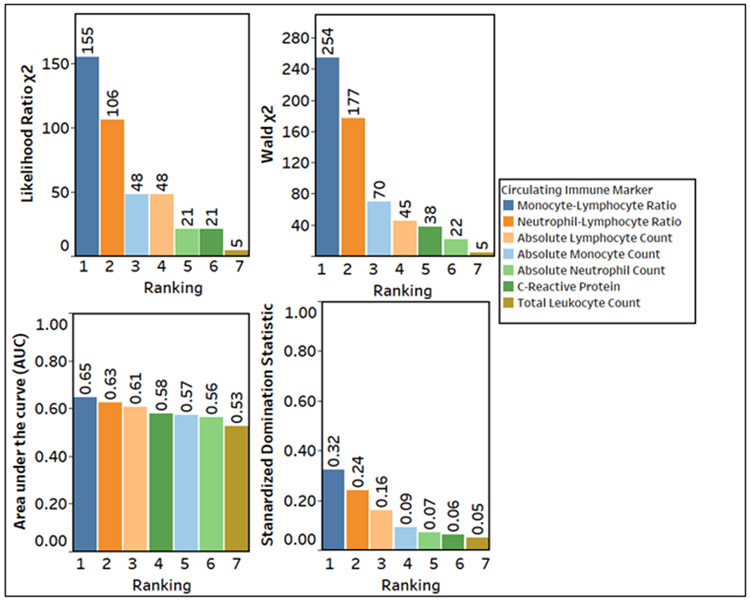
Methods: We analyzed data of participants enrolled in the National Health and Nutrition Examination Survey from January 1, 1999, to December 31, 2010, with the total leukocyte count within a normal range (4000-11,000 cells/μL [to convert to cells ×109/L, multiply by 0.001]) and without cardiovascular disease. The relative predictive value of circulating immune cell markers measured at enrollment-including total leukocyte count, absolute neutrophil count, absolute lymphocyte count, absolute monocyte count, monocyte-lymphocyte ratio (MLR), neutrophil-lymphocyte ratio, and C-reactive protein-for cardiovascular mortality was evaluated. The marker with the best predictive value was added to the 10-year atherosclerotic cardiovascular disease (ASCVD) risk score to estimate net risk reclassification indices for 10-year cardiovascular mortality.
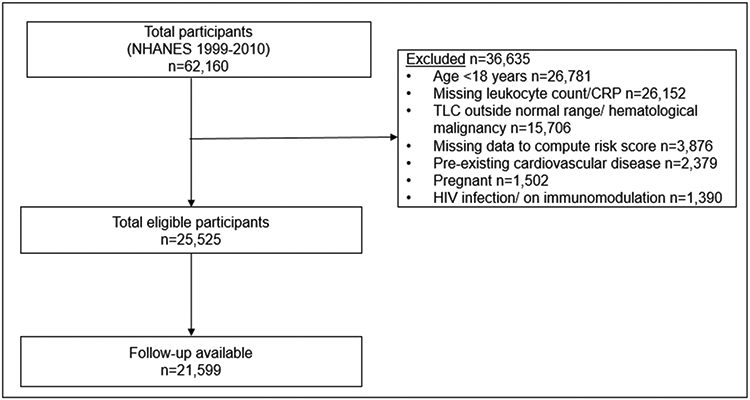
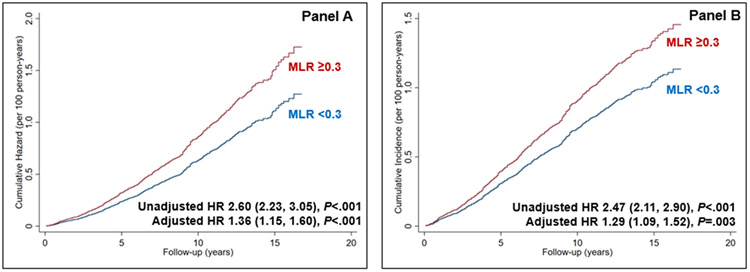
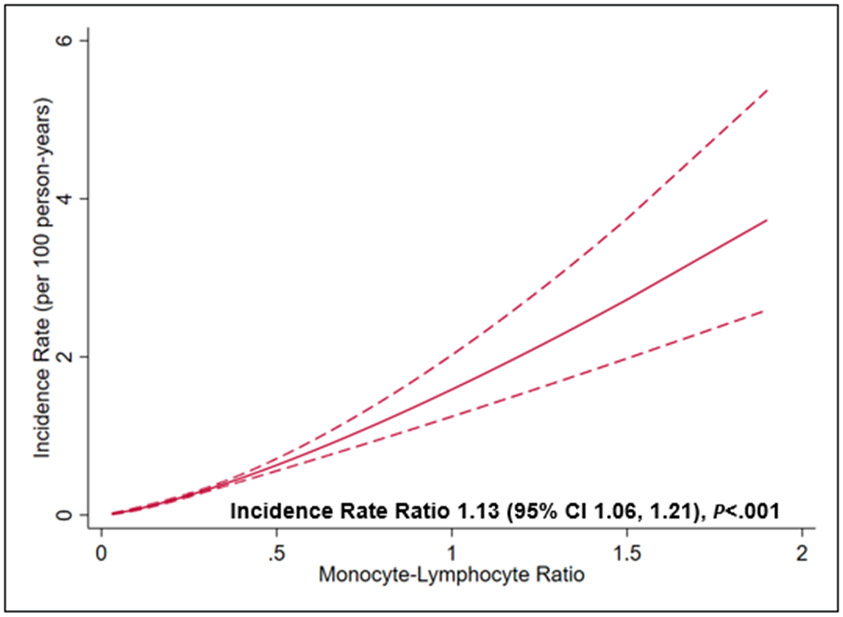
Results: Among 21,599 participants eligible for this analysis, the median age was 47 years (interquartile range, 34-63 years); 10,651 (49.2%) participants were women, and 10,713 (49.5%) were self-reported non-Hispanic white. During a median follow-up of 9.6 years (interquartile range, 6.8-13.1 years), there were 627 cardiovascular deaths. MLR had the best predictive value for cardiovascular mortality. The addition of elevated MLR (≥0.3) to the 10-year ASCVD risk score improved the classification by 2.7%±1.4% (P=.04). Elevated MLR had better predictive value than C-reactive protein and several components of the 10-year ASCVD risk score.
Conclusion: Among ambulatory US adults without preexisting cardiovascular disease, we found that MLR had the best predictive value for cardiovascular mortality among circulating immune markers. The addition of MLR to the 10-year risk score significantly improved the risk classification of participants.
Published by Elsevier Inc.
Conflict of interest statement
Figures
References
-
- Friedman GD, Klatsky AL, Siegelaub AB. The Leukocyte Count as a Predictor of Myocardial Infarction. New England Journal of Medicine. 1974;290(23):1275–1278. - PubMed
-
- Ernst E, Hammerschmidt DE, Bagge U, Matrai A, Dormandy JA. Leukocytes and the risk of ischemic diseases. Jama. 1987;257(17):2318–2324. - PubMed
-
- Sweetnam PM, Thomas HF, Yarnell JW, Baker IA, Elwood PC. Total and differential leukocyte counts as predictors of ischemic heart disease: the Caerphilly and Speedwell studies. American journal of epidemiology. 1997;145(5):416–421. - PubMed
-
- D'Agostino RB Sr., Vasan RS, Pencina MJ, et al. General cardiovascular risk profile for use in primary care: the Framingham Heart Study. Circulation. 2008;117(6):743–753. - PubMed
Publication types
MeSH terms
Substances
Grants and funding
LinkOut - more resources
Full Text Sources
Other Literature Sources
Research Materials
