Tamarind (Tamarindus indica L.) Seed a Candidate Protein Source with Potential for Combating SARS-CoV-2 Infection in Obesity
- PMID: 33840996
- PMCID: PMC8025844
- DOI: 10.33393/dti.2021.2192
Tamarind (Tamarindus indica L.) Seed a Candidate Protein Source with Potential for Combating SARS-CoV-2 Infection in Obesity
Abstract
Introduction:: Obesity and coronavirus disease (COVID)-19 are overlapping pandemics, and one might worsen the other.
Methods:: This narrative review discusses one of the primary mechanisms to initiate acute respiratory distress syndrome, uncontrolled systemic inflammation in COVID-19, and presents a potential candidate for adjuvant treatment. Blocking the S protein binding to angiotensin-converting enzyme 2 (ACE-2) and the 3C-like protease (3CL pro) is an effective strategy against severe acute respiratory syndrome coronavirus 2 (SARS-CoV-2) infection.
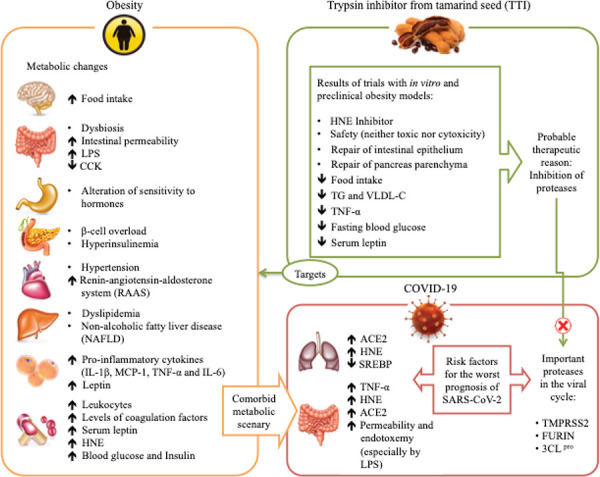
Results:: Host proteases such as FURIN, trypsin, and transmembrane serine protease 2 (TMPRSS) act in S protein activation. Tamarind trypsin inhibitor (TTI) shows several beneficial effects on the reduction of inflammatory markers (tumor necrosis factor α [TNF-α], leptin) and biochemical parameters (fasting glycemia, triglycerides, and very low-density lipoprotein [VLDL]), in addition to improving pancreatic function and mucosal integrity in an obesity model. TTI may inhibit the action of proteases that collaborate with SARS-CoV-2 infection and the neutrophil activity characteristic of lung injury promoted by the virus.
Conclusion:: Thus, TTI may contribute to combating two severe overlapping problems with high cost and social complex implications, obesity and COVID-19.
Conflict of interest statement
Conflict of Interest: The authors declare no conflicts of interest.
Figures
References
Publication types
LinkOut - more resources
Full Text Sources
Other Literature Sources
Miscellaneous