


Risks, Benefits, and Treatment Modalities of Menopausal Hormone Therapy: Current Concepts
- PMID: 33841322
- PMCID: PMC8034540
- DOI: 10.3389/fendo.2021.564781
Risks, Benefits, and Treatment Modalities of Menopausal Hormone Therapy: Current Concepts
Abstract
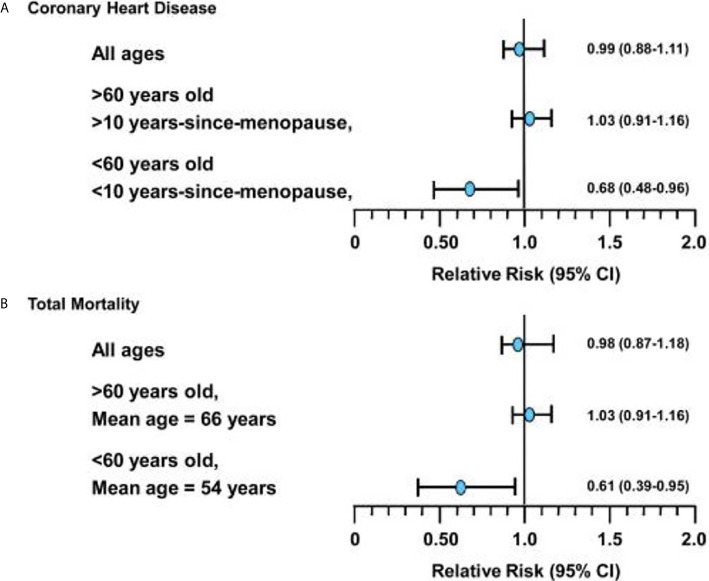
Menopausal hormone therapy (HT) prescribing practices have evolved over the last few decades guided by the changing understanding of the treatment's risks and benefits. Since the Women's Health Initiative (WHI) trial results in 2002, including post-intervention analysis and cumulative 18-year follow up, it has become clear that the risks of HT are low for healthy women less than age 60 or within ten years from menopause. For those who are experiencing bothersome vasomotor symptoms, the benefits are likely to outweigh the risks in view of HT's efficacy for symptom management. HT also has a role in preventing osteoporosis in appropriate candidates for treatment. A comprehensive overview of the types, routes, and formulations of currently available HT, as well as HT's benefits and risks by outcomes of interest are provided to facilitate clinical decision making.
Keywords: estrogen; hot flashes; menopausal hormone therapy; post-menopause; progesterone.
Copyright © 2021 Mehta, Kling and Manson.
Conflict of interest statement
The authors declare that the research was conducted in the absence of any commercial or financial relationships that could be construed as a potential conflict of interest.
Figures
References
-
- Carr BR, Wilson JD. Disorders of the ovary and female reproductive tract. In: Isselbacher KJ, Braunwald E, Wilson JD, Martin JB, Fauci AS, Kasper DL, editors. Harrisons’ Principles of Internal Medicine, 13th ed. New York: McGraw-Hill; (1994). p. 2016–7.
Publication types
MeSH terms
LinkOut - more resources
Full Text Sources
Other Literature Sources
Medical
